Electrical Troubleshooting Checklist for Safer Repairs
[ez-toc]
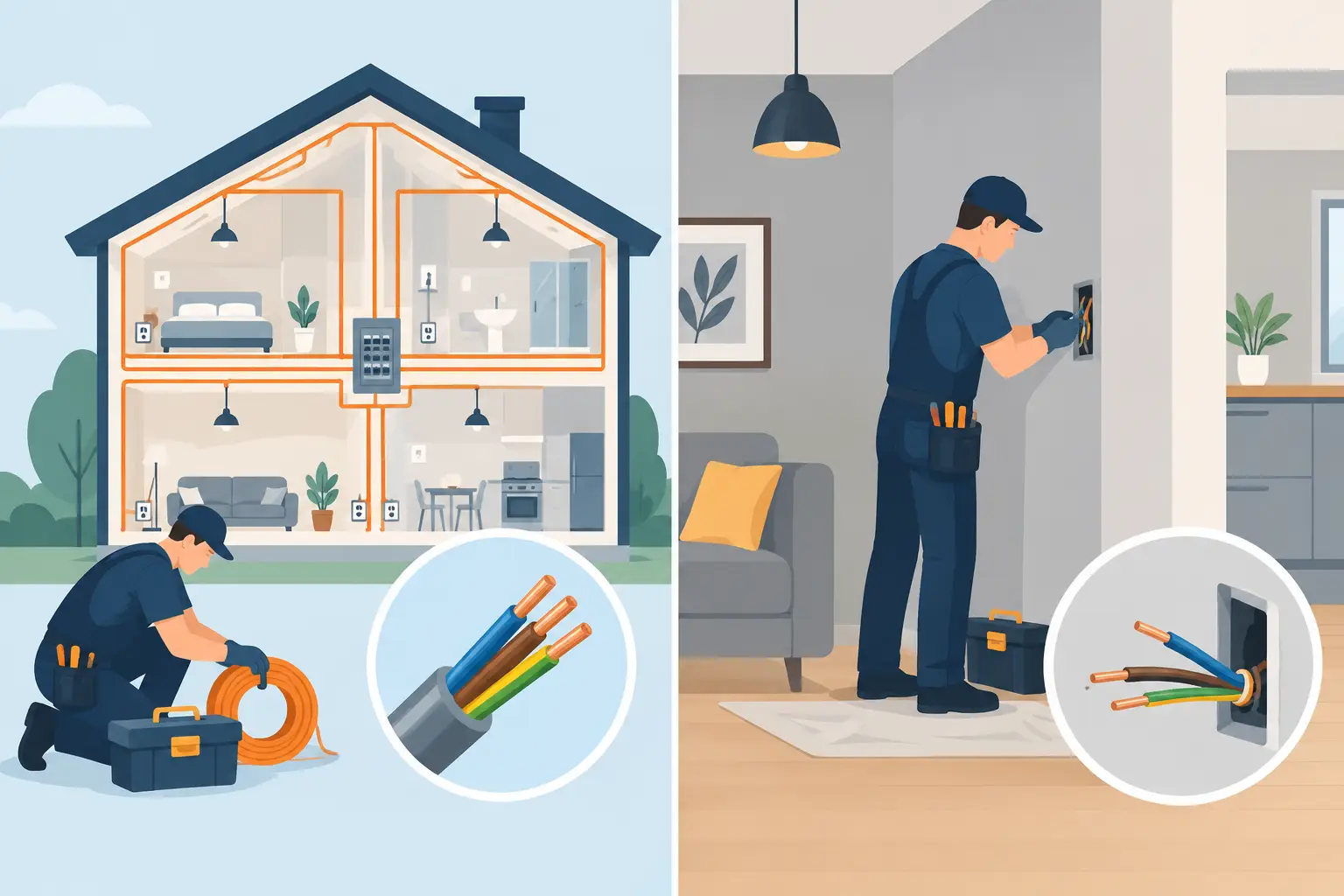
A flickering light, a tripped breaker, or an outlet that suddenly stops working can feel like a small inconvenience until it points to a larger electrical problem. This electrical troubleshooting checklist helps homeowners, property managers, and business owners identify what they can safely observe, document useful details, and recognize when the situation requires a licensed electrician.
Electrical systems are not a place for guesswork. Los Angeles properties often include aging wiring, overloaded circuits, remodeled spaces, added appliances, and equipment that places greater demands on panels designed decades ago. A careful first review can prevent damage, downtime, and serious safety hazards.
Stop and Call for Help When Safety Is in Question
Before checking anything, look for signs that require immediate professional attention. Turn off power at the main breaker only if you can reach it safely and there is no active fire, smoke, or water exposure. If there is smoke, sparking, a burning odor, a buzzing panel, electrical shock, or visible damaged wiring, keep people away from the area and call for qualified help.
Do not touch a panel, outlet, switch, appliance, or piece of equipment if you are standing in water or suspect water has entered the electrical system. Water damage after a roof leak, plumbing leak, pool equipment issue, or storm can create hidden hazards behind walls and inside electrical enclosures.
A breaker that repeatedly trips is also a warning, not an inconvenience to override. Resetting it again and again can allow an overloaded circuit, short circuit, failing appliance, or damaged wiring condition to worsen.
Prepare Before You Begin Basic Checks
The safest troubleshooting starts with observation. Note what stopped working, when it happened, what was operating at the time, and whether the problem affects one device, one room, or a larger area. For a commercial or industrial property, document whether equipment downtime followed a power event, machinery startup, HVAC cycle, or new load being added.
Use a flashlight rather than relying on a phone near a potentially damaged electrical area. Keep hands dry, avoid removing outlet covers or panel covers, and do not use damaged extension cords, power strips, or adapters while investigating the issue.
If a breaker has tripped once and there are no signs of damage, you may reset it one time by moving it firmly all the way to OFF and then back to ON. If it immediately trips or will not stay on, leave it off. That circuit needs professional diagnosis.
Electrical Troubleshooting Checklist for Homes and Businesses
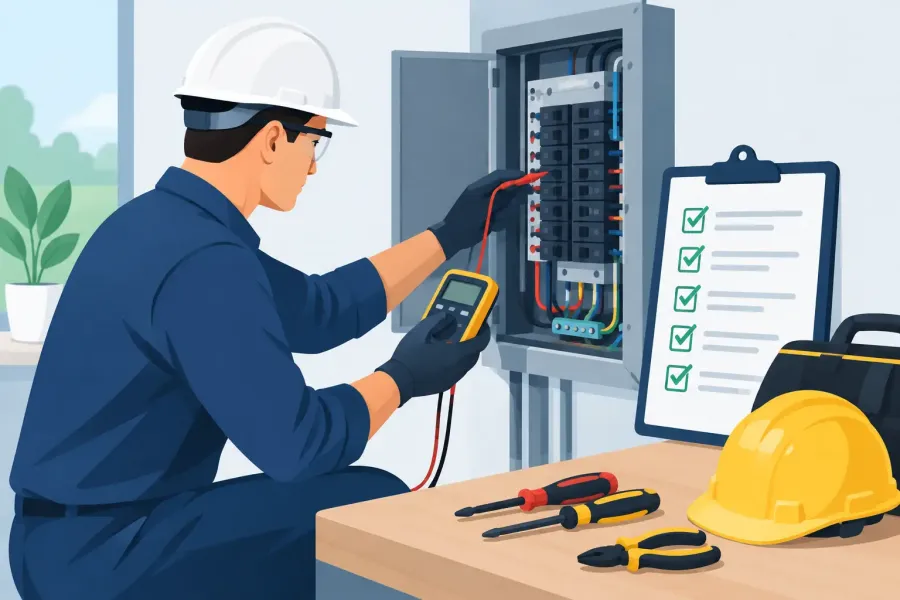
Work through these checks in order. They are designed to help you narrow the problem without exposing yourself to live wiring or hidden electrical components.
- Confirm the scope of the outage. Check whether the issue is limited to one outlet, light fixture, room, tenant space, or piece of equipment. If multiple areas are affected, inspect the main electrical panel from a safe distance and determine whether the problem may involve a larger circuit or service issue.
- Check the breaker panel. Look for a breaker sitting between ON and OFF, which commonly indicates it has tripped. Do not remove the panel cover or touch exposed components. Label the affected breaker if its circuit identification is unclear, but do not assume the label is accurate in an older property or after renovations.
- Check GFCI outlets. Kitchens, bathrooms, garages, laundry areas, outdoor spaces, pool areas, and some commercial work areas may have ground-fault circuit interrupter outlets. One tripped GFCI can disable several downstream outlets. Press RESET only if the outlet is dry, undamaged, and there is no burning smell or heat.
- Unplug recently added equipment. Portable heaters, microwaves, air fryers, compressors, office equipment, EV chargers, power tools, and high-demand appliances can overload a circuit. Unplug the suspected item before attempting one breaker reset. If the circuit stays on after the device is removed, the equipment or circuit load should be evaluated.
- Inspect cords and plugs visually. Look for cracked insulation, loose plug blades, discoloration, melted plastic, or cords pinched under furniture and doors. Replace damaged cords and do not tape over electrical damage as a permanent repair.
- Test the device elsewhere when appropriate. If a lamp, charger, or small appliance fails at one outlet but works at another known-good outlet, the original outlet or circuit may be the problem. If the device fails everywhere, stop using it until it can be repaired or replaced.
- Notice heat, sound, and smell. A warm outlet cover, hot switch, humming transformer, buzzing breaker, burning odor, or intermittent crackling is not normal. Turn off the affected circuit if safe to do so and schedule service promptly.
- Review recent changes. A new lighting fixture, appliance, tenant improvement, machinery installation, landscape lighting project, or electrical work elsewhere in the building can reveal an existing capacity or wiring issue. Share these details with the electrician because they can shorten the diagnostic process.
Common Problems and What They May Mean
A single dead outlet can be caused by a tripped GFCI, a loose connection, a failed receptacle, or a breaker problem. It may seem simple, but a loose connection can generate heat behind the wall. That is why a nonworking outlet accompanied by warmth, discoloration, or intermittent power deserves prompt service.
Flickering lights have several possible causes. A loose bulb or aging fixture may be the answer, especially if only one light is affected. However, lights that dim when major appliances start, flicker in several rooms, or change brightness unpredictably can point to circuit loading, a panel issue, or a utility-side problem. For businesses, lighting fluctuations around equipment startup may signal that dedicated circuits, power quality, or equipment wiring needs attention.
Frequently tripping breakers are often tied to overloads, short circuits, ground faults, or failing appliances. The right repair depends on the cause. Simply installing a larger breaker is dangerous unless a licensed electrician has confirmed the wiring and circuit design can safely support it. Oversizing a breaker can allow conductors to overheat before the breaker trips.
A breaker that trips when outdoor equipment, pool equipment, or a bathroom circuit is used often involves a ground-fault condition. Moisture, damaged insulation, worn equipment, and improper connections are all possibilities. These conditions should be diagnosed, not bypassed.
When a Licensed Electrician Is the Right Next Step
Call a professional for recurring breaker trips, dead circuits, panel concerns, burning odors, sparking, shocks, water-damaged electrical components, aluminum wiring concerns, or any issue involving exposed wiring. The same applies when a property needs a panel upgrade, new circuit, dedicated equipment circuit, EV charger, GFCI protection, surge protection, commercial wiring repair, or industrial equipment troubleshooting.
Property managers and business operators should also act early when electrical issues affect tenant safety, refrigeration, servers, machinery, security systems, telecom equipment, or production schedules. The cost of an accurate diagnosis is often far less than the cost of extended downtime or equipment damage.
A qualified contractor should provide clear findings, explain the repair options, and perform work that meets applicable code requirements. Prime Electric brings more than 40 years of local experience, licensed and insured service, and workmanship warranty coverage to electrical repairs across the Los Angeles area.
Electrical problems rarely become safer by waiting. If your checklist points to heat, repeated tripping, unreliable power, or damaged components, leave the circuit off when possible and arrange a professional inspection before the issue has a chance to escalate.