Pool and Spa Wiring for Safer Los Angeles Backyards

A pool light that flickers, a spa breaker that trips, or a new pump that will not start is more than an inconvenience. Water and electricity demand specialized safeguards. Professional pool and spa wiring protects the people using your backyard, helps expensive equipment run as intended, and gives property owners confidence that the system is properly installed.
For Los Angeles homeowners and property managers, the right electrical work starts with an on-site assessment. Pool and spa systems vary widely by age, equipment, panel capacity, and whether the project involves a new installation, remodel, repair, or equipment upgrade. A qualified electrician should identify the actual electrical load, inspect existing conditions, and build the work around current safety requirements rather than making assumptions.
What Safe Pool and Spa Wiring Includes
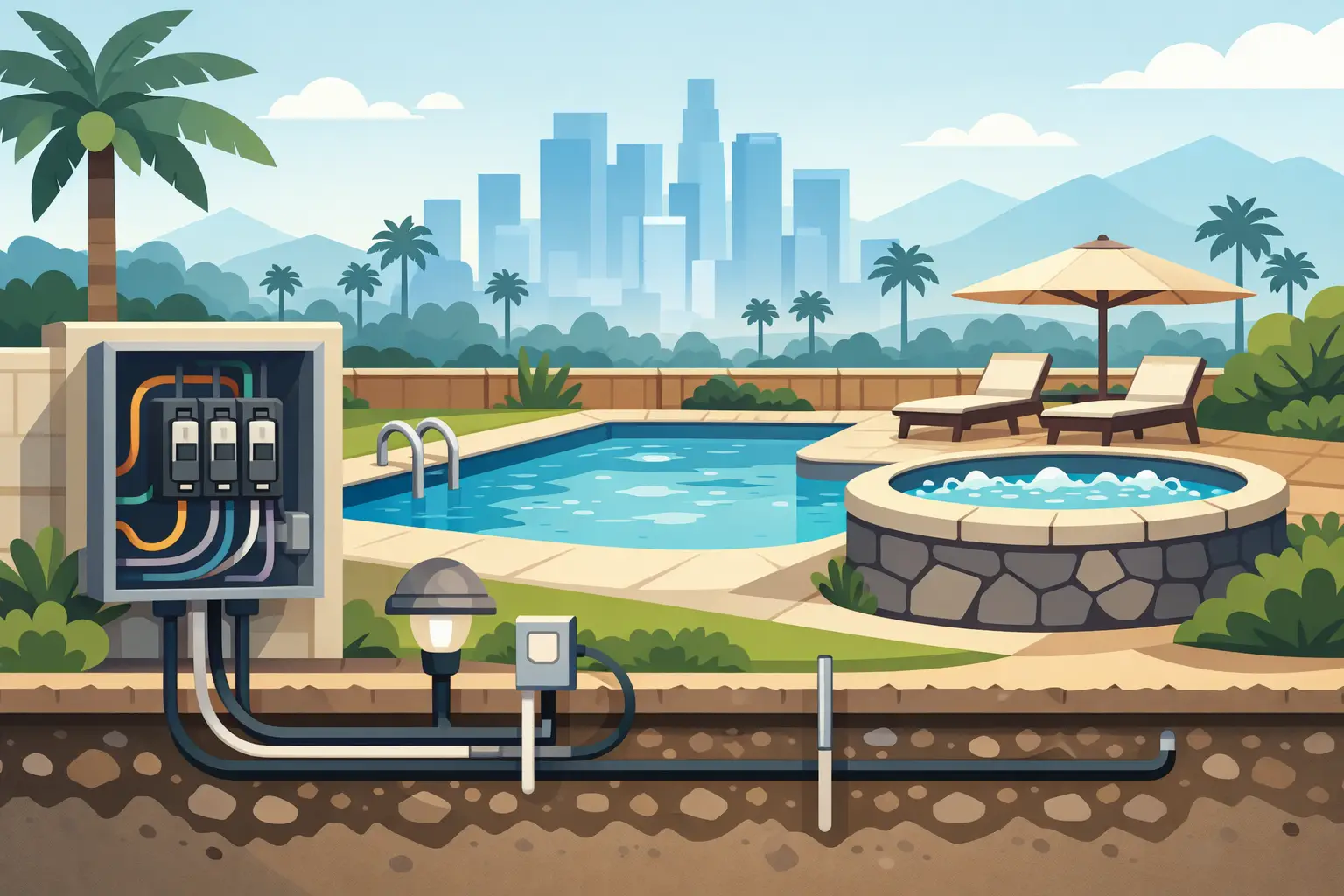
A pool or spa electrical system is not simply a dedicated circuit connected to a pump. It is a coordinated system of circuits, protective devices, grounding, bonding, disconnects, and equipment connections. Each part has a specific job, and a problem in one area can affect safety and reliability across the whole installation.
Ground-fault circuit interrupter protection, commonly called GFCI protection, is central to this work. GFCIs are designed to quickly shut off power when they detect an unintended path for electrical current. They are commonly required for pool and spa equipment, receptacles near water, lighting, and other applicable circuits. A standard breaker is not a substitute for GFCI protection.
Grounding and bonding are also essential, but they are not the same thing. Grounding provides a path connected to the electrical system ground to help manage fault current. Bonding connects conductive components together so they remain at the same electrical potential. Around a pool or spa, bonding may involve equipment, metal parts, structural steel, and other conductive elements required by the installation. This work must be carefully planned and completed because a missed or improperly connected bond can create a serious hazard.
A proper installation also includes a correctly located disconnecting means for service and emergency shutoff, weather-rated materials where exposed to the elements, and wiring methods suited to the environment. Outdoor electrical equipment faces sun, heat, moisture, landscaping activity, and occasional physical damage. Using the wrong enclosure, conduit, cover, or connector can shorten equipment life and create avoidable service issues.
Common Reasons Pool and Spa Circuits Fail
Electrical issues around water should never be dismissed as a normal part of pool ownership. A breaker that repeatedly trips is doing its job by responding to a condition that needs investigation. Resetting it again and again can hide the source of the problem while exposing equipment to damage.
One frequent issue is a failing pump motor. As motors age, insulation can deteriorate and internal components can draw current improperly. A GFCI breaker may trip immediately, intermittently, or only after the motor has been running for a period of time. The breaker may be working correctly, even if the underlying problem is in the motor or its wiring.
Moisture intrusion is another common cause. Pool equipment areas are exposed to splashing, irrigation, rain, humidity, and condensation. Water inside a junction box, disconnect, light niche connection, or underground conduit can lead to corrosion, tripping, and unreliable performance. In older installations, damaged conduit or deteriorated seals may allow moisture to reach connections that should remain protected.
Other issues include overloaded circuits, loose terminations, undersized conductors, damaged underground wiring, and outdated equipment added over time without a complete load evaluation. A pool heater, variable-speed pump, spa blower, lighting transformer, automation system, and convenience outlets can place substantial demands on an electrical system. What worked for the original pool equipment may not support later upgrades.
New Equipment May Require Electrical Upgrades
Replacing a single piece of pool equipment is sometimes straightforward, but it depends on the specifications of the old and new units. Modern variable-speed pumps, electric heaters, saltwater systems, automated controls, and spas each have distinct voltage, amperage, and protection requirements. A like-for-like replacement may use the existing circuit, while a higher-demand upgrade may require a new dedicated circuit or panel work.
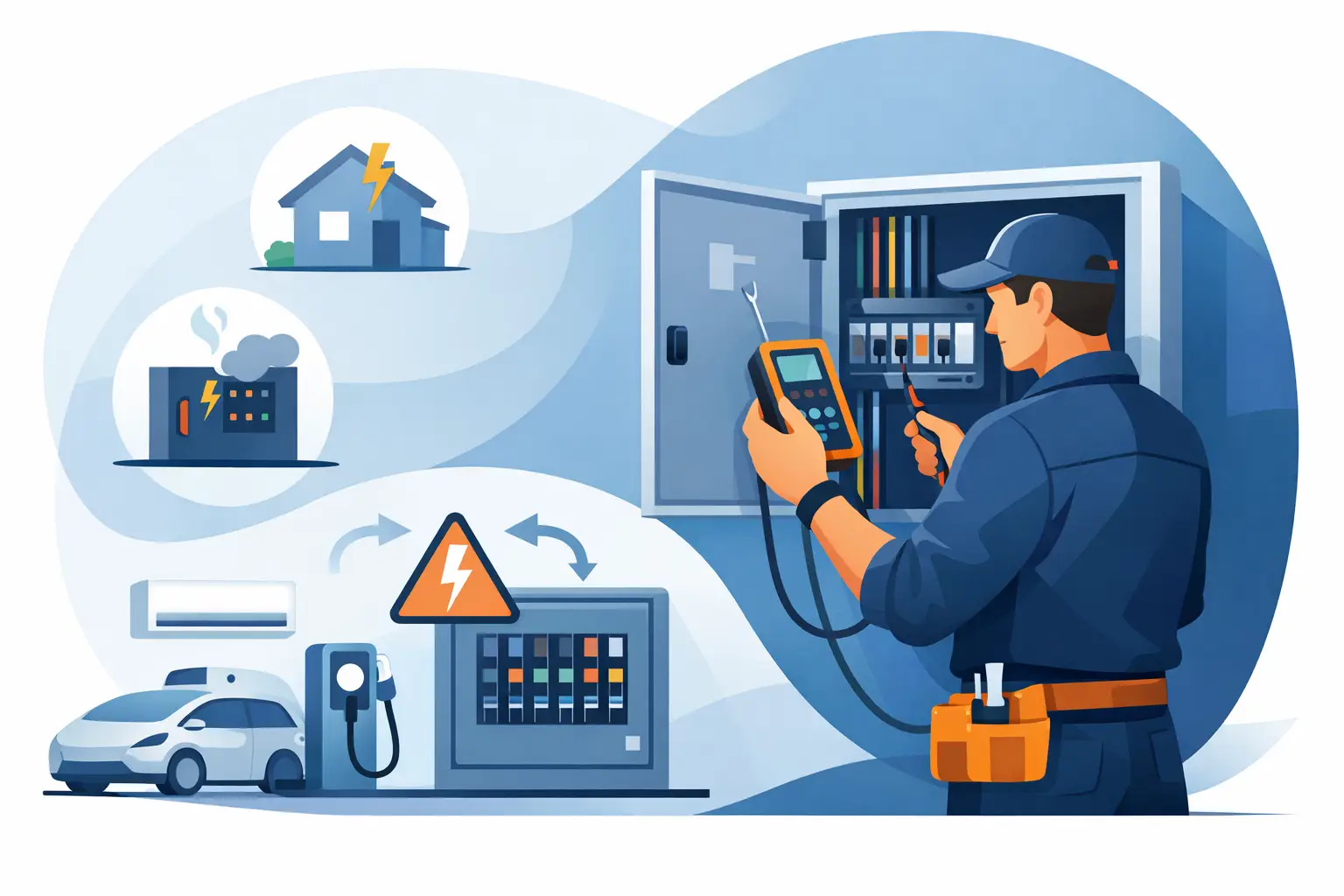
Before installation, an electrician should verify the equipment nameplate ratings, conductor size, breaker type, disconnect requirements, and available capacity in the main electrical panel. This is particularly important in older Los Angeles homes where the panel may already support air conditioning, kitchen appliances, EV charging, or an accessory dwelling unit.
Panel capacity is not determined by empty breaker spaces alone. A panel can appear to have room while its calculated load leaves little practical capacity for additional equipment. Conversely, a properly evaluated system may support a new circuit without a full panel replacement. The answer comes from an inspection and load calculation, not a guess.
Why Permits and Inspections Matter
Pool and spa electrical work often involves permit and inspection requirements, especially for new construction, major remodeling, new circuits, panel upgrades, and substantial equipment changes. Requirements can vary by jurisdiction and project scope. A professional electrician can help determine what applies before work begins.
Permits are not just paperwork. They create a documented process for verifying that safety provisions such as GFCI protection, bonding, conductor sizing, burial depth, and disconnect placement are addressed. That can matter when selling a property, resolving an insurance question, managing a multi-unit property, or documenting work after a renovation.
For property managers and business owners, compliance also helps protect against avoidable liability. Shared amenities, apartment pool areas, hotel spas, and fitness facilities have more users and more exposure than a private backyard installation. Prompt repairs and documented professional service are practical risk-management measures.
When to Call an Electrician Right Away
Do not use the pool or spa until the condition has been evaluated if you notice shocks, tingling sensations, burning odors, sparking, damaged cords, exposed wiring, water inside electrical enclosures, or repeated breaker trips. Turn off power at the appropriate disconnect or breaker if it is safe to do so, and keep people away from the affected area.
There are also less urgent signs that deserve professional attention. Pool lights that fail intermittently, a pump that starts slowly, a spa control panel that resets, corrosion at the equipment pad, or an outlet with a missing weatherproof cover can all point to developing electrical issues. Addressing small problems early is often less disruptive than waiting for a full equipment failure.
Choosing a Contractor for Pool and Spa Wiring
This is specialized electrical work, so ask direct questions before authorizing the job. Confirm that the contractor is properly licensed and insured, familiar with pool and spa electrical requirements, and willing to explain the scope of work in clear terms. You should understand whether the service involves troubleshooting, a circuit repair, GFCI replacement, bonding corrections, new equipment wiring, a panel upgrade, or a combination of these items.
A clear estimate should identify the work being performed and any conditions that could affect final scope, such as concealed damaged wiring or equipment defects discovered during testing. The lowest quote is not always the lowest long-term cost if it skips diagnostic work, uses unsuitable materials, or leaves existing safety concerns unaddressed.
Prime Electric brings more than 40 years of electrical experience to residential and commercial projects across Los Angeles. Our licensed, insured team evaluates the full system, keeps work areas clean, communicates clearly, and stands behind completed workmanship with a warranty.
Frequently Asked Questions About Pool and Spa Wiring
Can a pool pump share a circuit with other equipment?
It depends on the equipment ratings, circuit design, and applicable electrical requirements. Many pool and spa components need dedicated circuits. An electrician should review the manufacturer specifications and existing installation before connecting additional loads.
Why does my spa GFCI breaker keep tripping?
The cause may be moisture, a failing heater element, a pump or blower problem, damaged wiring, a loose connection, or a defective protective device. Because the breaker is part of the safety system, it should be tested and diagnosed rather than repeatedly reset.
Is bonding necessary if the equipment is grounded?
Yes. Grounding and bonding serve different safety functions. A properly grounded system can still have bonding deficiencies, which is why a complete inspection is needed when pool or spa electrical work is performed.
Can older pool wiring be brought up to current standards during a repair?
Often, yes, but the exact scope depends on the condition of the installation and the work being done. Some repairs may reveal older wiring methods or missing safety components that should be corrected as part of a responsible solution.
Your pool or spa should be a place to relax, not a source of uncertainty. If equipment is tripping, lights are unreliable, or you are planning an upgrade, schedule a professional evaluation before the next swim or soak.