Why Are My Lights Dimming? Causes and Fixes
[ez-toc]
A kitchen light that briefly dips when the air conditioner starts may be annoying. A whole-house dimming problem, especially one that comes with flickering, buzzing, warm outlets, or burning odors, can point to an electrical issue that needs prompt attention. If you are asking, why are my lights dimming, the answer depends on when it happens, which lights are affected, and what else is running at the time.
Some causes are simple, such as an aging LED bulb or an incompatible dimmer switch. Others involve overloaded circuits, loose connections, panel problems, or an issue with the electrical service feeding the property. Knowing the difference helps you protect your home, equipment, and family.
Why Are My Lights Dimming in One Room?
When only one fixture or one room is affected, the issue is often local to that circuit. Start with the bulb itself. LED bulbs can dim, flicker, or change color as they fail, and low-quality bulbs may be more noticeable on a dimmer. Replacing the bulb with a quality, compatible LED is a reasonable first step.
A dimmer switch is another common source of trouble. Not every LED bulb is rated for dimming, and not every older dimmer is designed to control modern LED lighting. The result can be flickering, reduced brightness, buzzing, or lights that will not reach full output. A properly matched LED-rated dimmer and compatible bulbs usually correct this issue.
If changing the bulb does not help, the fixture, switch, or wiring connection may be at fault. A loose connection creates resistance and heat, which can cause intermittent dimming and presents a real fire risk. Do not remove switches, open fixtures, or tighten wiring unless you are qualified to work safely on electrical systems. A licensed electrician can test the circuit and repair the actual source of the problem.
Lights That Dim When an Appliance Starts
It is common to notice a quick, slight dip in lights when a refrigerator compressor, garbage disposal, central air conditioner, pool pump, or other motor-driven appliance starts. These appliances draw extra power for a moment at startup, known as inrush current.
A brief, mild dimming event may be normal on an otherwise healthy electrical system. It becomes more concerning when the dimming is pronounced, lasts longer than a second or two, happens repeatedly, or affects lights in several rooms. Those symptoms can mean the appliance is sharing an undersized or overloaded circuit, the wiring is inadequate, or connections are deteriorating.
In Los Angeles homes, this can show up during hot weather when air conditioning, refrigerators, and other high-demand loads are running at the same time. Older homes may have electrical systems that were never designed for today’s appliance loads, home offices, EV charging, and high-efficiency HVAC equipment. Adding a new appliance without evaluating the panel and circuits can expose those limitations.
Circuit Overload Versus a Dedicated Circuit Need
An overloaded circuit does not always trip a breaker immediately. Before it does, you might see lights dim, outlets feel warm, or electronics behave unpredictably. Kitchen appliances, microwaves, bathroom equipment, portable heaters, window AC units, and garage tools are frequent contributors.
Some equipment should have a dedicated circuit so it does not compete with lighting or general-purpose outlets. The correct solution may be a new circuit, a circuit upgrade, or a review of the electrical panel capacity. Simply replacing a breaker with a larger one is not a safe fix and can allow wiring to overheat.
When Dimming Lights Point to a Panel or Service Problem
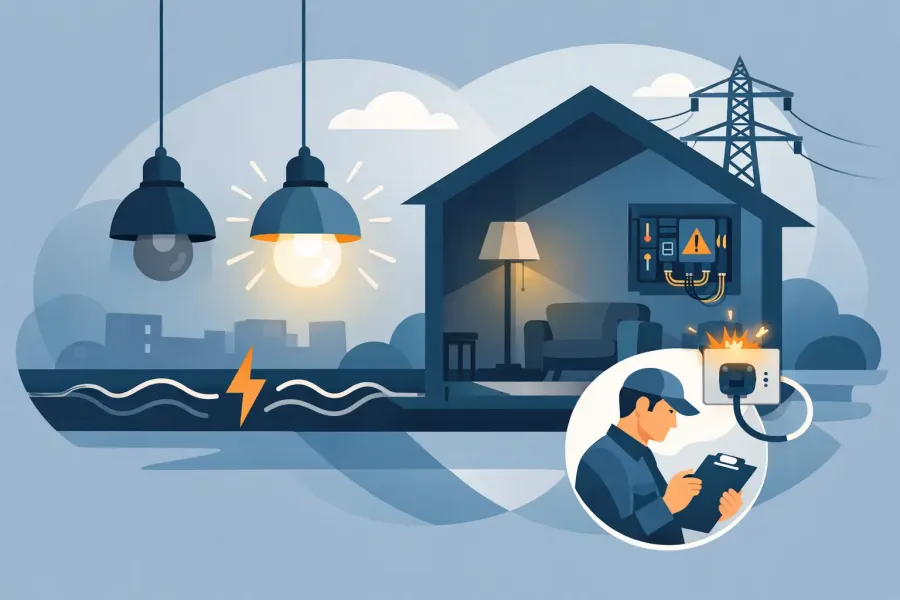
If lights throughout the house brighten and dim unpredictably, do not treat it as a bulb problem. Whole-home changes in brightness can indicate a loose neutral connection, a damaged service conductor, corrosion in the panel, or a failing main connection. These conditions can create unstable voltage.
A loose neutral is particularly serious because voltage can become uneven across different circuits. One area of the home may appear unusually bright while another dims. Sensitive electronics, appliances, and LED drivers can be damaged, and overheating connections can create a fire hazard.
Call a qualified electrician promptly if you notice any of these warning signs:
- Lights dimming or surging in multiple rooms
- Lights becoming unusually bright without adjusting a switch
- Buzzing, crackling, or popping from the panel or an outlet
- A burning smell, discoloration, or heat around electrical equipment
- Breakers that trip repeatedly or will not reset
- Dimming that began after storm damage, utility work, or a panel upgrade
If you smell burning, see smoke, hear active arcing, or notice a sparking panel, move away from the area and call for emergency assistance. Do not touch the panel, meter, or damaged equipment. If the issue may be on the utility side of the service, the electrician can help identify that and coordinate the appropriate next step.
Older Wiring Can Make the Problem Harder to See
Many properties across Los Angeles County have been remodeled over decades. A home may have newer fixtures connected to older branch wiring, additions served by undersized circuits, or a panel that has received multiple upgrades over time. The lights may be the first visible symptom, but the underlying issue can be hidden behind walls or inside electrical equipment.
Aluminum branch-circuit wiring, aging cloth insulation, damaged connections, and improperly installed splices all deserve professional evaluation. The solution is not always a whole-house rewire. It depends on the wiring condition, the affected circuits, the property’s electrical demand, and current code requirements. In some cases, a targeted repair is appropriate. In others, a panel upgrade, new dedicated circuits, or wiring replacement provides the safer long-term result.
Commercial and industrial properties can face similar issues, often with more costly consequences. Dimming lighting near machinery, compressors, large motors, or sensitive computer equipment may reflect voltage drop, inadequate circuit design, or a distribution problem. For a business, that can affect equipment reliability, productivity, and uptime.
Safe Checks You Can Make Before Scheduling Service
You can gather useful information without opening any electrical components. Notice whether the dimming affects one light, one room, or the entire property. Pay attention to what happens immediately before it occurs, such as an HVAC system cycling on or a specific appliance starting.
You can also try a known working bulb in the affected fixture, provided the fixture is cool and the power is off at the switch. Check whether the bulb is rated for use with the installed dimmer. If the issue is isolated to an LED fixture with a dimmer, bulb and dimmer compatibility may be the answer.
Avoid repeatedly resetting a tripped breaker, using extension cords as a permanent solution, or installing a higher-amperage breaker. Those actions can hide an electrical fault rather than solve it. Take note of the symptoms, including times of day and appliances in use, then share that information with your electrician.
What a Professional Electrical Inspection Should Include
A proper diagnosis goes beyond looking at the light fixture. An electrician may test voltage at the panel and affected circuits, inspect breakers and terminations, evaluate load demand, examine switches and fixtures, and identify whether the concern is inside the property or on the utility service side.
For recurring dimming, the goal is to find the reason voltage is changing, not just replace a visible component. That might involve correcting a loose connection, replacing a failing breaker, installing a dedicated circuit, upgrading a dimmer, repairing damaged wiring, or recommending a panel or service upgrade when the existing system no longer supports the property’s needs.
Prime Electric brings more than 40 years of electrical experience to residential, commercial, and industrial service work throughout the Los Angeles area. Our licensed and insured team provides clear recommendations, professional repairs, and workmanship backed by a warranty, so you can make an informed decision without guesswork.
When to Call an Electrician for Dimming Lights
Schedule service soon if dimming is frequent, worsening, affects multiple circuits, or occurs with high-demand equipment. Treat it as urgent when lights surge brighter, breakers trip, outlets are warm, or you hear unusual electrical sounds. Electrical problems rarely become safer by waiting, particularly when a loose connection or overloaded system is involved.
A light that dims once may only need a new bulb. A pattern of dimming is your property telling you something about its electrical system. Getting it inspected early can prevent damaged equipment, inconvenient outages, and a much larger repair later.