Commercial Electrician vs Residential Electrician
[ez-toc]
A commercial electrician vs residential electrician comparison matters most when an electrical problem affects safety, occupancy, or business operations. A flickering light in a home and a tripping circuit in a retail space may look similar at first, but the systems, code requirements, equipment, and consequences can be very different. Choosing an electrician whose experience matches the property helps prevent repeat repairs, failed inspections, and costly downtime.
Commercial Electrician vs Residential Electrician: The Core Difference
Both types of electricians work with electrical power, wiring, panels, lighting, safety devices, and code requirements. Both should be properly licensed, insured, trained, and prepared to diagnose the actual cause of a problem rather than offer a quick guess.
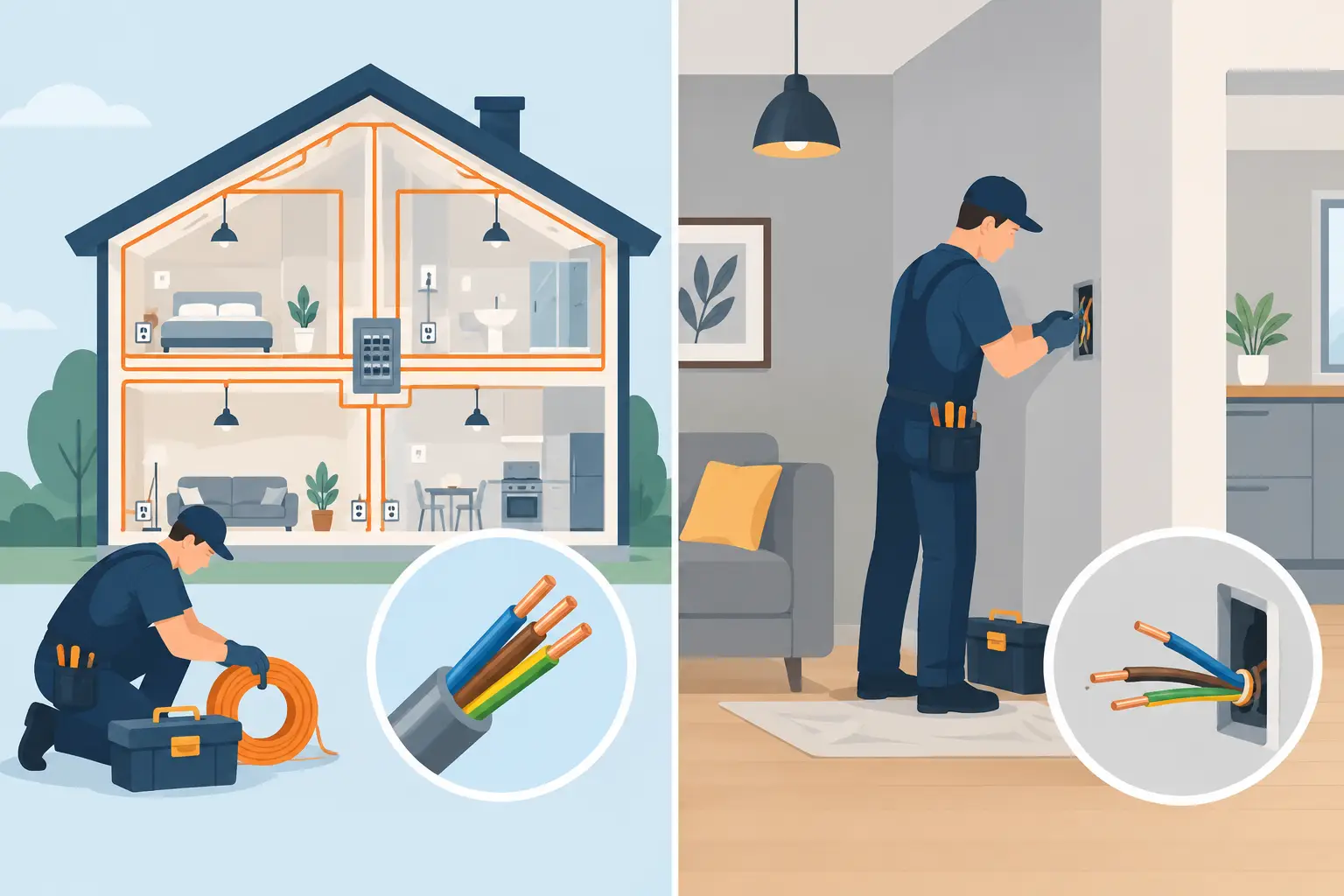
The main difference is the environment they serve. Residential electricians focus on homes, apartments, condos, garages, and outdoor living areas. Their work often includes panel upgrades, circuit breaker repairs, rewiring, recessed lighting, ceiling fans, GFCI outlets, surge protection, pool and spa wiring, and EV charger installation.
Commercial electricians work in offices, restaurants, retail stores, warehouses, multifamily common areas, medical offices, and similar business properties. They commonly handle larger electrical loads, three-phase power, commercial lighting, tenant improvements, data and telecom cabling, equipment circuits, transformers, machinery controls, and ongoing electrical maintenance.
There is overlap, especially for an experienced full-service contractor. The right choice depends less on the label alone and more on whether the electrician has proven experience with your building type, system voltage, equipment, and project scope.
What Residential Electricians Typically Handle
Residential electrical work is built around the way people live at home. Safety and convenience are central concerns, particularly in older Los Angeles-area homes where original wiring, undersized panels, or aging outlets may no longer support modern electrical demand.
A residential electrician may troubleshoot a breaker that trips when the microwave and refrigerator run at the same time, replace unsafe aluminum or damaged wiring, install dedicated appliance circuits, or upgrade a service panel for an EV charger. They also handle practical improvements such as dimmers, landscape lighting, exhaust fans, and ceiling fan wiring.
Residential systems are usually single-phase and generally operate at 120/240 volts. That does not make the work simple. A panel upgrade, whole-home rewiring project, or electrical service repair requires careful load calculations, permit coordination when required, code-compliant installation, and clean workmanship that respects the home.
For homeowners, a residential electrician should explain the issue in plain language. You should understand what failed, what repair is recommended, whether the work requires a permit, and what options are available before work begins.
Common Residential Warning Signs
Warm outlets, buzzing panels, frequently tripped breakers, burning odors, lights that dim when appliances start, and extension cords used as permanent wiring all deserve professional attention. A home may still have power while carrying a serious electrical risk.
Older panels can also create limitations when a homeowner adds central air conditioning, a hot tub, induction cooking, solar equipment, or an EV charger. In those cases, the answer may be a new dedicated circuit, a panel upgrade, or a larger service upgrade. It depends on the existing load and the condition of the electrical system.
What Commercial Electricians Typically Handle
Commercial electrical work has a wider operational impact. A failed circuit can interrupt point-of-sale systems, refrigeration, office networks, security equipment, production lines, or tenant operations. The electrician must consider not just the repair, but how to complete it safely with minimal disruption to staff, customers, and other building occupants.
Commercial properties may use three-phase power to run larger motors and equipment efficiently. Wiring is often installed in conduit, cable trays, raceways, and above suspended ceilings rather than inside residential-style walls. Projects can involve distribution panels, transformers, emergency lighting, exit signs, occupancy controls, high-voltage systems, dedicated computer circuits, and machinery connections.
A commercial electrician may be called to repair a restaurant circuit that serves refrigeration equipment, add power for new office workstations, install LED lighting throughout a warehouse, troubleshoot a compressor connection, or build out electrical systems for a new tenant. These projects often require coordination with property managers, general contractors, inspectors, and business owners.
Uptime Changes the Job
For a business, electrical work is often scheduled around operating hours, deliveries, customers, or production deadlines. Shutting down a circuit may be simple in a home, but it can be a major decision in a medical office, retail store, or industrial facility.
That is why commercial experience includes planning outages, identifying critical loads, tracing circuits accurately, and completing work in a way that supports safe operation. The lowest estimate is not always the best value if it overlooks necessary permits, uses unsuitable materials, or creates a disruption that costs the business more later.
Training, Licensing, and Code Requirements
Professional electricians develop their skills through training, field experience, and licensing requirements. Residential and commercial work both require knowledge of the National Electrical Code, local requirements, safe work practices, grounding, overcurrent protection, and proper testing procedures.
The code application can differ substantially by occupancy and use. A commercial property may have requirements related to emergency systems, fire-rated assemblies, accessibility, energy codes, exit pathways, and equipment clearances. Residential projects have their own requirements for GFCI and AFCI protection, smoke and carbon monoxide alarms, kitchen and bathroom circuits, and outdoor installations.
Permitting also varies by job. Replacing a fixture may not have the same requirements as replacing a service panel, installing a new subpanel, or wiring a tenant improvement. A qualified electrician should be able to tell you when permits and inspections are likely needed and why they protect the property owner.
Always verify that the contractor is properly licensed and insured for the work being performed. Insurance, a written scope of work, and a workmanship warranty are practical safeguards, not extras. They give homeowners, property managers, and business owners clearer accountability if questions arise after installation.
Differences in Materials, Scale, and Cost
Commercial projects frequently use heavier-duty materials because the electrical loads, building size, and installation methods are different. Conduit, commercial-grade devices, larger conductors, specialized disconnects, and three-phase equipment can increase material and labor requirements.
Residential work can also be substantial. A whole-home rewiring project, main panel replacement, underground service repair, or extensive lighting remodel may require significant planning and investment. Still, the scope is typically more contained than a commercial build-out or equipment upgrade.
Cost should reflect the actual work required, not a generic hourly assumption. Accessibility, panel capacity, wiring condition, permit requirements, material type, after-hours scheduling, equipment downtime, and the complexity of troubleshooting all affect the estimate. A clear proposal should separate the immediate safety issue from optional upgrades so you can make an informed decision.
How to Choose the Right Electrician for Your Property
Start with the job, not the category. If you own a home and need a new EV charger or a breaker repair, an electrician with strong residential experience is the natural fit. If your office needs data cabling, dedicated equipment circuits, or a lighting retrofit, look for demonstrated commercial capability.
For multifamily properties, the answer may be both. Individual units often have residential-style electrical needs, while common areas, gates, parking structures, laundry rooms, and building service equipment can require commercial-level expertise. Property managers benefit from working with a contractor who can assess the full property rather than treating every problem as an isolated service call.
Ask direct questions before approving work. Has the electrician completed similar projects? Will permits be required? Is the contractor licensed and insured? What is included in the estimate? How will the work affect occupants or operations? Is there a workmanship warranty? Straight answers to these questions are a good sign that the contractor is prepared and accountable.
Prime Electric brings more than 40 years of experience to residential, commercial, and industrial electrical work across the Los Angeles area, with licensed and insured service backed by a workmanship warranty. That broad capability is especially valuable when a property has both everyday electrical needs and more complex infrastructure behind the walls.
The best electrician is the one who treats your home, building, or business as a system worth protecting. Whether the project is a single unsafe outlet or a critical equipment upgrade, professional diagnosis and code-compliant work can prevent a small electrical concern from becoming a larger interruption.