Are Flickering Lights Dangerous? When to Call
[ez-toc]
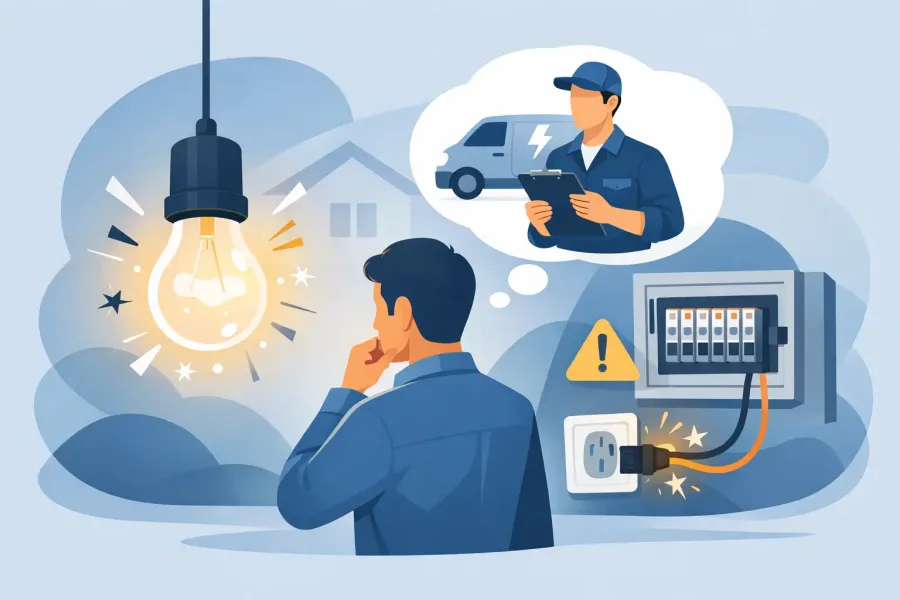
A kitchen light that flickers once when the air conditioner starts may be annoying. A light that repeatedly dims, buzzes, or flickers throughout the house is a different matter. Are flickering lights dangerous? Sometimes they are, especially when the problem points to a loose connection, overloaded circuit, failing panel component, or utility issue.
The key is to look at the pattern. One bulb flickering has a very different cause and risk level than lights changing brightness in multiple rooms. Knowing the difference can help you avoid unnecessary worry while recognizing when it is time to schedule professional electrical service.
Are Flickering Lights Dangerous in Every Situation?
No. Flickering is not automatically an emergency, and a simple cause is common. A loose LED bulb, an incompatible dimmer switch, or an aging light bulb can create intermittent flickering without indicating a problem in the wiring.
Still, electricity should not be treated as a guessing game. Flickering can also be the visible symptom of a poor electrical connection. Loose connections create resistance and heat. Over time, that heat can damage insulation, switches, outlets, fixtures, circuit breakers, or wiring inside walls. In serious cases, it can create a fire hazard.
The practical question is not simply whether a light flickers. It is whether the flickering is isolated, repeatable, worsening, or accompanied by other warning signs.
When a Flickering Light Is Usually a Simple Fix
Start with the fixture itself. If one lamp or one recessed light flickers while the rest of the building is stable, turn the light off and allow the bulb to cool. Confirm that the bulb is properly seated, then test it again. If it continues, replace the bulb with a quality bulb that matches the fixture’s wattage rating and dimmer requirements.
LED bulbs are a frequent source of confusion. Older dimmer switches were designed for incandescent bulbs and may not work properly with LEDs. The result can be flickering, buzzing, reduced dimming range, or lights that do not fully turn off. Installing a compatible LED-rated dimmer often resolves the issue.
A fixture may also have a failing socket, loose internal connection, or worn switch. These are repairs for a qualified electrician, but they are generally more contained than a whole-home wiring or panel issue.
Warning Signs That Need Prompt Attention
Flickering becomes more concerning when it happens beyond one fixture or is paired with signs of electrical stress. Do not ignore the following:
- Lights dim or brighten when major appliances start, such as an air conditioner, refrigerator, microwave, washer, or pool equipment.
- Multiple lights flicker in different rooms, particularly on separate circuits.
- You notice a burning smell, warm switch plate, warm outlet, buzzing panel, sparks, discoloration, or a popping sound.
- Circuit breakers trip repeatedly, outlets stop working, or electronics reset unexpectedly.
If you smell burning, see smoke or sparks, or hear active arcing, turn off power at the main breaker only if it is safe to do so. Keep clear of the affected area and call for urgent electrical help. Do not remove outlet covers, open the electrical panel, or attempt to tighten wiring yourself.
Why Lights Flicker Throughout a Home or Building
When lights flicker in several areas, the cause may be upstream from the fixture. A loose neutral connection is one possibility. The neutral conductor helps stabilize voltage in many electrical systems. If it becomes loose at a panel, meter, service connection, or circuit, lights may brighten and dim unpredictably. This condition can damage sensitive electronics and deserves immediate diagnosis.
An overloaded circuit can also cause flickering. Los Angeles homes often have additions, remodeled kitchens, home offices, EV chargers, or high-demand HVAC equipment that place more demand on an electrical system than it was originally designed to handle. Older panels and undersized circuits can struggle when several loads operate at once.
In commercial settings, flickering may be tied to machinery startups, compressor loads, aging ballast systems, damaged branch wiring, or electrical distribution issues. A business should take recurring flickering seriously because it can affect equipment reliability, employee safety, customer experience, and uptime.
There is also a possibility that the issue originates outside the property. If neighbors are experiencing the same flickering or a nearby utility line has been damaged, the electrical utility may need to inspect its equipment. A licensed electrician can help determine whether the concern is on the property side or utility side of the service.
What You Can Safely Check Before Calling an Electrician
You do not need to diagnose an electrical system to provide useful details during a service call. Notice whether the flickering affects one fixture, one room, or the entire property. Pay attention to what is running when it happens, such as central air, an EV charger, a garbage disposal, or commercial equipment.
You can also test a simple bulb replacement in a switched-off, cool fixture. If the issue is limited to a dimmer-controlled LED light, document the bulb type and dimmer behavior. These observations can help an electrician narrow the cause faster.
Avoid repeatedly resetting breakers to keep a circuit running. A breaker that trips is responding to a potential overload, short circuit, ground fault, or equipment problem. Resetting it once may be reasonable if there are no signs of damage, but repeated trips call for service rather than another reset.
Why DIY Electrical Repairs Can Make Flickering Worse
A loose wire is not always visible, and the dangerous connection may be inside a junction box, panel, fixture, outlet, or wall cavity. Tightening the wrong connection, using the wrong wire connector, or working in a live panel can lead to shock, arc damage, or a repair that appears to work while leaving the actual hazard unresolved.
This is especially true with panel work and service conductors. These components can remain energized even when individual breakers are off. Electrical repairs should also meet applicable code requirements, particularly for rental properties, commercial spaces, remodels, and systems serving high-demand equipment.
A licensed and insured electrician can test voltage, inspect connections, evaluate breaker and panel condition, identify overloaded circuits, and recommend the repair that fits the actual problem. The right solution may be as straightforward as replacing a dimmer or fixture. In other cases, it may involve repairing damaged wiring, adding a dedicated circuit, correcting panel issues, or coordinating with the utility.
Protecting Your Property From Repeat Electrical Problems
Once flickering has been resolved, consider whether the electrical system is keeping up with the property. A home that has added modern loads without electrical upgrades may benefit from a panel evaluation, dedicated circuits for large appliances, whole-home surge protection, or wiring updates in older areas of the house.
For property managers and business owners, recurring flickering is a useful maintenance signal. Addressing it early can prevent damaged equipment, tenant complaints, unexpected downtime, and more extensive repairs later. Keeping clear records of when the issue occurs can also make troubleshooting more efficient.
Prime Electric brings more than 40 years of electrical experience to residential, commercial, and industrial service throughout the Los Angeles area. When flickering lights are persistent, widespread, or paired with heat, odors, breaker trips, or buzzing, a professional inspection is the safest next step.
A light should make a room usable, not make you wonder what is happening behind the wall. If the pattern does not have an obvious, simple explanation, treat it as a reason to have the electrical system checked before a small warning becomes a costly disruption.