Why Outlets Spark and When to Call an Electrician
[ez-toc]
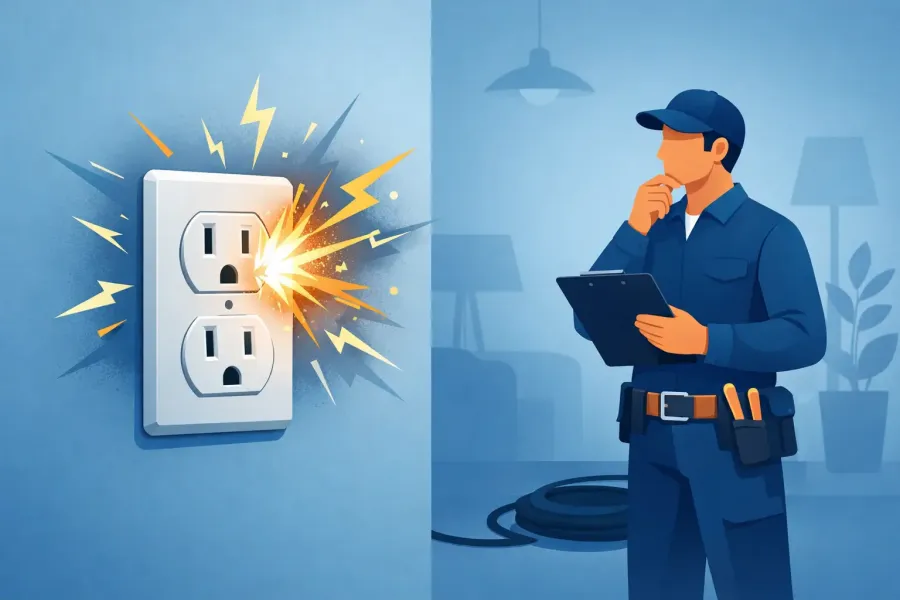
A tiny blue flash when you plug in a phone charger can be unsettling. Understanding why outlets spark helps you separate a normal electrical reaction from a warning that your home or business may have a loose connection, worn receptacle, or overloaded circuit.
A spark is not something to ignore simply because the outlet still works. Electrical problems can worsen behind the wall, where heat and damaged connections are not visible. The right response depends on when the spark happens, how large it is, whether there is an odor or heat, and what else is happening on that circuit.
Why Outlets Spark When You Plug Something In
A small, quick spark can occur as an appliance or device begins drawing power. When the metal prongs of a plug approach the energized contacts inside the receptacle, electricity can briefly arc across the tiny gap before the connection is fully made. This is more common with devices that have motors, heating elements, or power supplies, such as vacuum cleaners, window air conditioners, lamps, chargers, and power tools.
In that limited situation, the spark is usually small, brief, and contained inside the outlet. There should be no popping sound, persistent crackling, smoke, burning smell, or discoloration. The plug should also fit firmly in the receptacle.
That said, a normal-looking spark is not a blanket approval for every outlet. Older Los Angeles properties often have receptacles, wiring, or panels that have seen decades of use. A worn outlet can turn a minor arc into a heat-producing connection problem over time.
When a Sparking Outlet Is a Safety Concern
The details matter. If the outlet sparks repeatedly, sparks when nothing is being plugged in, or produces a large, bright flash, stop using it. Turn off the circuit breaker if you can do so safely and arrange for a licensed electrician to inspect the issue.
Warning signs that call for prompt service include:
- A burning, fishy, or melting-plastic odor near the outlet
- Warm, hot, cracked, loose, or discolored outlet covers
- Buzzing, popping, sizzling, or crackling sounds
- A plug that slips out easily or will not stay firmly seated
- Frequent breaker trips, flickering lights, or power loss on the same circuit
Smoke, visible charring, or a hot outlet should be treated as urgent. Do not keep testing the outlet with other devices, and do not attempt to spray anything into it or remove the cover while the circuit is energized. If there is an active fire or immediate danger, call emergency services first.
Loose Connections Create Heat
Loose wiring is one of the most serious reasons an outlet may spark. Electrical current must move through secure connections. When a wire terminal, internal contact, or plug connection becomes loose, current can arc across small gaps instead of flowing cleanly through the intended path.
That arcing creates heat. Over time, it can damage insulation, char the receptacle, harm the wiring in the electrical box, and create a fire hazard. Loose connections may result from aging materials, improper installation, repeated use, vibration, or outlets that have been overloaded for years.
A qualified electrician can shut off power, inspect the receptacle and box, test the circuit, and determine whether the repair is limited to the outlet or points to a larger wiring issue. Replacing only the visible receptacle without diagnosing the connection behind it can leave the actual problem in place.
Worn Receptacles Cannot Hold Plugs Securely
Outlets wear out. The internal metal contacts that grip plug prongs can loosen after years of plugging and unplugging devices. When a plug hangs loosely, shifts under its own weight, or falls out, the connection is no longer reliable.
A loose plug can arc while a device is operating, particularly with higher-demand equipment. This is not a situation to solve with a tighter-fitting power strip, a multi-plug adapter, or tape. The receptacle should be professionally evaluated and replaced if needed.
Damaged Plugs and Cords Can Be the Source
Sometimes the outlet is not the only issue. A bent plug prong, frayed cord, cracked charger block, or damaged appliance can create poor contact and cause sparking as it is inserted. Inspect the plug before using it again, especially if the device has been pulled by its cord, crushed by furniture, exposed to water, or used outdoors.
Do not force a bent prong into an outlet. Stop using cords with exposed wire or damaged insulation. If multiple devices spark in the same receptacle, however, the outlet or circuit is more likely to be at fault.
Overloaded Circuits and Improper Power Use
An outlet may spark when too much demand is placed on the circuit. Space heaters, portable air conditioners, microwaves, hair tools, refrigerators, printers, and shop equipment can draw significant power. Running several high-demand items from one circuit, especially through extension cords or power strips, can strain wiring and connections.
Breaker trips are a protective response, not an inconvenience to work around. Repeatedly resetting a tripped breaker without finding the cause can expose a property to continued overheating or equipment damage. A professional can assess circuit load, identify shared circuits, and recommend a dedicated circuit, outlet upgrade, panel work, or wiring repair where appropriate.
Commercial and industrial properties face the same basic electrical principles at a larger scale. A sparking receptacle near office equipment, machinery, compressors, or production equipment may involve load requirements, equipment condition, or circuit design that should be assessed before downtime becomes a larger operational problem.
Moisture Changes the Risk
Water and electricity are a dangerous combination. Outlets in kitchens, bathrooms, garages, laundry areas, patios, pool areas, and exterior locations need appropriate protection. In many applications, that means a ground-fault circuit interrupter, commonly called a GFCI outlet or breaker.
A GFCI monitors the electrical path and shuts off power quickly when it detects an imbalance that could indicate current is traveling through water or a person. It does not make a wet, sparking outlet safe to use. If an outlet has been exposed to water, has corrosion, trips repeatedly, or sparks near a sink or outdoor area, leave it unused until it has been inspected.
For pool and spa wiring, outdoor receptacles, and wet-location electrical equipment, professional installation and repair are especially critical. These systems require the correct equipment, grounding, bonding, and protective devices to help protect people and property.
What to Do If an Outlet Sparks
If you see a small spark with no other warning signs, unplug the device and check both the plug and receptacle for damage. Avoid repeatedly plugging the device in to see whether it happens again. If the outlet is loose, noisy, warm, discolored, or produces another spark, stop using it.
If a breaker has tripped, leave it off until the cause is understood. Do not replace a breaker with a larger one or attempt to bypass a GFCI. Those protections are designed around the wiring and circuit capacity, and altering them improperly can create a serious hazard.
A licensed, insured electrician can determine whether the issue involves a single worn outlet, a damaged cord, a loose wire, a failing breaker, inadequate grounding, moisture intrusion, or a circuit that needs an upgrade. That diagnosis is the difference between a targeted repair and an unresolved hazard hidden behind the wall.
Why Professional Electrical Repair Is Worth It
Outlet repairs may look simple, but the visible device is only one part of the electrical system. Proper work includes safely de-energizing and testing the circuit, examining wire condition and terminations, confirming correct grounding and polarity, and verifying that the outlet and circuit are appropriate for the location and load.
Prime Electric brings more than 40 years of electrical experience to residential, commercial, and industrial service across Los Angeles County. Licensed and insured electricians can address everything from a failed receptacle or GFCI issue to wiring replacement, circuit breaker repairs, panel upgrades, and dedicated circuits for modern equipment.
A sparking outlet is your electrical system asking for attention. Acting early can often keep a straightforward repair from becoming damaged wiring, lost business uptime, or a far more expensive safety issue.