Why Do Outlets Feel Warm? When to Call an Electrician
[ez-toc]
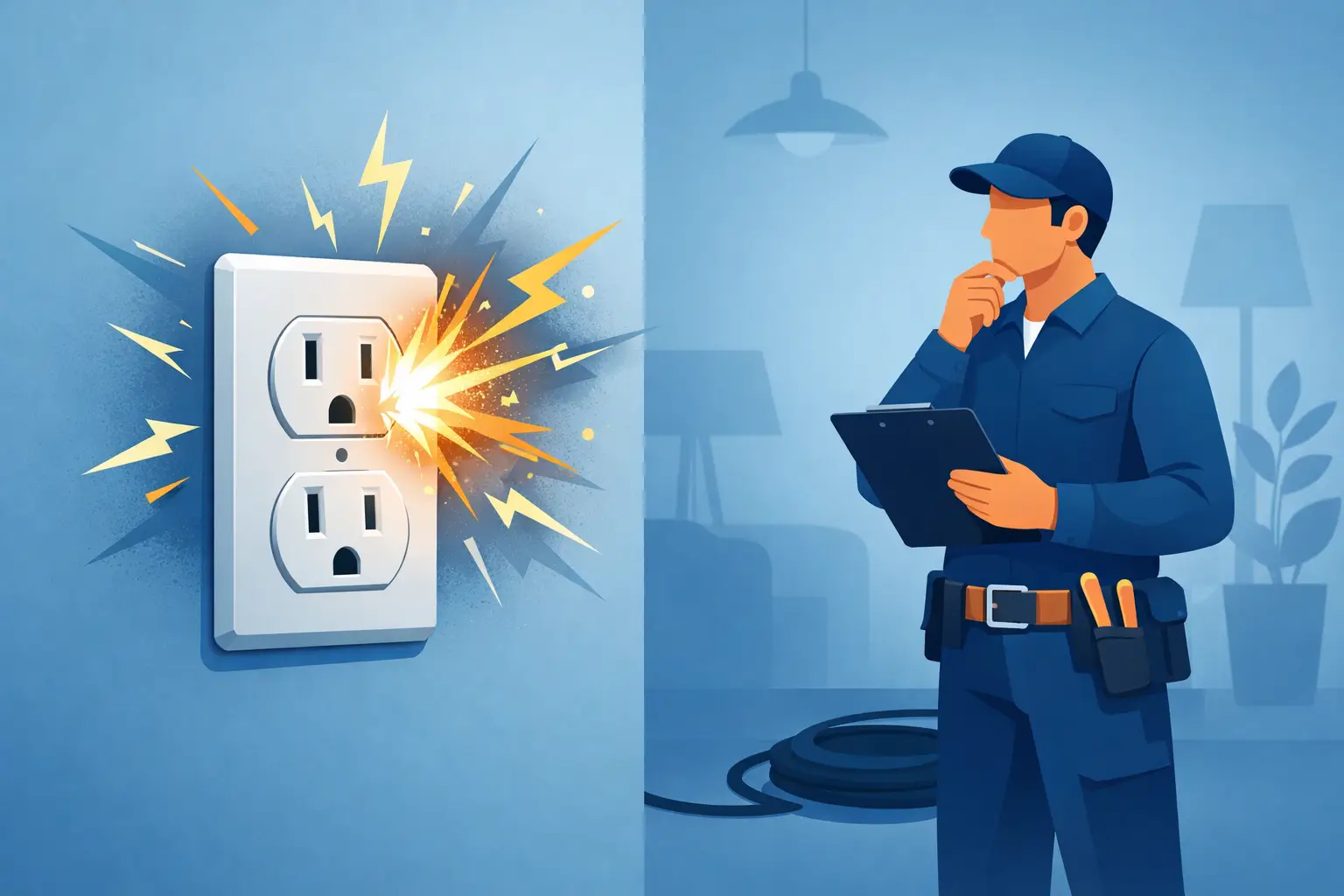
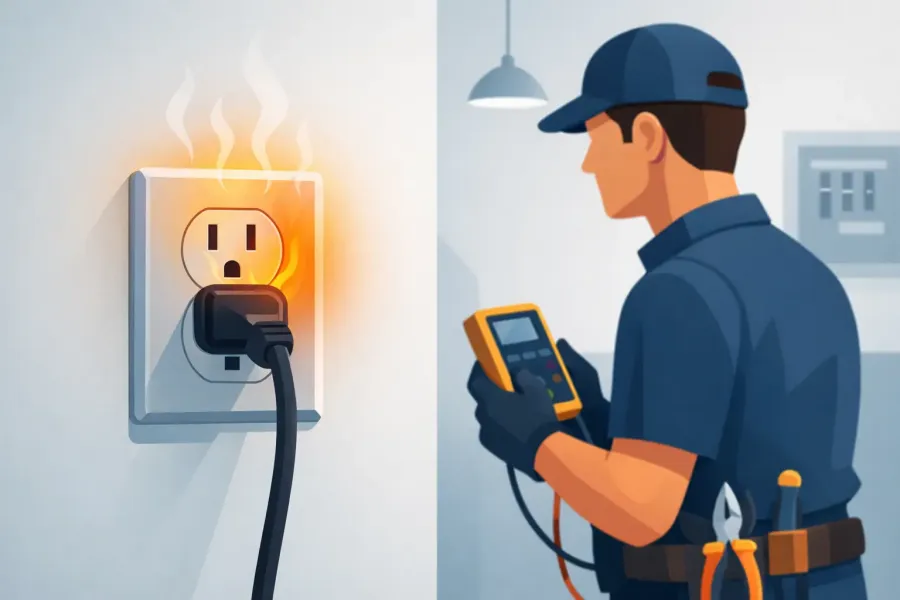
A wall outlet should not feel noticeably warm during ordinary use. So, why do outlets feel warm? Most often, the outlet or its wiring is producing heat because electricity is meeting resistance somewhere it should not. That may be a loose connection, an overloaded circuit, a worn receptacle, or a problem inside the electrical box. Treat unusual warmth as an early warning, not a cosmetic issue.
A phone charger may feel mildly warm, and some larger plugs can retain a little heat while powering equipment. But if the outlet cover, receptacle, plug, or wall around it feels hot enough to make you pause, stop using it. Heat at an electrical connection can worsen quickly, especially in older Los Angeles homes, rental properties, busy offices, and facilities with high-demand equipment.
Why Do Outlets Feel Warm? Resistance Creates Heat
Electricity moves through conductors with very little resistance when the wiring, terminals, and connections are in good condition. When a connection becomes loose, corroded, damaged, or undersized for the load, it resists the flow of electricity. That resistance produces heat.
The problem is that a circuit breaker may not trip right away. Breakers are designed primarily to respond to overloads and short circuits. A loose wire connection can generate significant heat at one outlet while the circuit is still carrying an amount of current below the breaker’s trip rating. This is one reason a warm outlet deserves professional attention even when everything in the room still appears to work.
Warmth can come from the receptacle itself, the wiring connected behind it, the plug blades, or an appliance drawing excessive power. The source matters because the repair may be as contained as replacing a damaged outlet, or it may involve correcting wiring, circuit capacity, or a panel issue.
Common Reasons an Outlet Gets Warm
A loose outlet connection
Loose terminal screws, worn internal contacts, or a weak connection between the plug and receptacle are among the most common causes. As the connection loosens, electricity has to pass through a smaller, less secure contact point. That point heats up under load.
You may notice that plugs fall out easily, sit loosely, or need to be positioned a certain way to work. Those are not minor inconveniences. A loose receptacle can arc, meaning electricity jumps across a gap and creates intense localized heat. Arcing can discolor the outlet, damage insulation, and create a fire risk inside the wall.
An overloaded circuit or power strip
Portable heaters, air conditioners, microwaves, hair dryers, coffee makers, refrigerators, and power tools can draw substantial power. Plugging several high-demand items into one circuit, outlet, or power strip can make the outlet and plug warm.
A power strip does not add circuit capacity. It simply allows more devices to share the same circuit. In homes and commercial spaces with limited outlets, it is easy to overload a circuit without realizing it. Repeated breaker trips, flickering lights, or warm cords often point to a circuit that needs evaluation or an additional dedicated circuit.
A damaged or aging receptacle
Outlets wear out. The spring contacts inside a receptacle can weaken over time, particularly in frequently used kitchen, office, workshop, and rental-property outlets. Cracked plastic, dark marks around the slots, a burning odor, or melted portions of the faceplate indicate damage that should be addressed immediately.
Older outlets may also lack modern safety features. In areas exposed to moisture, such as kitchens, bathrooms, garages, outdoor locations, and pool areas, a properly installed GFCI outlet provides added protection against shock hazards. Replacing an old outlet is not always just a matter of appearance or convenience.
Improper wiring or an undersized circuit
Some warm outlets trace back to incorrect wiring methods, deteriorated wire insulation, aluminum wiring concerns, poor splices, or circuits that were not designed for the equipment now being used. A home office added to a bedroom, a garage converted into a workspace, or new kitchen appliances can change a property’s electrical demands considerably.
Commercial and industrial properties face similar issues when equipment is added without verifying circuit load, conductor size, disconnect requirements, and panel capacity. Machinery, compressors, data equipment, and specialty lighting can create demands that ordinary branch circuits were never intended to support.
Heat from the device or plug
Sometimes the outlet is not the original source of the heat. A failing appliance, charger, extension cord, or power adapter may run hot and transfer heat to the plug and receptacle. This is common with low-quality adapters, damaged cords, and equipment with failing internal components.
If only one device makes an outlet warm, stop using that device and have both the equipment and outlet checked. Do not assume the outlet is safe simply because another plug appears to work normally.
When a Warm Outlet Is an Emergency
Turn off the affected circuit at the electrical panel, if you can do so safely, and contact a licensed electrician promptly if you notice any of the following:
- The outlet, plug, or cover plate is hot to the touch.
- You smell burning plastic, rubber, or a sharp electrical odor.
- The outlet is discolored, blackened, cracked, melted, buzzing, or sparking.
- A plug fits loosely or falls out.
- The breaker trips repeatedly when the outlet is used.
- Lights flicker or dim when equipment on the same circuit turns on.
Do not continue testing the outlet by plugging devices in and out. Do not cover the issue with a new faceplate, tape a damaged cord, or keep resetting a breaker. Those actions can conceal symptoms while the underlying connection continues to overheat.
If there is smoke, visible fire, or active sparking, move away from the area, call 911, and do not attempt to put water on an electrical fire.
What You Can Safely Do Before an Electrician Arrives
Unplug the device only if the plug and surrounding area are not hot, damaged, or sparking. If it is safe to access the panel, switch off the breaker serving the outlet. Leave a clear note so no one turns the circuit back on or uses the outlet by mistake.
Avoid opening the outlet box yourself. Even after a breaker is turned off, electrical work requires confirming that power is actually absent and identifying whether other circuits may be present in the box. A loose neutral, shared circuit, damaged conductor, or panel problem cannot be diagnosed reliably from the outlet face alone.
For property managers and business owners, document which equipment was connected, when the warmth was noticed, and whether breakers tripped. That information can help an electrician isolate the cause faster and reduce downtime.
How a Licensed Electrician Finds the Cause
A qualified electrician starts by inspecting the outlet, plug fit, wire terminations, box condition, and signs of heat damage. They may test voltage, circuit load, grounding, polarity, and the condition of the connected wiring. If the outlet is part of a larger issue, they can trace the circuit back to the panel and evaluate breaker sizing, conductor capacity, and demand on the circuit.
The right repair depends on the findings. It may involve replacing a worn receptacle, repairing a connection, replacing damaged wiring, installing GFCI or AFCI protection where appropriate, adding a dedicated circuit, or upgrading panel components. The goal is not simply to make the outlet work again. It is to correct the condition that allowed heat to build up in the first place.
Prime Electric brings more than 40 years of electrical experience to residential, commercial, and industrial service calls throughout the Los Angeles area. A licensed, insured electrician can assess the problem clearly, explain the recommended repair, and help protect your property from a preventable electrical hazard.
Frequently Asked Questions About Warm Outlets
Is it normal for an outlet to feel slightly warm?
A very slight warmth can occur when a high-demand device has been running, but the outlet should never feel hot, smell unusual, or show damage. If the warmth is noticeable or recurring, stop using it and schedule an inspection.
Can a warm outlet cause a fire?
Yes. Heat caused by loose connections, arcing, overloaded circuits, or damaged wiring can degrade insulation and ignite nearby materials. The risk depends on the source and severity, but it is not a symptom to ignore.
Should I replace a warm outlet myself?
Replacing an outlet without identifying why it became warm can leave the real hazard behind the wall. Professional diagnosis is the safer choice, especially if there is discoloration, repeated breaker tripping, loose wiring, or an older electrical system.
A warm outlet is often the first visible sign that an electrical connection needs attention. Shut off use of the affected outlet, avoid temporary fixes, and have the circuit evaluated before a small heat issue becomes a costly repair or safety emergency.