Panel Replacement Cost: What to Expect
[ez-toc]
A failing electrical panel rarely gives you the courtesy of a convenient timeline. It shows up as breakers that trip for no clear reason, lights that flicker when major appliances start, burning smells, or a panel that simply cannot keep up with modern power demands. When homeowners and property managers start asking about panel replacement cost, they usually are not shopping for an optional upgrade. They are trying to solve a safety issue, a reliability issue, or both.
In Los Angeles area properties, panel work can vary quite a bit from one building to the next. A straightforward replacement in a newer home is very different from upgrading an older panel in a house with aging wiring, limited capacity, and code issues that surface once the work begins. That is why honest pricing starts with a real evaluation, not a guess over the phone.
What affects panel replacement cost?
The biggest factor is usually the size and type of panel being installed. Replacing a smaller residential panel with a comparable model generally costs less than upgrading to a 200-amp service designed to support central air, EV charging, kitchen remodels, or added circuits. Commercial and light industrial properties can be more complex still, especially when uptime, equipment compatibility, or specialized loads are involved.
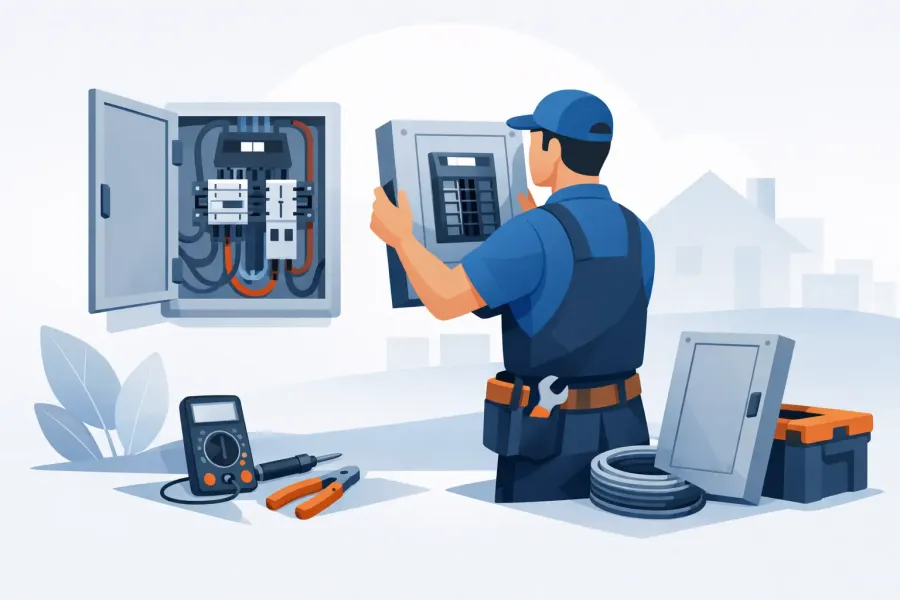
Labor also plays a major role. Panel replacement is not just a box swap. The electrician has to safely disconnect power, remove the old equipment, install the new panel, reconnect circuits, verify proper grounding and bonding, label breakers, and test the system. If the existing wiring is brittle, overcrowded, damaged, or improperly terminated, the job can expand quickly.
Permits and inspections are another part of the total. In most cases, panel replacement should be permitted and inspected to confirm the work meets current code. That process protects the property owner. It also means the estimate needs to account for administrative time, local requirements, and coordination with the utility when service shutdown or reconnection is needed.
Accessibility matters too. A panel in an easy-to-reach garage is different from one installed in a tight utility room, exterior wall with damage, or location that requires additional repair work after the replacement. The more obstacles involved, the more labor is required.
Typical panel replacement cost ranges
For many residential properties, panel replacement cost often falls somewhere in the low-thousands to mid-thousands, but broad national averages can be misleading. A basic replacement may be far less involved than a full service upgrade with meter work, grounding improvements, permit coordination, and circuit corrections. In higher-cost service markets like Los Angeles, pricing can run above what homeowners see in generic online estimates.
A like-for-like panel replacement is usually the lower end of the range. A service upgrade, especially to 200 amps, generally costs more because it may involve new service entrance components, additional labor, and utility coordination. If the electrician finds damaged conductors, aluminum branch wiring concerns, overheating, corrosion, or code violations, that will affect the final price as well.
For commercial properties, panel replacement cost can move higher based on the number of circuits, the type of disconnects required, and whether work needs to be done after hours to avoid disrupting business operations. Industrial environments add another layer because machinery, specialty loads, and facility safety protocols often require more planning and testing.
Why two panel quotes can look very different
Property owners sometimes receive estimates that are far apart and assume one contractor is simply overpriced. Sometimes that is true. Often, though, the estimates are covering different scopes of work.
One quote may include permit handling, inspection coordination, proper labeling, code-required grounding updates, cleanup, and a workmanship warranty. Another may price only the panel itself and basic installation, leaving corrections and permit-related costs for later. That lower number can look attractive until the real scope becomes unavoidable.
This is where experience matters. A seasoned electrical contractor is more likely to spot service capacity issues, overloaded circuits, old panel brands with known failure problems, and existing wiring conditions before the work begins. That leads to a more reliable estimate and fewer surprises.
When a replacement is worth the cost
Sometimes replacement is clearly necessary. If the panel is damaged, obsolete, unsafe, or no longer functioning correctly, repair may only postpone a larger problem. Older panels with known reliability concerns should be evaluated seriously. Breakers that do not trip properly, signs of heat damage, and corrosion are not issues to ignore.
Other times, replacement is driven by capacity. If you are adding air conditioning, an EV charger, new kitchen equipment, a pool or spa, or upgraded commercial equipment, the existing panel may not have enough room or amperage. In that case, replacement is less about fixing failure and more about building a safe path for future electrical demand.
There is also the insurance and resale angle. Some insurance carriers take issue with outdated or problematic panels. Buyers and inspectors do too. Replacing the panel can reduce friction during underwriting or a property sale, even if the old system still appears to be operating.
What is usually included in the price
A professional panel replacement estimate generally includes removing the old panel, installing the new panel and breakers, reconnecting existing circuits, testing, and basic labeling. It may also include permit fees, inspection coordination, utility coordination, grounding and bonding updates, and minor related materials.
What is not always included is wall repair, painting, major rewiring, meter upgrades, or replacement of damaged branch circuits outside the panel area. If the existing electrical system has broader issues, those items may be priced separately after inspection.
That is why clear communication matters. A good contractor should explain what is included, what could change, and which site conditions would justify added cost. Transparent expectations are part of professional service.
How to keep panel replacement cost from getting out of hand
The simplest way is to address the issue before it becomes an emergency. When a panel is already overheating, failing intermittently, or showing visible damage, there is often less flexibility in scheduling and budgeting. Emergency service has its place, but planned work usually allows for better coordination and fewer rushed decisions.
It also helps to choose a licensed and insured electrical contractor with strong local experience. Panel replacement affects safety, code compliance, and the reliability of the entire system. A cheaper bid is not a better value if it leads to failed inspections, repeat visits, nuisance breaker trips, or unresolved hazards.
For property managers and business owners, documenting current and future electrical needs can help control cost. If a tenant improvement, added equipment load, or EV infrastructure is coming soon, it may be smarter to size the panel once instead of paying for incremental upgrades later.
Panel replacement cost and older Los Angeles properties
Many homes and buildings in the area were not designed for today’s electrical demands. That creates a common pattern: the panel replacement itself is only part of the story. Once the old equipment is opened up, electricians may find doubled-up conductors, undersized service, worn insulation, ungrounded circuits, or modifications made over decades by different installers.
This does not mean every older property turns into a major project. It does mean estimates should leave room for reality. A contractor with deep local experience will understand how often older homes and mixed-use buildings need more than a simple box change.
For customers who want a dependable answer, the best approach is an on-site evaluation. Prime Electric has spent more than 40 years serving local homeowners, property managers, and businesses, and that kind of experience matters when panel work needs to be done safely and correctly the first time.
What to ask before approving the work
Before moving forward, ask whether the quote includes permits, inspection, utility coordination, grounding updates, and warranty coverage. Ask whether the electrician expects any code corrections once the panel is opened. Ask if the replacement is like-for-like or a true service upgrade.
Those questions are not about pushing the price down. They are about understanding the scope so you can compare estimates fairly. A reputable contractor should be comfortable answering them clearly.
If you are trying to budget for panel replacement cost, think of the project as an investment in safety, capacity, and long-term reliability rather than just a line-item repair. The right panel should support how the property is actually used today and what you may need from it next year.