How to Install EV Charger at Home

[ez-toc]
If you are searching for how to install EV charger equipment at home, the first thing to know is that this is rarely a plug-it-in-and-go project. In many Los Angeles area homes, the real work happens behind the wall – checking panel capacity, sizing the circuit correctly, confirming code requirements, and making sure the charger matches the vehicle and the way you actually drive. A clean installation is not just about convenience. It is about safety, reliability, and avoiding expensive rework later.
How to install EV charger the right way
Most home EV charger installations follow the same basic path, but the details vary from property to property. A newer home with extra panel space may be straightforward. An older home with a crowded panel, aluminum wiring, or a detached garage can require additional work before a charger is ever mounted.
That is why the right starting point is not the charger itself. It is your electrical system. A licensed electrician will usually begin by looking at your main service, breaker panel, available load capacity, grounding, and the location where you want the charger installed. This determines whether your home can support a Level 2 charger as-is or whether you need an upgrade.
For most homeowners, a Level 2 charger is the practical choice. It charges much faster than a standard 120-volt outlet and makes daily EV use much easier. But it also needs a dedicated 240-volt circuit, proper wire sizing, the right breaker, and code-compliant installation. That is not a place to guess.
Start with the charger type and charging speed
Before installation begins, you need to choose what kind of charger you actually need. Some drivers want the fastest available home charging. Others only need enough overnight charging to cover a daily commute. The right answer depends on your vehicle, your driving habits, and your home’s electrical capacity.
A Level 1 charger uses a standard outlet, but it is often too slow for households that rely on the EV every day. A Level 2 charger is the common home upgrade because it can add much more range per hour. Within Level 2, amperage matters. A 32-amp charger, a 40-amp charger, and a 48-amp charger do not all place the same demand on your electrical system.
Higher output can be attractive, but it is not always necessary. If your panel is already close to capacity, it may make more sense to install a slightly lower-amperage charger than to force a major service upgrade. This is one of those situations where faster is not automatically better. The best installation is the one that fits your home safely and serves your routine without overbuilding.
Check panel capacity before anything else
One of the biggest questions in how to install EV charger systems is whether your panel can handle the added load. That answer comes from a load calculation, not a visual guess. Even if there is an open breaker space, the panel may not have enough available capacity for a new dedicated 240-volt circuit.
In Los Angeles homes, especially older properties, it is common to find panels that are already carrying air conditioning, kitchen loads, laundry equipment, and other major appliances near their practical limit. Adding an EV charger without evaluating the total load can create nuisance tripping at best and unsafe conditions at worst.
If the panel does not have enough capacity, there are still options. Sometimes a load management device can help. In other cases, a subpanel or full service upgrade is the better long-term move. Property owners should look at this as part of the total project, not as an annoyance added later. If your electrical system is already showing its age, the charger may simply be the point where the upgrade finally becomes necessary.
Pick the best installation location
Where the charger goes affects cost, convenience, and appearance. A garage wall near the parking position is usually the simplest setup. A driveway installation, detached garage, carport, or multi-vehicle arrangement may require longer conduit runs, trenching, weather-rated equipment, or added protection.
Cable reach matters more than many people expect. The charger should be mounted where you can plug in without stretching the cord across a walkway or forcing the vehicle into one exact parking position every time. For commercial properties and multifamily buildings, accessibility, usage patterns, and future expansion matter even more.
The shortest path is not always the best path. A slightly longer run that keeps the installation cleaner, safer, and easier to use can be the smarter choice.
Permits and code compliance are part of the job
A proper EV charger installation usually requires a permit and inspection. This is not paperwork for its own sake. Permitting helps confirm that the circuit, wiring method, grounding, overcurrent protection, and equipment placement meet current electrical code.
Skipping the permit process may seem like a shortcut, but it can create problems later with insurance claims, home sales, and liability. It can also leave hidden issues undiscovered until they become expensive.
For homeowners and property managers, this is one of the clearest reasons to use a licensed and insured electrical contractor. The job should be documented, code-compliant, and completed in a way that stands up to inspection.
What the installation process usually looks like
Once the site evaluation is complete and the charger is selected, the installation itself is usually straightforward for an experienced electrician. The charger may be hardwired or connected through a properly rated receptacle, depending on the equipment and the project requirements.
The electrician will install a dedicated breaker, run the correct wire gauge, route conduit where needed, mount the charger securely, and make all terminations according to manufacturer specs and code requirements. After that, testing is critical. The system should be checked for proper voltage, breaker sizing, grounding, and charger function before it is put into regular use.
A clean installation also pays attention to practical details. The charger should be mounted at a useful height, the cord should store neatly, and the finished work should look intentional rather than improvised.
How much it can cost
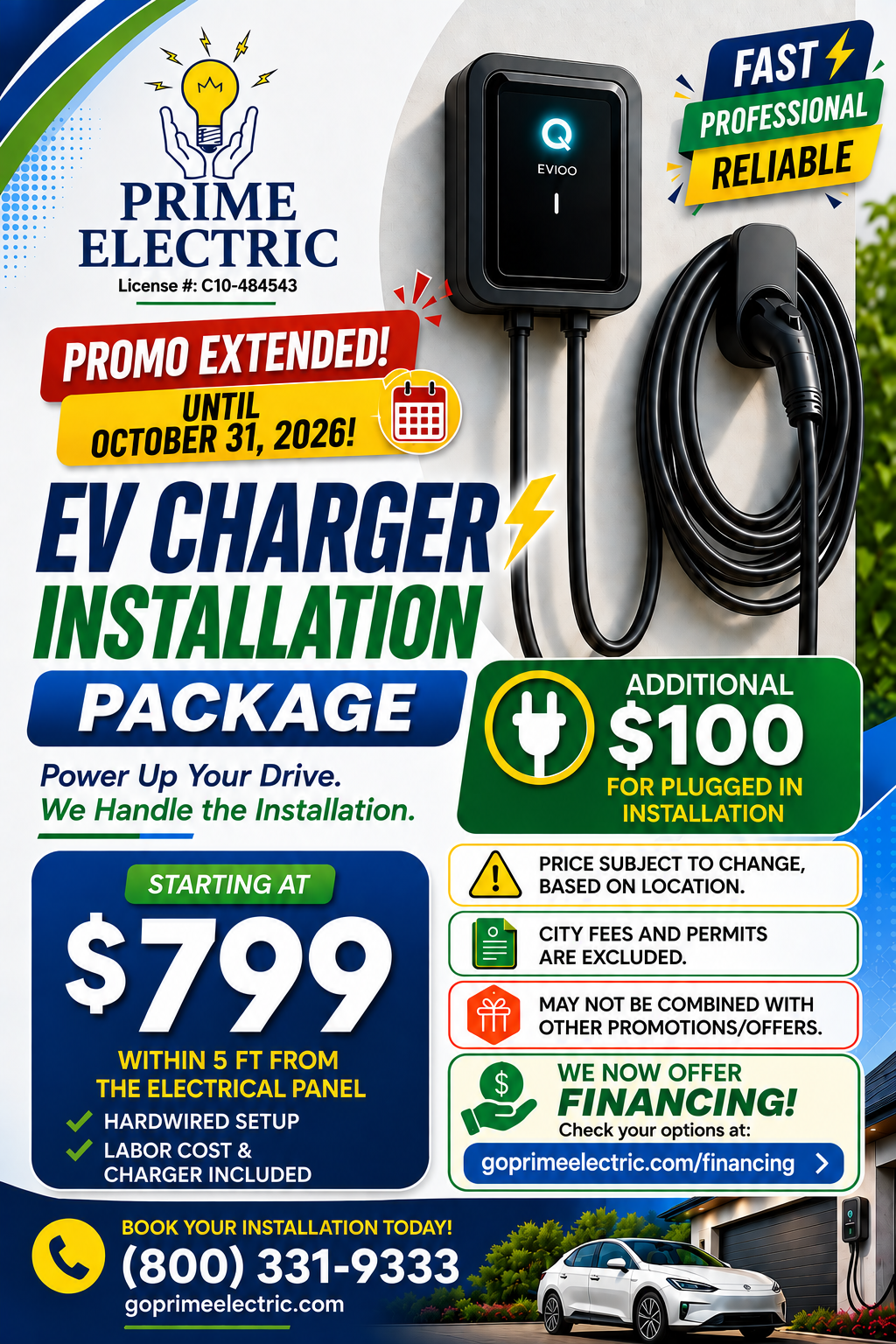
The price to install an EV charger varies because the charger itself is only one piece of the job. The final cost depends on the amperage, wiring distance, panel condition, wall access, permit requirements, and whether upgrades are needed.
A simple installation close to the panel will cost less than one that requires a long conduit run across the property. A home with sufficient panel capacity will cost less than one needing a service change. Detached garages, older homes, and high-output chargers tend to increase the scope.
That is why accurate estimates matter. A low quote that ignores panel limitations or permit requirements is not a bargain. It is often just an incomplete job description.
DIY is rarely worth the risk
Homeowners sometimes ask whether they can handle the installation themselves. Technically, some parts may seem manageable, especially if a charger uses a receptacle connection. But EV charging is a continuous high-load application, and mistakes with breaker sizing, wire gauge, torque settings, or grounding can create real hazards.
There is also the issue of warranty protection, inspection approval, and insurance. If a charger fails, overheats, or damages equipment because it was installed incorrectly, the savings from doing it yourself disappear fast.
For most people, this is not the place to experiment. A licensed electrician brings the tools, code knowledge, and troubleshooting ability to get it right the first time.
When homes need more than just a charger
Sometimes the charger project reveals broader electrical needs. If your lights flicker, breakers trip regularly, or your panel is outdated, the charger is only part of the conversation. You may need panel replacement, circuit reconfiguration, grounding corrections, or wiring upgrades to support the new load safely.
That can feel like a bigger commitment up front, but it often protects the property long term. Many owners would rather address known electrical limitations now than install around them and run into problems later.
For homes, multifamily properties, and commercial sites across Los Angeles, the best EV charger installation is one that considers the whole system. Prime Electric approaches these projects with that mindset – licensed, insured, code-focused, and backed by decades of electrical experience.
If you are planning to charge at home, think beyond the box on the wall. The right installation should fit your vehicle, your property, and your electrical system without cutting corners. A charger should make daily life easier, and when the work is done properly, that is exactly what it does.