Repair vs Replace Electrical Panel: How to Decide
[ez-toc]
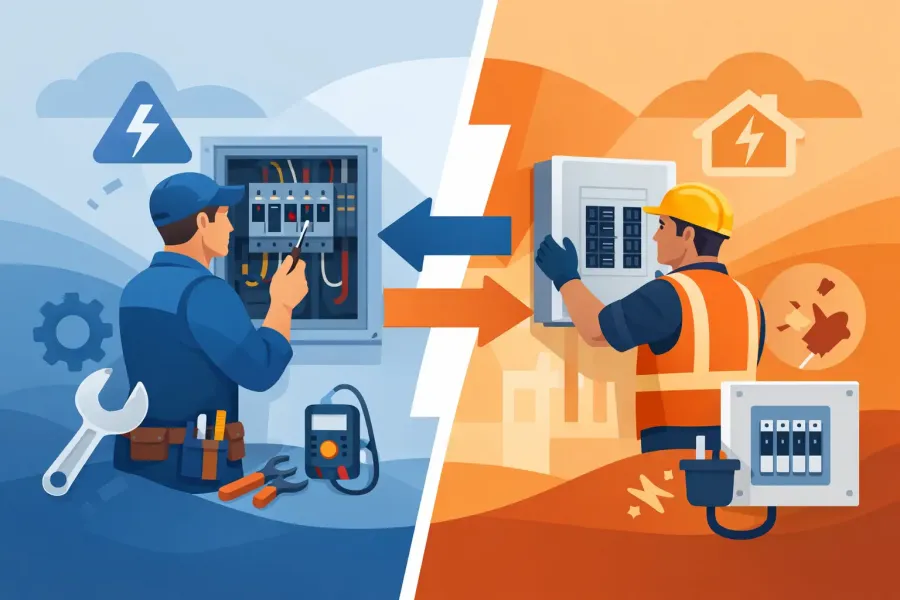
A breaker that trips during normal use, lights that flicker when the air conditioner starts, or a warm electrical panel cover is more than an inconvenience. The repair vs replace electrical panel decision affects your property’s safety, capacity, reliability, and future electrical costs. A targeted repair can be the right answer for a newer, otherwise sound panel. But when the panel is obsolete, damaged, overloaded, or unable to support modern electrical demand, replacement is usually the safer long-term investment.
For homeowners, property managers, and business owners in Los Angeles, the right choice begins with a professional inspection. Electrical panels are not DIY equipment. They contain energized components, and the visible symptom is not always the root problem.
When Electrical Panel Repair Makes Sense
Repair is often appropriate when the panel itself is in good condition and the problem is limited to an individual component or connection. A licensed electrician may be able to correct a loose connection, replace a failed circuit breaker, repair damaged wiring at the panel, label circuits correctly, or resolve a nuisance-tripping issue caused by a specific appliance or overloaded branch circuit.
For example, a relatively modern panel with one breaker that will not reset does not automatically need a full replacement. The breaker may be defective, the circuit may have a short, or an appliance connected to that circuit may be drawing too much current. The proper repair depends on testing the circuit, breaker, wiring, and connected load.
Repair can also be a sensible option after minor physical damage, provided the panel enclosure, bus bars, main breaker, and internal components remain safe and compliant. The goal is not simply to restore power. It is to identify why the issue occurred and confirm the repair will hold up under normal use.
A repair is generally worth considering when the panel has adequate amperage for the property, replacement parts are available and approved, there is no corrosion or overheating, and the panel has room for necessary circuits. The condition of the service equipment matters just as much as its age.
Signs You Should Replace an Electrical Panel
Some electrical panel problems are warnings that a repair may only delay a larger failure. Replacement becomes the responsible choice when the equipment cannot reliably distribute power or protect the building from electrical faults.
A panel should be evaluated for replacement if breakers trip frequently without a clear appliance-related cause, the panel feels warm, there is a burning odor, buzzing is heard inside the enclosure, or there are signs of rust, water intrusion, scorching, or melted insulation. These conditions can point to loose connections, damaged bus bars, overloading, or internal arcing. Each carries a real fire and shock hazard.
Older panels may also present a concern because of their design, condition, or limited availability of safe replacement components. Certain legacy panel brands have known safety concerns, while other outdated panels simply cannot support the electrical needs of a remodeled home, a commercial tenant improvement, or modern equipment. A professional assessment can identify whether a specific panel is still suitable for service.
Capacity is another major factor. Many older homes were built with 60-amp or 100-amp service. That may have been enough before central air conditioning, electric dryers, pool equipment, larger kitchen loads, EV chargers, home offices, and high-demand electronics became common. If the service is consistently near capacity, adding more breakers is not a real solution. A properly sized panel and service upgrade may be needed.
Repair vs Replace Electrical Panel: The Capacity Question
The most practical way to approach repair vs replace electrical panel decisions is to ask whether the existing system can safely support the load you have now and the load you expect to add soon. A panel that works today but has no room for a planned EV charger, heat pump, addition, or new commercial equipment may be a poor candidate for repeated small upgrades.
An electrician can perform a load calculation to estimate demand based on the property’s appliances, HVAC equipment, lighting, receptacle loads, and specialty systems. This is especially valuable for commercial spaces and industrial facilities, where machinery, compressors, data systems, and dedicated equipment circuits can create significant demand.
A panel replacement may also provide needed space for code-required protection. Modern upgrades often involve arc-fault or ground-fault circuit interrupter protection in applicable areas, improved grounding and bonding, surge protection, and clearer circuit identification. These improvements help protect people, electronics, and equipment, but they must be designed around the property’s actual electrical system.
What a Panel Replacement Can Include
Replacing a panel is not always limited to swapping one metal box for another. The scope depends on the condition of the existing service, utility requirements, building use, and local code requirements. In some cases, the work involves a panel-only replacement. In others, it may include a service upgrade, new meter equipment, grounding improvements, feeder replacement, or new circuits for added loads.
For a home, common reasons for replacement include an EV charger installation, major kitchen remodel, solar-related electrical changes, added air conditioning, a pool or spa, or a detached accessory space. For commercial and industrial properties, replacement may support tenant improvements, machinery upgrades, code corrections, expanded data infrastructure, or increased production loads.
Because panel work can require permits, utility coordination, inspections, and a temporary power shutdown, planning matters. A qualified electrical contractor should explain the proposed scope clearly, identify what is included, and discuss how power interruptions will be handled. Transparent planning prevents surprises for residents, tenants, employees, and customers.
Cost Is Important, but So Is the Risk of Waiting
Repair usually costs less upfront than replacement, especially when the issue is isolated to a breaker, terminal, or branch circuit. Replacement has a higher initial cost because it can involve new equipment, labor, permits, inspections, service components, and code upgrades. However, the lowest immediate price is not always the lowest cost over time.
Repeated breaker replacements, constant troubleshooting, and limitations on new circuits can add up. More importantly, an aging or damaged panel can place a property at risk of unexpected outages, equipment damage, failed inspections, insurance concerns, or electrical fire. For a business, a panel failure can interrupt operations and create costs far beyond the electrical repair itself.
The right estimate should not be a guess based solely on the panel’s appearance. It should account for panel condition, amperage, available capacity, wiring condition, access, permit needs, and the specific equipment the system must serve. Be cautious of anyone who recommends a full panel replacement without inspection or promises a quick repair without diagnosing the cause.
Why a Professional Inspection Matters
A panel may look fine from the outside while having overheated connections or damaged components inside. Conversely, a panel that appears old may still be serviceable with a specific repair. Only a trained electrician can safely open, test, and evaluate energized equipment while considering the entire electrical system.
During an inspection, the electrician should look for signs of overheating, corrosion, improper breaker types, double-tapped conductors, inadequate grounding or bonding, overcrowding, damaged wire insulation, and load concerns. They should also ask about recent changes, such as new appliances, tripping patterns, remodeling work, water leaks, or additions to the property.
For Los Angeles-area property owners, working with a licensed and insured contractor matters. Panel work is a safety-critical service that should be completed to applicable code requirements, with permits and inspections when required. Prime Electric brings more than 40 years of electrical experience to residential, commercial, and industrial panel evaluations, with workmanship backed by a warranty.
Common Questions About Panel Decisions
Can I just install a larger breaker?
Not unless the wire, circuit design, and connected equipment are rated for that larger breaker. Installing an oversized breaker can allow wiring to overheat before the breaker trips. If a circuit cannot handle the load, the solution may be a dedicated circuit, correctly sized wiring, or an equipment repair.
Does frequent breaker tripping mean the panel is bad?
Not necessarily. A tripping breaker may be doing its job by responding to an overload, short circuit, ground fault, or failing appliance. Frequent tripping is still a reason to schedule service, because the underlying cause needs to be located and corrected.
How long does an electrical panel last?
There is no single expiration date. Service life depends on the manufacturer, installation quality, electrical demand, environmental exposure, maintenance history, and whether the equipment has experienced heat or water damage. Condition and capacity should drive the decision, not age alone.
If your panel is showing warning signs or no longer keeps up with your property, do not wait for a total failure to get answers. A careful inspection can clarify whether a focused repair protects your investment or whether replacement gives you the safer, more dependable path forward.