Arc Fault Versus GFCI Breakers Explained
[ez-toc]
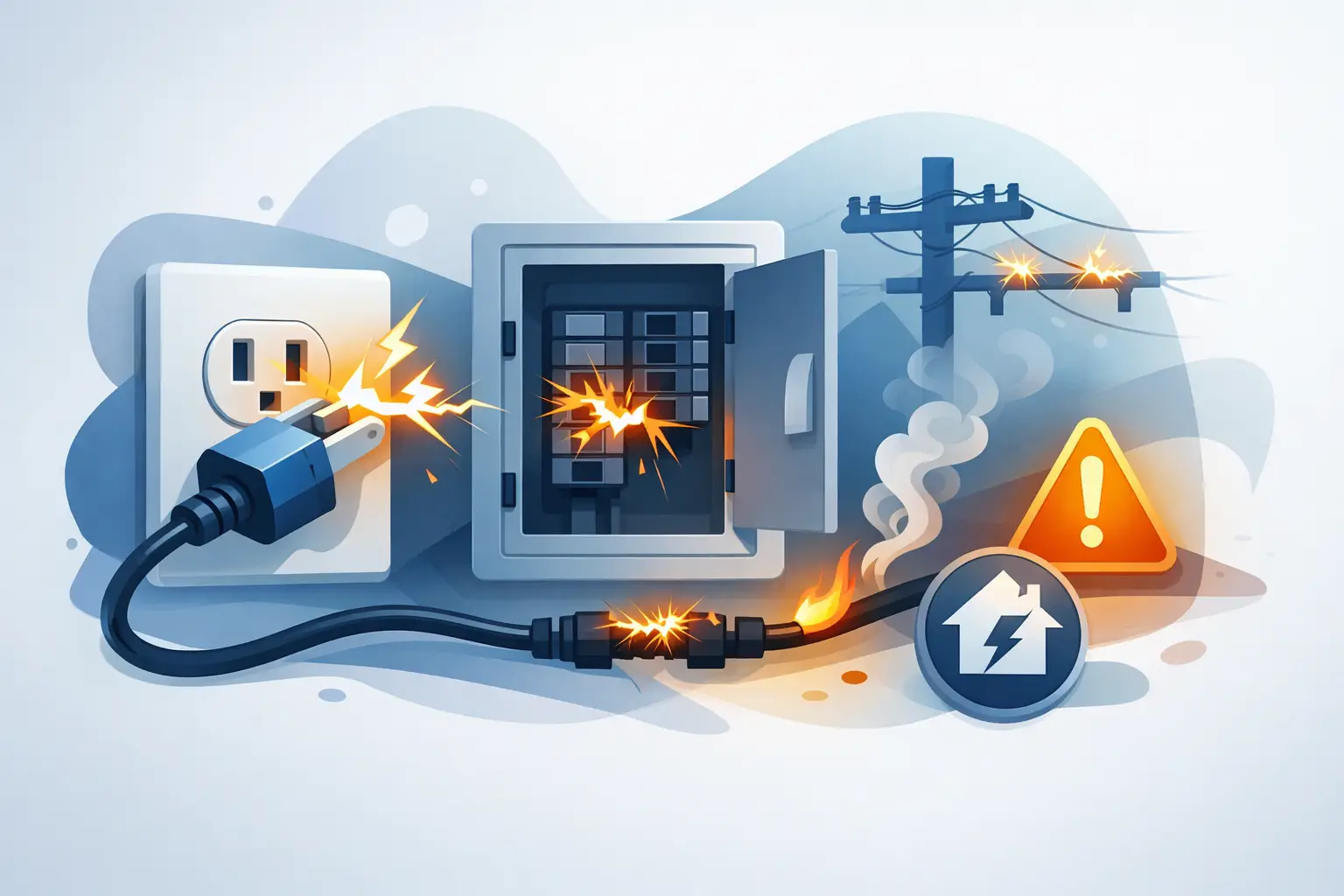
A breaker may look fine in the panel and still leave a serious safety gap. The question of arc fault versus GFCI breakers comes up most often during a panel upgrade, remodel, inspection correction, or when a breaker begins tripping unexpectedly. Both devices improve electrical safety, but they respond to very different hazards. Choosing the wrong one – or assuming one replaces the other – can create code issues and leave people or property less protected.
For Los Angeles homes, rental properties, offices, and facilities, the right answer depends on the circuit location, the equipment it serves, the age and condition of the wiring, and current electrical code requirements. A licensed electrician can identify the protection your circuit needs without turning a simple repair into guesswork.
What an Arc Fault Breaker Protects Against
An arc-fault circuit interrupter, commonly called an AFCI breaker, is designed to detect dangerous electrical arcing. An arc occurs when electricity jumps across a gap or travels through an unintended path. Unlike the visible spark from a loose plug, many damaging arcs happen inside walls, junction boxes, cords, or damaged wiring where no one sees them.
Arcing can result from a loose terminal, a nail through a cable, worn insulation, a damaged appliance cord, or aging wiring connections. The current may not be high enough to trip a standard breaker, yet the heat from repeated arcing can damage insulation and ignite nearby materials. AFCI breakers analyze the electrical waveform for signatures associated with hazardous arcs and shut off the circuit when those signatures are detected.
AFCI protection is commonly associated with living areas and other spaces where branch-circuit wiring runs through walls and serves everyday outlets, lighting, and appliances. Requirements have expanded over successive electrical code cycles, so the exact scope depends on the property, the work being performed, and the code adopted by the local authority having jurisdiction.
AFCI breakers are not just for old wiring
Older homes can certainly have loose or deteriorated connections, but new wiring can also develop faults. Construction damage, improperly tightened terminals, overloaded extension cords, and wear from normal use can all create arcing conditions. AFCI protection is one layer of defense, not a substitute for properly installed wiring, quality devices, and routine repairs.
What a GFCI Breaker Protects Against
A ground-fault circuit interrupter, or GFCI breaker, is designed primarily to reduce the risk of electric shock. It monitors the current leaving on the hot conductor and compares it with the current returning on the neutral conductor. If even a small amount of current is leaking somewhere else – potentially through water, grounded metal, or a person – the GFCI trips quickly.
GFCI protection is especially critical where electricity and moisture can meet. In homes, that often includes bathrooms, kitchens, garages, laundry areas, outdoor locations, crawl spaces, unfinished basements, and areas near pools or spas. Commercial and industrial applications may require GFCI protection in wet, damp, maintenance, exterior, or equipment-specific locations as well.
A GFCI receptacle can protect itself and downstream receptacles when installed and wired correctly. A GFCI breaker protects the entire circuit from the electrical panel onward. The better choice depends on the circuit layout, accessibility, equipment served, panel compatibility, and the protection required by code.
A GFCI does not prevent every electrical problem
A GFCI is extremely effective at detecting ground faults, but it is not intended to detect the arcing patterns an AFCI recognizes. It also does not replace a standard overcurrent breaker. Every circuit still needs overcurrent protection sized correctly for its wiring and load.
Arc Fault Versus GFCI Breakers: The Practical Difference
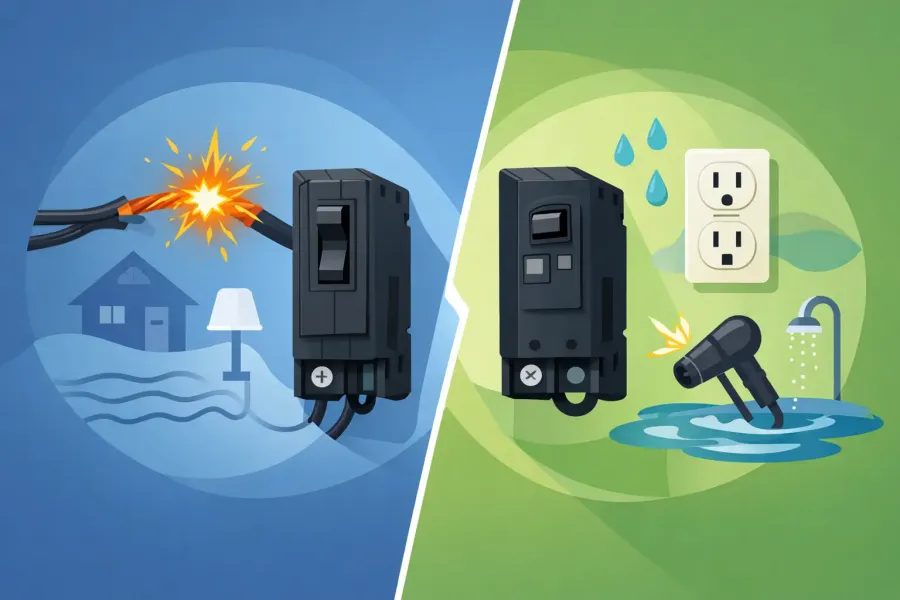
The simplest distinction is this: AFCI protection is focused on fire risks from arcing, while GFCI protection is focused on shock risks from current leakage to ground. Both trip a circuit, but they are looking for different evidence of danger.
Consider a bedroom circuit with a loose connection inside a receptacle box. The connection may arc intermittently, heat up, and damage the box or surrounding materials. An AFCI breaker is designed to recognize that type of event. Now consider a bathroom receptacle where a hair dryer falls into water or a damaged cord contacts a grounded surface. A GFCI device is designed to interrupt power rapidly when current takes an unintended path.
Neither device should be viewed as optional where protection is required. The correct installation may call for AFCI protection, GFCI protection, or both. That is why an electrician begins with the circuit purpose and location rather than selecting a breaker based only on what is currently installed.
When a Dual-Function Breaker Makes Sense
A dual-function breaker combines AFCI and GFCI protection in one device. It can be a practical choice for circuits that require both types of protection, particularly during a panel upgrade, kitchen renovation, laundry circuit update, garage conversion, or major wiring replacement.
Dual-function breakers can simplify protection at the panel, but they must be matched to the panel manufacturer and the specific circuit. Breakers are not interchangeable simply because they appear to fit. Installing an unlisted or incompatible breaker can compromise the panel, create reliability problems, and violate listing requirements.
It also helps to understand the terminology. A “combination AFCI” is not necessarily a dual-function AFCI/GFCI breaker. In electrical terminology, combination AFCI refers to an AFCI design capable of detecting multiple types of arcs. If you need protection against both arc faults and ground faults, confirm that the breaker is specifically rated as dual function.
Why These Breakers Sometimes Trip
A tripping AFCI or GFCI is not automatically a bad breaker. It may be doing exactly what it was designed to do. Repeated tripping deserves attention because it can point to a damaged cord, moisture intrusion, failing appliance, loose connection, wiring defect, or an installation issue.
With GFCI circuits, common causes include outdoor moisture, worn appliance cords, pool or spa equipment problems, improperly connected neutral conductors, and leakage from electronic equipment. With AFCI circuits, common concerns include loose devices, damaged wiring, aging appliances, certain motor loads, or shared-neutral wiring that was acceptable under an older installation method but conflicts with a modern AFCI setup.
The right response is not to replace a protective breaker with a standard breaker just to stop the nuisance. That removes a safety feature without resolving the reason it operated. A qualified electrician can isolate the circuit, inspect connections, test appliances, verify neutral wiring, and determine whether the breaker itself is defective or responding to a real fault.
Panel Upgrades and Older Los Angeles Properties
Many Los Angeles-area properties have older panels, original branch wiring, additions completed over different decades, or circuits that have been modified several times. These conditions can complicate AFCI and GFCI upgrades. Shared neutrals, mixed wiring methods, bootleg grounds, deteriorated insulation, and overloaded circuits may not become obvious until new protection is installed.
That does not mean a safety upgrade is a bad idea. It means the work should be planned properly. During a panel replacement or remodel, a licensed electrician should evaluate circuit labeling, conductor condition, grounding and bonding, neutral configuration, load capacity, and the equipment requirements before selecting breakers.
For rental owners and property managers, documentation matters too. Clear circuit labeling, professional repairs, and code-conscious upgrades help reduce tenant disruption and provide a more defensible maintenance record. For business owners, reliable protective devices can help prevent downtime caused by damaged circuits and equipment faults.
Do You Need an AFCI, GFCI, or Both?
There is no responsible one-size-fits-all answer. A bedroom receptacle circuit may need AFCI protection. A garage receptacle circuit may need GFCI protection and, depending on the installation and applicable code, may also require AFCI protection. A kitchen, laundry, accessory dwelling unit, remodeled space, or newly added circuit often requires careful review because location-based rules and renovation scope can affect what must be installed.
A professional assessment is particularly worthwhile if you are replacing a panel, adding an EV charger, remodeling a kitchen or bathroom, correcting an inspection item, upgrading a pool or spa circuit, or dealing with breakers that trip repeatedly. These are not situations where bypassing protection is worth the risk.
Prime Electric brings more than 40 years of electrical experience to residential, commercial, and industrial work across the Los Angeles area. A licensed, insured electrician can evaluate your panel and circuits, explain the protection your property needs, and complete the work cleanly and correctly. If a breaker is tripping or an upgrade is planned, getting the cause identified now is far safer than waiting for a small electrical warning to become a larger repair.