Pool and Spa Wiring Requirements Explained
[ez-toc]
A new pool or spa gets people thinking about tile, pumps, lights, and heater size. The wiring is usually an afterthought until inspection fails or a safety issue shows up. That is why understanding pool and spa wiring requirements matters early, before concrete is poured, equipment is set, or a breaker keeps tripping for reasons no one can explain.
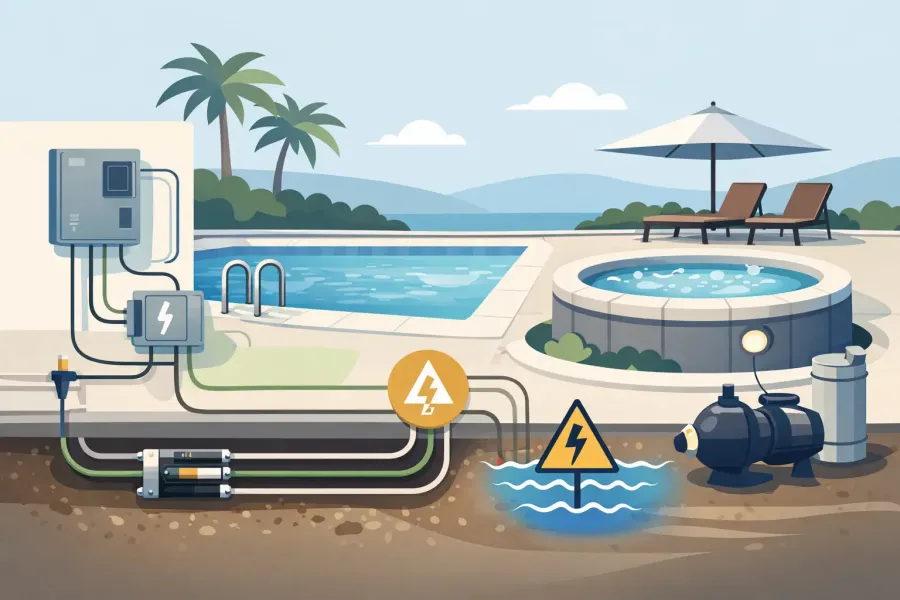
Pool and spa electrical work is not ordinary backyard wiring. Water changes the risk level, and code rules are stricter for good reason. A safe installation depends on proper circuit sizing, bonding, grounding, GFCI protection, approved disconnects, and equipment that is installed with the right clearances. Miss one piece, and the whole system can become unreliable or unsafe.
Why pool and spa wiring requirements are stricter
Swimming pools and spas combine electricity, metal components, wet surfaces, and bare feet. That combination raises the chance of shock if the system is not designed and installed correctly. The rules are built to reduce that risk, not just to satisfy an inspector.
In practical terms, code compliance protects people and equipment. Proper bonding helps equalize electrical potential between metal parts. Grounding gives fault current a safe path. GFCI protection shuts power off quickly when a dangerous imbalance is detected. A disconnect within sight of equipment makes service safer. These are not add-ons. They are core safety measures.
For homeowners and property managers, the biggest mistake is assuming a pool installer handles everything electrical to the same standard as a licensed electrical contractor. Sometimes they coordinate it well. Sometimes they subcontract. Sometimes a project ends up with unclear responsibility between trades. That is where delays, corrections, and expensive rework start.
The core electrical requirements for pools and spas
The exact setup depends on the pool or spa type, the equipment package, and local code enforcement, but several requirements show up on most jobs.
Dedicated circuits and correct load calculations
Pool pumps, heaters, blowers, automation systems, lights, and convenience receptacles often need separate circuits. The size of those circuits depends on the equipment nameplate ratings, voltage requirements, and whether loads run continuously. A spa heater or pool heat pump can change the service demand significantly, especially at homes with older panels.
This is where load calculation matters. If the panel is already crowded or the electrical service is undersized, adding pool equipment may require a subpanel, breaker rearrangement, or a full service upgrade. Skipping that step can leave a property with nuisance trips or overheated conductors.
GFCI protection
GFCI protection is a major part of pool and spa wiring requirements. Many pool and spa components must be GFCI protected, including receptacles in required locations and specific equipment depending on the installation. The goal is simple: shut the circuit off fast if electricity starts going where it should not.
People sometimes think a single GFCI device covers everything. That is not always true. Protection has to be applied correctly based on the type of equipment, the circuit design, and current code requirements. The right answer depends on the layout.
Bonding and grounding
Bonding and grounding get confused all the time, but they do different jobs. Grounding connects the electrical system to earth and provides a path for fault current. Bonding connects metal parts together so they stay at the same electrical potential.
Around pools and spas, bonding may include metal piping, metal fittings, pump motors, structural steel, and other conductive parts near the water. If bonding is incomplete, dangerous voltage differences can exist even when everything looks normal. This is one of the most critical parts of the installation and one of the least visible once the job is finished.
Disconnects and equipment location
Pool and spa equipment usually needs a disconnecting means that is accessible and properly located. Equipment also has clearance requirements for safe servicing and ventilation. In addition, receptacles, switches, lights, and electrical equipment have minimum distance rules from the water depending on what they are and how they are protected.
These spacing rules are easy to get wrong during remodels. A new spa added near an existing patio outlet or light switch can create a code issue that did not exist before. What worked for the old layout may not work after the upgrade.
Common equipment that affects wiring design
Not every pool or spa is wired the same way. A basic pump and light setup is very different from a high-end installation with automation, multiple bodies of water, electric heat, water features, and landscape lighting tied into the same system.
Pumps and motors
Variable-speed pumps are common because they improve efficiency, but they still need proper circuit protection and manufacturer-compliant wiring. Motor loads must be handled correctly, and disconnecting means must be suitable for the equipment.
Heaters and heat pumps
Gas heaters often have electrical control requirements even though they are not electric heat. Electric heaters and heat pumps can place a substantial demand on the panel. In older Los Angeles homes, that can be the component that turns a simple wiring job into a panel upgrade project.
Underwater and landscape lighting
Pool lights involve very specific safety rules. Fixtures, junction boxes, transformers, conduit methods, and placement all matter. The same goes for nearby low-voltage lighting if it is installed close to the water. Lighting is one area where shortcuts create real shock hazards.
Automation and controls
Modern pool systems often include app-based controls, timers, relays, and integration with landscape or home systems. Those features add convenience, but they also add complexity. Clean, organized wiring and correct labeling make future service much easier.
Permits, inspections, and local enforcement
In most cases, pool and spa electrical work requires a permit and inspection. That is not red tape for the sake of it. It is how safety gets verified before the system is put into regular use.
Local enforcement can also affect details. National code sets the baseline, but local jurisdictions may have amendments, inspection preferences, or utility coordination requirements. In Los Angeles area projects, that local experience matters. A contractor who works in the area regularly understands how to prepare a job so it moves through inspection with fewer surprises.
Where DIY and handyman work usually goes wrong
The biggest issue is not always visible poor workmanship. More often, it is incomplete planning. A circuit may be installed without accounting for total load. Bonding may be partially done but not fully continuous. A disconnect may be present but in the wrong location. Equipment may function, yet still fail inspection or create a safety concern.
Another common problem is mixing old and new electrical work without addressing the entire system. A homeowner adds a spa to an existing patio area, but the panel lacks capacity, receptacle placement is no longer compliant, and the bonding path is questionable. The project appears close to done, then stalls when inspection identifies corrections.
For property managers and commercial owners, there is also liability to think about. If a pool, spa, or related amenity is serving tenants, guests, or customers, code compliance is more than a convenience. It is part of responsible facility management.
What to expect from a professional installation
A qualified electrician starts by reviewing the full equipment list, the panel capacity, the site layout, and the permit requirements. From there, the work should be planned around safe routing, correct conductor sizing, proper protection, and a clean equipment setup that can be serviced later without guesswork.
Good electrical work on a pool or spa project also means coordination. Electricians often need to work alongside pool builders, plumbers, inspectors, and sometimes gas contractors. Timing matters. Bonding needs to happen before certain surfaces are finished. Conduit and stub-ups need to be placed before decking or hardscape closes everything in.
For customers, the value of hiring an established licensed and insured contractor is straightforward. You want the work done safely, documented properly, and built to last. Prime Electric has spent more than 40 years earning trust on projects where reliability and code compliance are not optional.
When an upgrade may be required
Sometimes the wiring itself is only part of the job. If the existing panel is outdated, undersized, or full, a pool or spa addition may trigger broader electrical upgrades. That can include a subpanel, breaker replacement, service equipment improvements, or replacing deteriorated wiring feeding the backyard equipment area.
That does increase project scope, but it can also prevent future failures. It is better to identify those needs early than to install expensive pool equipment on an electrical system that cannot support it reliably.
If you are planning a new installation, a remodel, or troubleshooting an existing setup, the best next step is to have the electrical side evaluated before the project gets too far along. Pool and spa wiring requirements are detailed because safety depends on details. Getting them right from the start gives you a system that works the way it should and a backyard you can use with confidence.