Why Does Breaker Keep Tripping at Home?
[ez-toc]
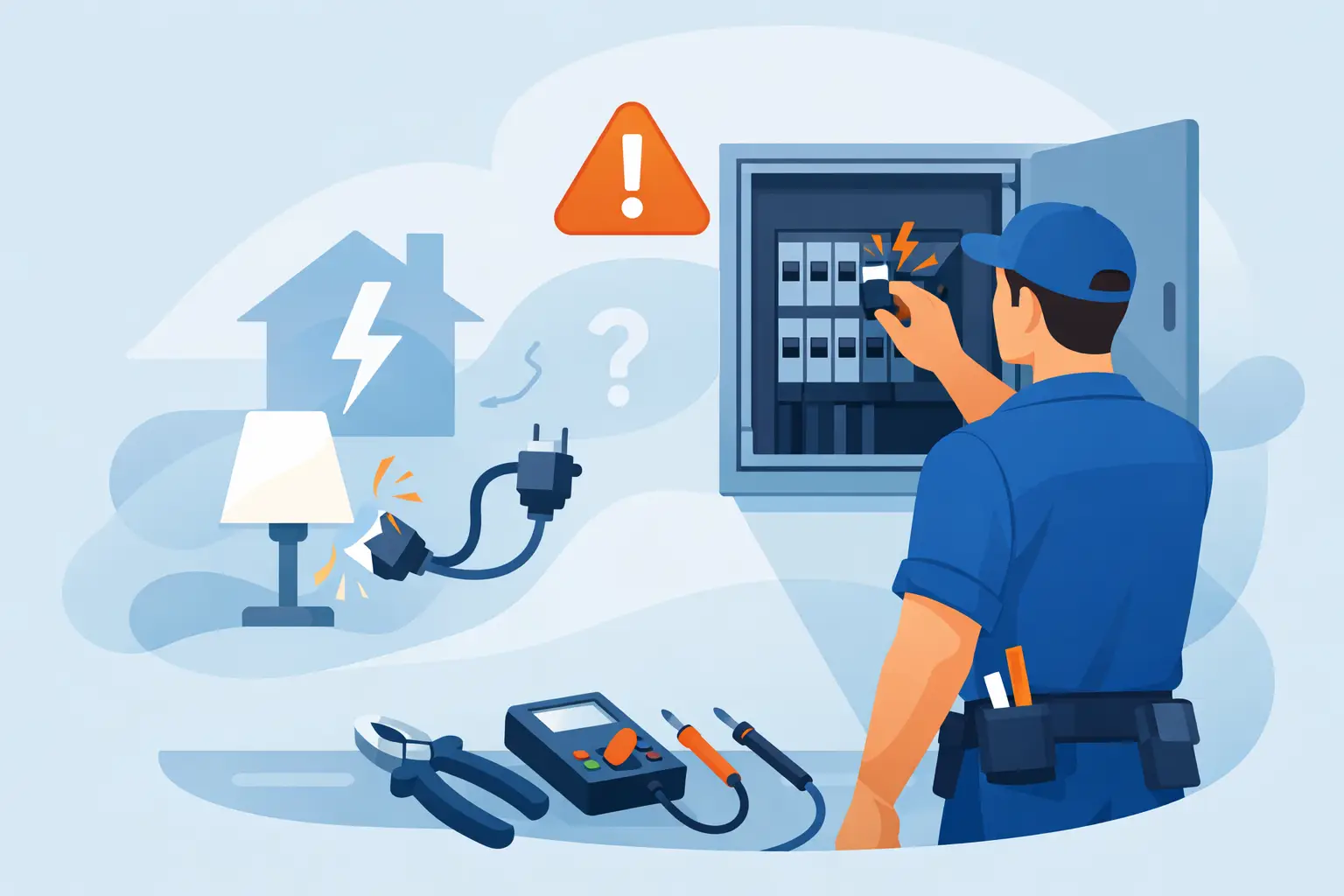
If you are asking, why does breaker keep tripping, the short answer is that your electrical system is trying to protect you. A circuit breaker shuts power off when it senses a problem such as an overloaded circuit, a short, a ground fault, or an issue inside the panel itself. That trip is not the main problem. It is the warning sign.
For homeowners, property managers, and business owners, that distinction matters. Resetting a breaker once may get the lights back on. Resetting it over and over without finding the cause can put wiring, appliances, and people at risk. In some cases, it is a minor load issue. In others, it points to damaged wiring, a failing breaker, or equipment that should not stay energized.
Why does breaker keep tripping? The most common causes
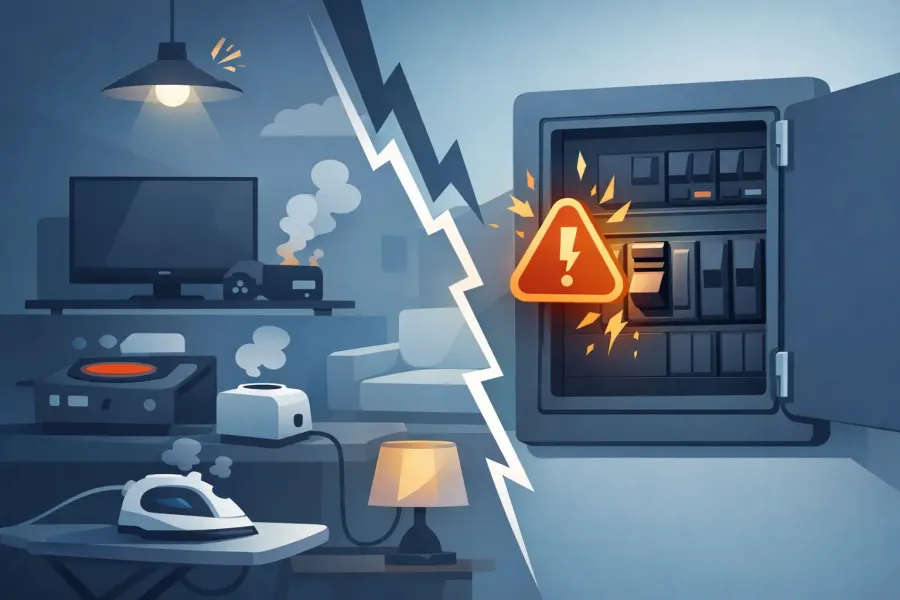
Most repeat breaker trips come down to a handful of issues. The first is an overloaded circuit. This happens when too many devices pull power from the same branch circuit at the same time. Space heaters, microwaves, hair dryers, portable AC units, refrigerators, and garage equipment are common examples. In commercial or industrial settings, the same idea applies to office equipment, compressors, or machinery drawing more current than the circuit is designed to handle.
Another common cause is a short circuit. A short happens when a hot wire touches a neutral wire, creating a sudden surge of current. This can occur inside an outlet, switch, light fixture, appliance cord, or behind the walls where wiring has been damaged. Short circuits usually trip a breaker immediately and may leave signs such as a burned smell, discoloration, or sparking.
Ground faults are similar but slightly different. Instead of hot touching neutral, the hot conductor contacts a grounded surface. Kitchens, bathrooms, garages, outdoor areas, pool equipment areas, and commercial washdown spaces are more prone to this because moisture increases the risk. If a breaker associated with those spaces trips repeatedly, a ground fault should be taken seriously.
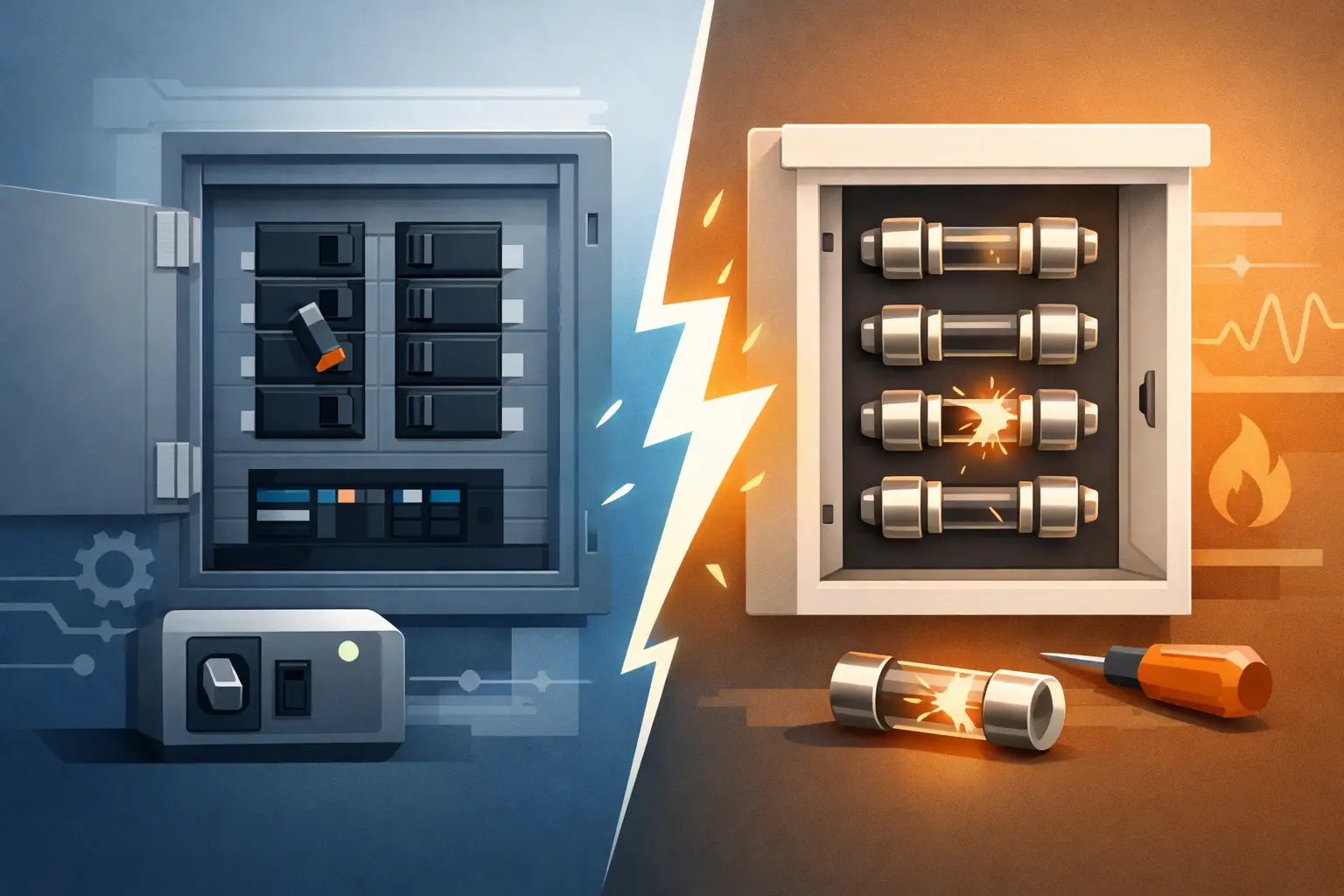
Then there is the breaker itself. Breakers do wear out. A weak or defective breaker may trip too easily or fail to hold under normal load. That does not mean every tripping breaker is bad, but it is one possibility an experienced electrician should evaluate, especially in older panels.
Signs the problem is more than a temporary overload
Sometimes the issue is straightforward. You run a toaster oven, coffee maker, and microwave together, and the kitchen breaker trips. That points to load management or the need for a dedicated circuit. But some symptoms suggest a deeper electrical fault.
If the breaker trips the moment you reset it, even with nothing obvious running, the problem may be a short, ground fault, or internal panel issue. If it trips only when a certain appliance turns on, the appliance itself may be faulty or the circuit may be undersized for its demand. If you notice buzzing at the panel, warm outlets, flickering lights, a burning odor, or visible damage, stop resetting the breaker and have the system inspected.
Age also matters. Many older Los Angeles properties were not designed for modern electrical use. Homes that once supported a few lights and basic appliances are now expected to handle EV charging, upgraded kitchen loads, home offices, HVAC equipment, and entertainment systems. The result is a panel and branch circuits that may be operating closer to their limits than intended.
Overloaded circuits are common, but not always simple
An overload sounds minor, but there are trade-offs. Sometimes the fix is as simple as redistributing what plugs in where. Other times, the pattern of use tells you the property needs an upgrade.
For example, if a bedroom breaker trips only when a portable heater is running, that may not mean anything is broken. Portable heaters draw a heavy load. If the circuit also serves lights, TVs, chargers, and adjacent receptacles, it may be doing exactly what it is supposed to do by tripping. The safe solution might be reducing the load, adding a dedicated circuit, or improving the overall capacity depending on how the space is used.
The same applies in business settings. A breaker that trips after new office equipment, refrigeration equipment, or production tools are added may be signaling that the electrical design no longer matches current demand. The answer is not to force it. The answer is to evaluate the load properly and correct it at the source.
When an appliance is the real problem
A circuit can be fine and still trip because one connected device is failing. This is common with older refrigerators, microwaves, dishwashers, disposal units, HVAC components, and shop tools. Internal motor issues, damaged cords, moisture intrusion, or worn insulation can all cause a breaker trip.
A useful clue is timing. If the breaker holds until a specific machine starts, that equipment needs attention. If the breaker remains stable when that one item is unplugged, the appliance may be the cause. Even then, there can be overlap. A struggling motor may be exposing a marginal circuit that was already close to overload.
That is why proper diagnosis matters. Guessing often leads to replacing the wrong part or living with a recurring issue that gradually gets worse.
Why does breaker keep tripping in one room only?
When the issue stays isolated to one room or one area, the fault is usually tied to that branch circuit rather than the whole property. It could be too many plug-in devices, a damaged receptacle, loose wiring, a failing light fixture, or hidden damage from age, moisture, or previous work.
In rental properties and commercial spaces, this is especially common where rooms have been repurposed over time. A spare bedroom becomes an office. A storage room becomes a break room. A retail space adds more lighting and point-of-sale equipment. The circuit may still be the same one installed years ago, even though the electrical demand is no longer the same.
If only one room is affected, that is useful information, but it is not a reason to ignore it. Localized problems can still create serious fire and shock hazards.
What you can safely check before calling an electrician
There are a few basic observations you can make safely. Think about what was running when the breaker tripped. Unplug recently added devices. Check whether the issue happens only with one appliance or only at certain times. Look for obvious signs such as a wet outdoor receptacle cover left open, a damaged extension cord, or a scorched plug.
You can also reset the breaker once. Move it fully to the off position, then back on. If it trips again right away, stop there. Repeated resetting is not troubleshooting. It is bypassing a warning.
Do not remove panel covers, do not replace a breaker yourself unless you are a qualified professional, and do not assume a larger breaker is the fix. Installing an oversized breaker on a circuit with smaller wire can create a very dangerous condition because the wiring may overheat before the breaker trips.
When it is time to call a licensed electrician
Call for service if the breaker trips repeatedly, if it will not reset, if it affects major appliances or business equipment, or if you notice heat, odor, buzzing, or visible damage. Those are not wait-and-see issues.
A licensed electrician can test the breaker, inspect the circuit, evaluate connected loads, check for short circuits and ground faults, and determine whether the problem is the wiring, the device, the panel, or the overall capacity of the system. That is the difference between a temporary workaround and a real repair.
For property owners, there is another reason to act promptly: recurring breaker problems rarely stay isolated. The same conditions that trip one breaker may point to panel wear, aging wiring, poor previous workmanship, or service capacity issues that affect other circuits too.
Prime Electric handles breaker troubleshooting, panel repairs, wiring issues, dedicated circuits, and electrical upgrades for homes and businesses across the Los Angeles area. For customers who value licensed, insured work and clear answers, that kind of experience matters when the problem is tied to safety and uptime.
The goal is not just to reset power
A breaker is supposed to trip when something is wrong. That is the good news. It means the protection is responding. The next step is figuring out why.
Sometimes the answer is simple. Sometimes it points to wiring damage, an overloaded circuit, or a panel issue that needs professional repair. Either way, the safest move is to treat repeated tripping as a message, not a nuisance. If your breaker keeps tripping, get the cause identified and corrected before it turns into a larger and more expensive problem.