Best Commercial Backup Power Options for Businesses
[ez-toc]
A power outage can stop far more than the lights. For a commercial property, it can shut down point-of-sale systems, refrigeration, security cameras, elevators, network equipment, manufacturing controls, and essential safety systems. The best commercial backup power options are the ones matched to your actual loads, required runtime, building infrastructure, and local code requirements – not simply the largest system in the catalog.
For Los Angeles businesses and property managers, a well-planned backup power system protects revenue, tenant comfort, equipment, and customer confidence. It also needs to work when conditions are difficult, with proper transfer equipment, safe installation, routine testing, and a clear plan for which circuits receive emergency power.
Best Commercial Backup Power Options for Your Facility
Standby generators for longer outages
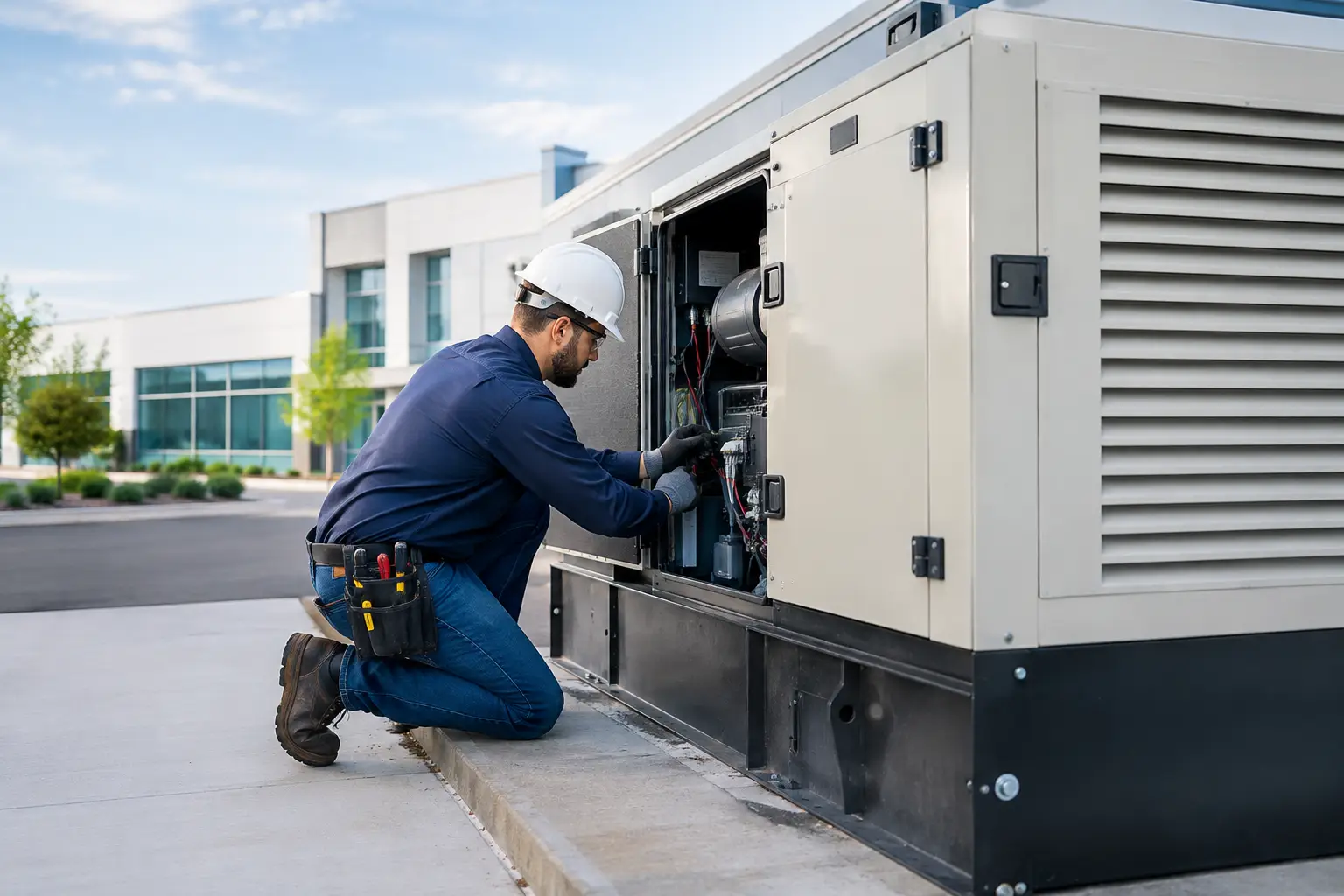
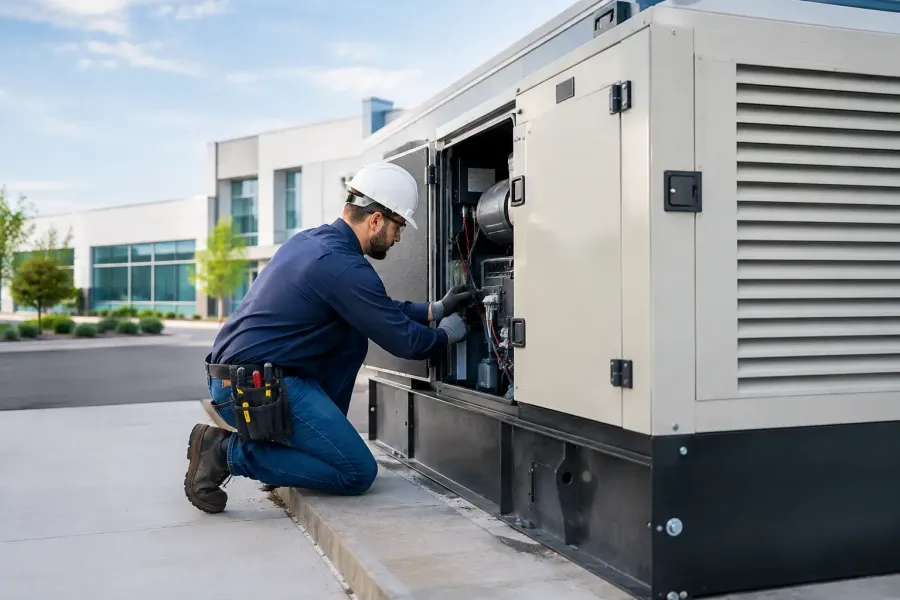
A permanently installed standby generator is the most familiar choice for businesses that need power for hours or days. When utility service fails, an automatic transfer switch disconnects the building from the utility source and starts the generator. Once stable power is available, the transfer switch moves selected electrical loads to generator power.
Standby generators commonly run on natural gas, propane, diesel, or, in some cases, other approved fuels. Natural gas can be convenient where service is reliable and fuel storage space is limited. Diesel generators are often selected for higher-capacity applications and critical facilities, but they require fuel storage, fuel management, and regular maintenance. Propane can be a practical option where natural gas is unavailable, although long runtimes require sufficient on-site fuel capacity.
This is generally the right solution for restaurants protecting refrigeration, medical or professional offices, multifamily buildings, warehouses, retail locations, and facilities with critical equipment. The trade-off is cost and complexity. A generator installation may involve load calculations, gas or fuel coordination, ventilation, exhaust routing, sound control, permits, seismic anchorage, and electrical upgrades.
A generator should not be sized by guessing at the building’s total service size. Many facilities only need to back up life-safety systems and a defined group of critical circuits. Separating essential loads from nonessential loads can reduce generator size and project cost while still keeping the business operational.
UPS systems for equipment that cannot blink
An uninterruptible power supply, or UPS, provides immediate battery-supported power when utility voltage drops or fails. Unlike a generator, which needs time to start and transfer, a properly selected UPS can keep sensitive loads energized without interruption.
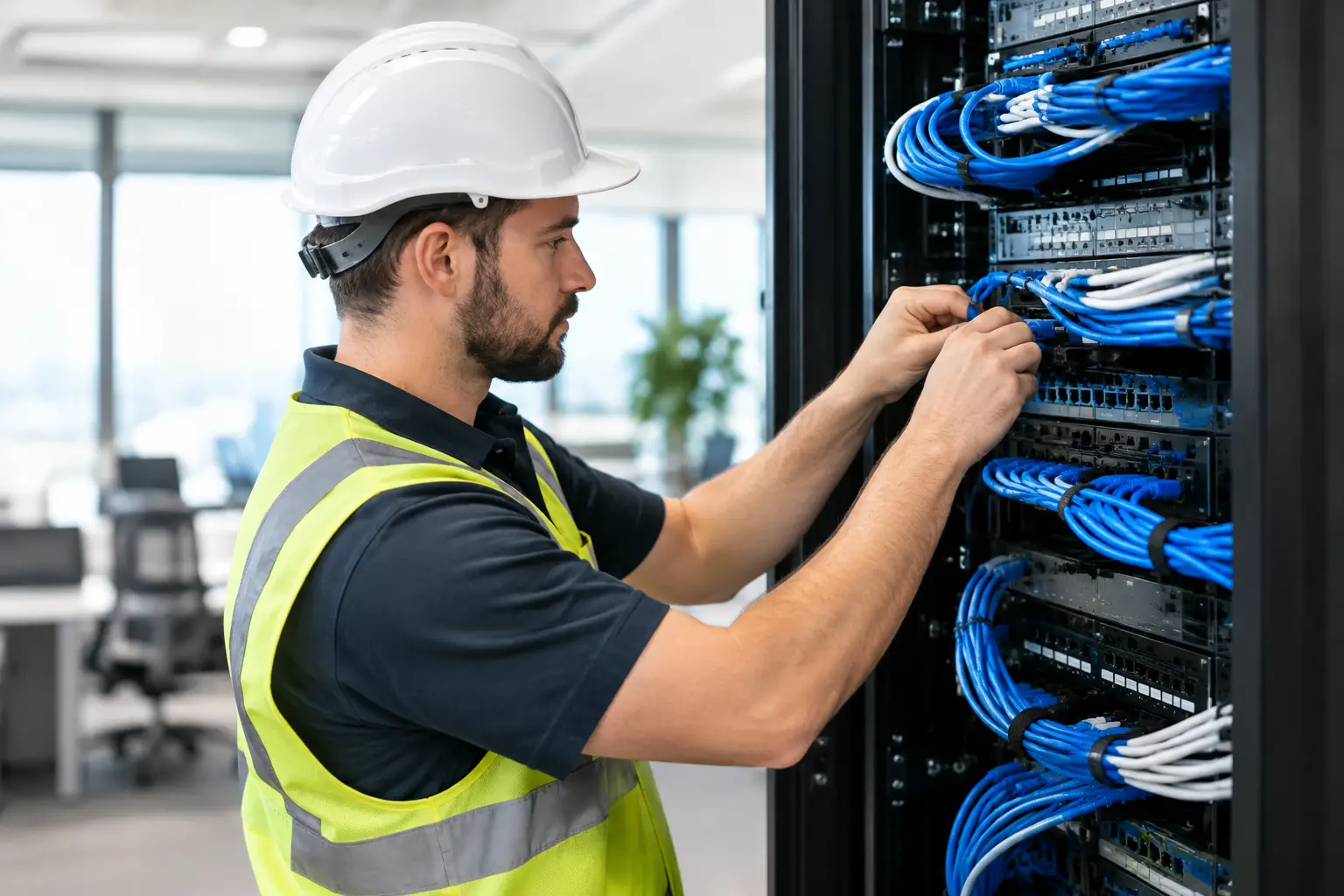
UPS systems are especially useful for server rooms, telecom equipment, network racks, access control, security systems, point-of-sale terminals, laboratory equipment, and computer-controlled machinery. They also protect equipment from short outages, voltage dips, and poor power quality that can cause data loss or unexpected shutdowns.
Most UPS systems are not intended to run a large facility for many hours. Their typical role is to provide a short bridge period – often minutes rather than hours – so equipment stays online until a generator takes over or staff can complete an orderly shutdown. Runtime depends on the battery bank and the connected load, so a UPS serving a few network switches may run far longer than one supporting a full server room.
For many commercial sites, the strongest design combines a UPS with a standby generator. The UPS handles the instant gap, while the generator supports extended operation. That combination is often worth considering when a brief interruption could disrupt customers, damage production, or corrupt critical data.
Battery energy storage for quieter, flexible backup
Commercial battery energy storage systems store electricity for use during outages and, depending on the equipment and utility program, may also help manage peak demand. These systems can operate quietly and produce no on-site exhaust, making them attractive for certain office, retail, hospitality, and mixed-use properties.
Battery backup is not automatically simpler than a generator. A commercial battery system requires careful engineering around capacity, discharge rate, inverter capability, room or outdoor placement, ventilation where applicable, fire protection requirements, and utility interconnection. The system must also be designed to safely isolate from the grid during an outage unless it is part of an approved microgrid arrangement.
The primary question is runtime. Batteries can be an excellent fit for critical loads with modest energy demand, such as communications, lighting, security, and selected office equipment. Backing up large HVAC equipment, electric heating, commercial kitchens, or heavy industrial loads can require a much larger and more expensive battery system.
Battery storage may make sense when noise restrictions, emissions concerns, limited fuel access, or frequent short outages shape the decision. It can also pair with solar, but solar panels alone do not necessarily provide power during a utility outage. The inverter, battery storage, disconnecting equipment, and control strategy all need to be designed for backup operation.
Portable generators for limited, temporary needs
Portable generators can help support a temporary operation, jobsite, small office, or isolated equipment load. They are less appropriate as a long-term solution for a building with critical operations. Portable units require manual setup, fuel handling, weather protection, safe cable routing, and close attention to carbon monoxide risks.
A portable generator must never feed a building through an improvised connection. Backfeeding power through an outlet or panel can energize utility lines, endanger workers, damage equipment, and create serious fire hazards. If a portable generator will supply selected building circuits, the facility needs an approved inlet, transfer switch or interlock, and properly designed wiring.
For a small business that only needs to keep a few devices running during an occasional outage, this approach can be cost-effective. For a property with tenants, sensitive equipment, or life-safety obligations, permanent equipment is usually the safer and more dependable answer.
How to Choose the Right Commercial Backup Power System
The right system begins with a load assessment. List the equipment that must remain energized, then identify its starting demand, running demand, voltage, phase, and tolerance for interruption. Motors, compressors, pumps, elevators, and HVAC equipment can have significant startup requirements that affect generator and inverter sizing.
Next, define the required runtime. A network closet may only need enough battery support for a controlled shutdown. A grocery operation, medical practice, apartment building, or industrial facility may need several hours or more. Fuel availability, refueling access, and the likelihood of extended regional outages all matter.
Also consider the difference between emergency, legally required standby, and optional standby power. Fire alarm systems, emergency lighting, exit signage, smoke control, and other life-safety equipment can be subject to specific code rules. A qualified electrical contractor can help determine which loads require dedicated emergency power equipment and which can be included as optional business-continuity loads.
Your installation should account for these practical factors:
- Available electrical capacity, panel space, and the condition of existing switchgear
- Generator placement, ventilation, exhaust clearances, fuel supply, sound levels, and access for service
- Transfer switch type, including whether critical loads need automatic transfer
- Battery room or outdoor enclosure requirements, fire safety provisions, and equipment cooling
- Required permits, inspections, testing, and maintenance documentation
In Los Angeles, site constraints can influence the design as much as electrical demand. Tight setbacks, neighboring properties, rooftop equipment, parking layouts, noise expectations, and seismic requirements may affect where equipment can be located. Planning early helps avoid selecting a system that cannot be installed safely or approved as designed.
Installation and Maintenance Matter as Much as Equipment
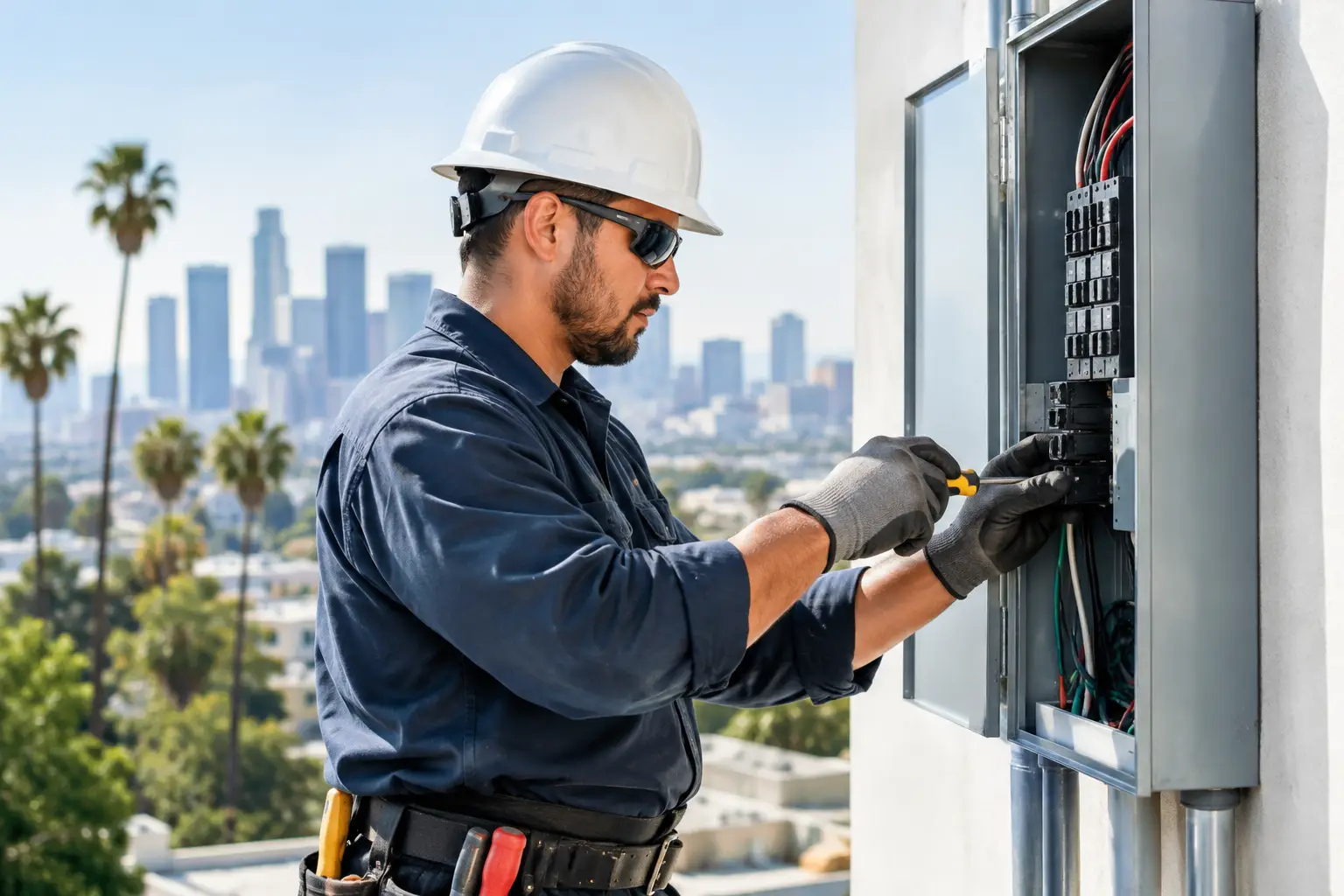
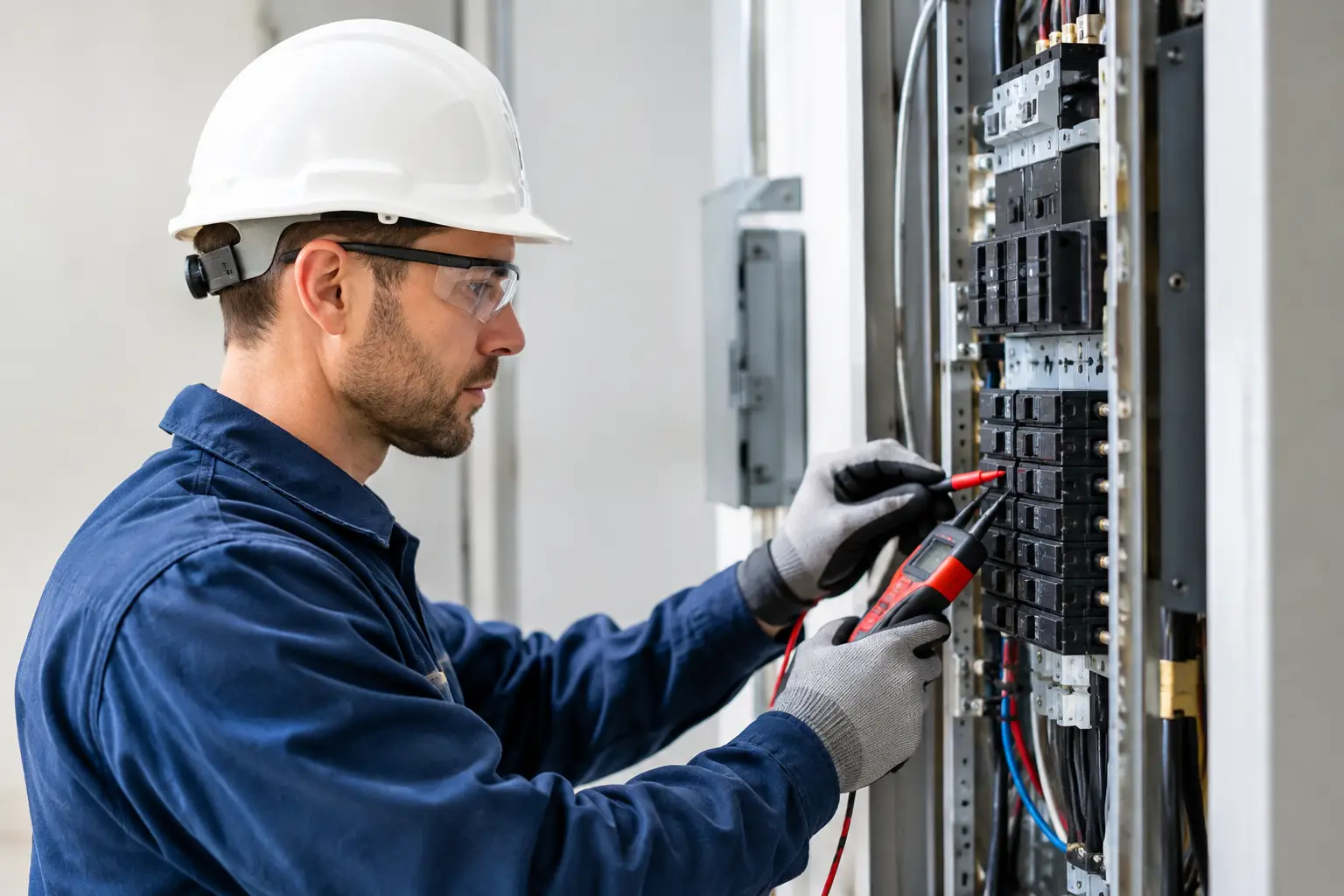
Backup power is only valuable if it starts, transfers, and carries the intended load when utility service fails. That requires more than installing a generator or battery cabinet. The electrical distribution, transfer equipment, grounding, overcurrent protection, controls, and critical-load panel all need to work together.
Routine maintenance should include scheduled exercise, battery inspections, fuel checks, transfer-switch testing, and load-bank testing when appropriate. A generator that runs with no meaningful load may still fail when asked to power a facility. Likewise, UPS batteries have a finite service life and should be monitored and replaced before their capacity declines below operational needs.
Document the system for the people who will rely on it. Facility staff should know what the backup system powers, how long it is expected to run, who can authorize manual actions, and which contractor to call if an alarm or fault occurs. Clear labeling and accurate panel directories make outage response safer and faster.
A dependable backup power plan is a business decision, not just an equipment purchase. Prime Electric can evaluate your critical loads, existing electrical infrastructure, and site conditions to help build a code-compliant solution that supports the operations you cannot afford to lose. Start with a professional assessment before the next outage decides what matters most.