LED Lighting: A Smarter Upgrade for Your Property

[ez-toc]
A flickering kitchen fixture, a dim parking area, or an office full of harsh fluorescent tubes can affect more than appearance. LED lighting gives homeowners and property managers a practical way to improve visibility, reduce energy use, and make a space feel safer and more current. The best result, however, comes from choosing the right fixtures, controls, and electrical installation for the job.
LED upgrades are not one-size-fits-all. A recessed ceiling light, warehouse high-bay fixture, landscape light, and exterior security floodlight each have different performance needs. A licensed electrician can help match the equipment to the space while checking the wiring, switches, circuits, and code requirements behind it.
Why LED Lighting Is Worth the Upgrade
LED fixtures use significantly less electricity than older incandescent and halogen options while producing strong, usable light. They also generally last much longer, which means fewer lamp changes in high ceilings, rental units, commercial spaces, and hard-to-reach exterior locations.
For homeowners, that can mean lower operating costs and better lighting in the rooms used every day. For commercial and industrial properties, efficient lighting can reduce maintenance demands and help create safer work areas, entrances, corridors, storage rooms, and loading zones.
The value is not limited to the energy bill. Quality LED fixtures turn on instantly, are available in many color temperatures, and can be paired with dimmers, occupancy sensors, timers, photocells, and smart controls. Those options give property owners more control over when lights operate and how a room or work area feels.
Still, lower wattage does not automatically mean a better installation. An LED fixture that is poorly located, incompatible with a dimmer, or connected to aging wiring can create flickering, buzzing, uneven illumination, or premature failure. The equipment and the electrical system need to work together.
Choosing the Right LED Lighting for Each Space
The first question is not simply, “How bright should it be?” It is, “What does this area need the lighting to do?” A bathroom vanity needs even facial illumination. A garage needs broad coverage with limited shadowing. A retail floor needs lighting that supports visibility and presentation. A warehouse may need high-output fixtures positioned for safe movement around inventory and equipment.
Brightness: Look at Lumens, Not Just Watts
With traditional bulbs, people often used wattage as a shortcut for brightness. With LEDs, lumens are the more useful measurement. Higher lumens generally mean more light output, while watts tell you how much electricity the product consumes.
The correct lumen level depends on room size, ceiling height, wall colors, natural light, and the task being performed. Installing overly bright fixtures can make a room uncomfortable, while under-lighting can leave stairways, work surfaces, and exterior paths unsafe. An electrician can recommend a layout that provides useful illumination without wasting energy or crowding the ceiling with unnecessary fixtures.
Color Temperature Changes How a Space Feels
Color temperature is measured in Kelvin. Lower Kelvin ratings produce warmer, softer light often used in living rooms, bedrooms, and hospitality settings. Mid-range temperatures work well in kitchens, bathrooms, and general office areas. Cooler temperatures can be useful for garages, workshops, storage areas, and task-focused commercial spaces.
There is no universal best choice. A warm light can make a residence feel inviting, but it may not provide the crisp visibility wanted for a detailed workbench. A cooler fixture may suit a commercial back room but feel too stark in a dining area. Viewing samples or discussing the purpose of each area before installation helps avoid costly changes later.
Fixture Type and Placement Matter
Recessed lights can create a clean ceiling line, but they must be spaced and aimed properly to avoid dark zones. Under-cabinet lighting can make food preparation safer and more comfortable. Pendant fixtures can provide useful task lighting over an island or reception counter. Exterior wall packs, floodlights, and pathway lights should be positioned to improve security without creating glare for neighbors, drivers, or customers.
For business owners, fixture placement also affects operations. Poorly placed lighting around stairwells, parking lots, exits, machinery, and loading areas can create safety concerns even when the fixture itself is new. A professional lighting plan considers the actual use of the space, not just the number of lights installed.
When an LED Upgrade Requires Electrical Work
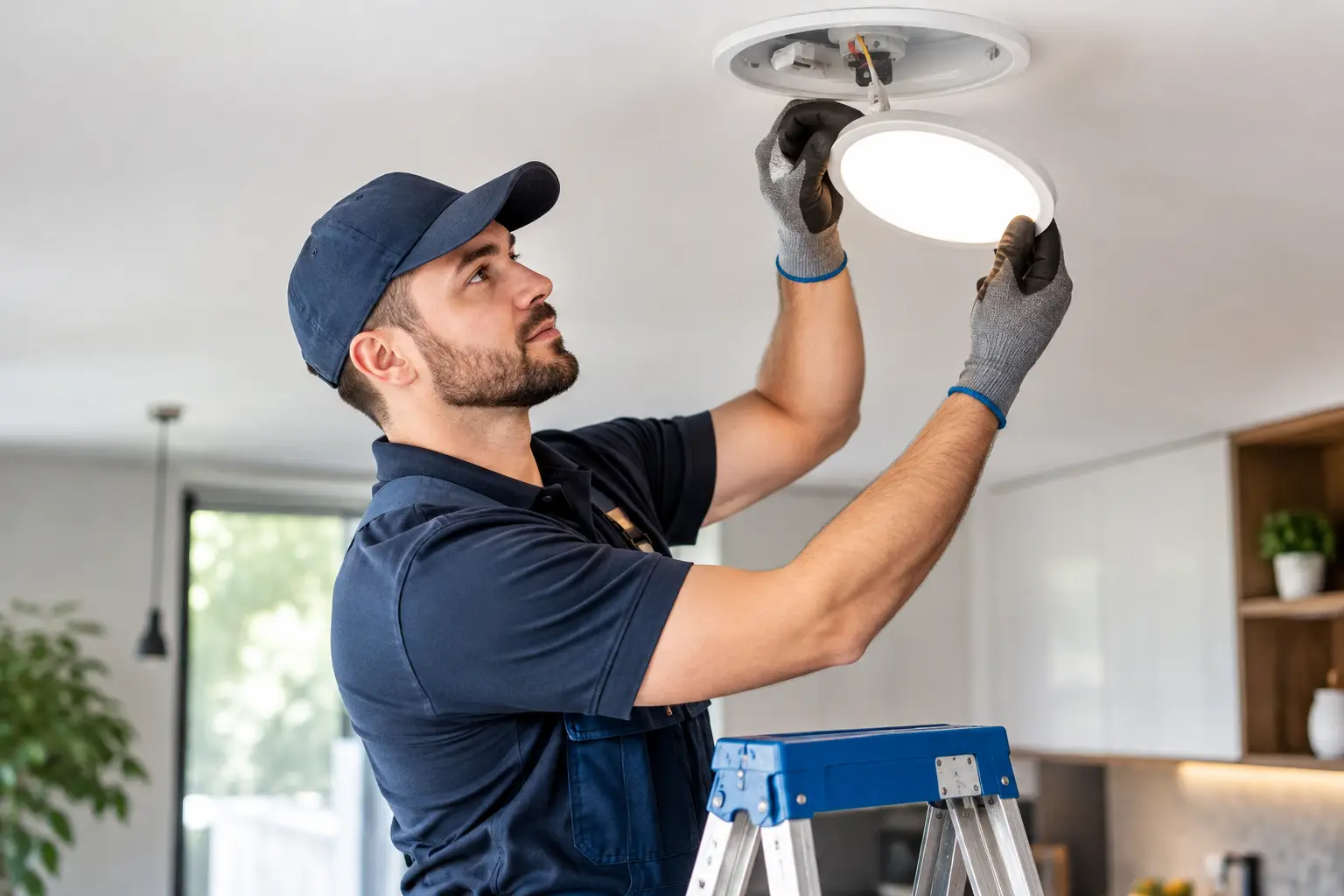
Some plug-in lamps and simple bulb replacements are straightforward. Many larger upgrades are not. Replacing fluorescent troffers, adding recessed lights, installing landscape lighting, converting a warehouse to high-bay LEDs, or upgrading exterior security lighting often involves wiring changes, switching, circuit evaluation, and sometimes permits.
Older Los Angeles properties can present additional considerations. Existing wiring may be deteriorated, junction boxes may not support the intended fixture, or the available circuit capacity may be limited. In commercial buildings, emergency lighting, exit signs, control requirements, and occupancy rules may also apply.
A licensed and insured electrician should evaluate the project when you notice recurring breaker trips, hot switches, buzzing fixtures, damaged wiring, water exposure, or lights that flicker after bulbs have been replaced. These are not issues to cover up with a new fixture. They can point to a loose connection, overloaded circuit, failing dimmer, or another electrical condition that deserves proper diagnosis.
Dimmers, Sensors, and Smart Controls
Controls are often where an LED project becomes more useful day to day. Dimmers can adjust the mood and brightness of a dining room, conference room, lobby, or bedroom. Occupancy sensors can reduce wasted electricity in restrooms, closets, break rooms, and storage areas. Photocells and timers can manage exterior lights without requiring someone to turn them on every evening.
Compatibility is essential. Not every LED lamp works well with every dimmer, and mixing older dimmers with newer LEDs is a common reason for flickering or reduced dimming range. Smart switches and connected lighting systems also need correct wiring, a suitable neutral connection where required, and thoughtful setup.
A professional installation helps prevent the frustrating result of buying quality products that do not perform as expected. It also provides a chance to organize controls in a way that makes sense for the people who actually use the space.
LED Lighting for Safety, Security, and Property Value
Lighting is a practical safety improvement. Clear illumination at entry doors, steps, pathways, driveways, parking areas, and electrical rooms helps people identify hazards and move through the property confidently. Motion-activated exterior lighting can also make vulnerable areas less appealing to trespassers without keeping bright fixtures on all night.
For rental and commercial properties, consistent lighting supports tenant and visitor experience. Burned-out lamps, mismatched color temperatures, and dark common areas can make an otherwise well-maintained building feel neglected. A planned LED upgrade creates a more professional appearance while reducing the ongoing effort of replacing failing lamps.
That said, the lowest-priced fixture is rarely the best long-term choice. Product quality, heat management, warranty coverage, color consistency, driver reliability, and access for future maintenance all matter. The right recommendation depends on how often the light operates and how difficult it will be to service later.
Work With an Electrician Who Plans for the Long Term
A reliable lighting upgrade begins with a walkthrough of the property and a clear discussion of what is not working now. The goal may be energy savings, better task lighting, code compliance, security, appearance, or all of the above. A qualified electrician should explain the options plainly, identify any electrical concerns, and provide transparent recommendations before work begins.
Prime Electric brings more than 40 years of electrical experience to residential, commercial, and industrial projects throughout the Los Angeles area. Licensed professionals can install and repair lighting systems while addressing the wiring, circuits, controls, and safety details that determine whether the upgrade performs as it should.
If your current lighting is dim, inefficient, unreliable, or simply no longer suited to the way your property is used, schedule a professional assessment. A well-planned LED installation can make the space easier to use, safer to navigate, and less expensive to operate for years to come.