How to Upgrade Electrical Panel Safely
[ez-toc]
If your breakers trip when the AC starts, the lights dim when appliances run, or you are planning an EV charger, you may be asking how to upgrade electrical panel capacity without creating a bigger safety problem. The short answer is that a panel upgrade is not a simple swap. It is a service-level electrical project that affects load capacity, code compliance, grounding, permits, and the long-term reliability of your property.
For homeowners and property managers in Los Angeles, panel upgrades are often tied to older homes, remodeling work, added equipment, or insurance concerns. Many properties were built for a much smaller electrical demand than they carry now. What worked decades ago may not support modern HVAC systems, kitchen appliances, home offices, pool equipment, or vehicle charging.
What an electrical panel upgrade actually involves
An electrical panel upgrade usually means replacing an outdated or undersized panel with one that can safely handle more electrical load. In many cases, that also includes replacing breakers, improving grounding and bonding, labeling circuits correctly, and coordinating with the utility company for service disconnect and reconnection.
Sometimes the job also requires a meter socket upgrade, new service entrance conductors, or repairs to wiring feeding the panel. That is why two properties can both need a panel upgrade but have very different scopes of work. A 100-amp to 200-amp residential upgrade is common, but not every building is a fit for the same solution.
How to upgrade electrical panel the right way
The right way to approach this work starts with a licensed electrician evaluating the existing system. That assessment should look at the panel brand and condition, available amperage, signs of overheating, code issues, grounding, and the actual electrical demand of the building.
A proper load calculation matters. If you are adding central air, an EV charger, a spa, commercial equipment, or multiple dedicated circuits, the electrician needs to determine whether the existing service can support it. Guessing here is where expensive mistakes happen.
Once the load is confirmed, the electrician can recommend whether you need a full panel replacement, a service upgrade, a subpanel, or targeted circuit additions. Those are not interchangeable answers. Sometimes a customer asks for a bigger panel when the real issue is damaged breakers or overloaded branch circuits. In other cases, a panel that looks serviceable is already maxed out and needs full replacement before new equipment can be installed safely.
After scope is defined, the project usually moves into permitting and utility coordination. Because the main service is involved, most upgrades require inspection and approval. Power is typically shut off during the replacement, so timing and planning matter, especially for businesses or occupied properties.
Signs your panel may need an upgrade
An upgrade is often less about age alone and more about capacity, condition, and safety. Still, older equipment deserves close attention. Panels with corrosion, heat damage, double-tapped breakers, limited circuit space, or obsolete components are common candidates for replacement.
Frequent tripping is another warning sign, but it is not the only one. You may also notice buzzing, warm breakers, flickering lights, or the need for too many extension cords and power strips. If a remodel requires new circuits and the panel has no room, that is a practical reason to upgrade even if nothing has failed yet.
For commercial and industrial properties, the issue is often uptime. If the panel cannot support added loads, sensitive equipment, isolated circuits, or production-related systems, the risk is not just inconvenience. It can affect operations and reliability.
Why this is not a DIY project
People searching how to upgrade electrical panel systems sometimes expect a step-by-step weekend project. That is not what this is. The main panel is where utility power enters the building. Even with the main breaker off, parts of the system can remain energized. A mistake here can cause severe shock, arc flash, fire, failed inspection, or damage to equipment throughout the property.
There is also the code side. Panel upgrades need to meet current electrical standards, not the standards from when the building was first wired. That can involve grounding electrode systems, bonding, conductor sizing, breaker compatibility, working clearances, and proper circuit identification. An unpermitted or improper installation can create problems when you sell, refinance, insure, or expand the property later.
That is why licensed, insured electrical contractors handle this work. Experience matters because panel upgrades are rarely as simple as removing one box and hanging another in its place.
What happens during a panel upgrade
Most projects begin with a site visit and estimate. The electrician inspects the existing service, discusses your current and future electrical needs, and explains whether you need more amperage or simply a safer, better-organized panel.
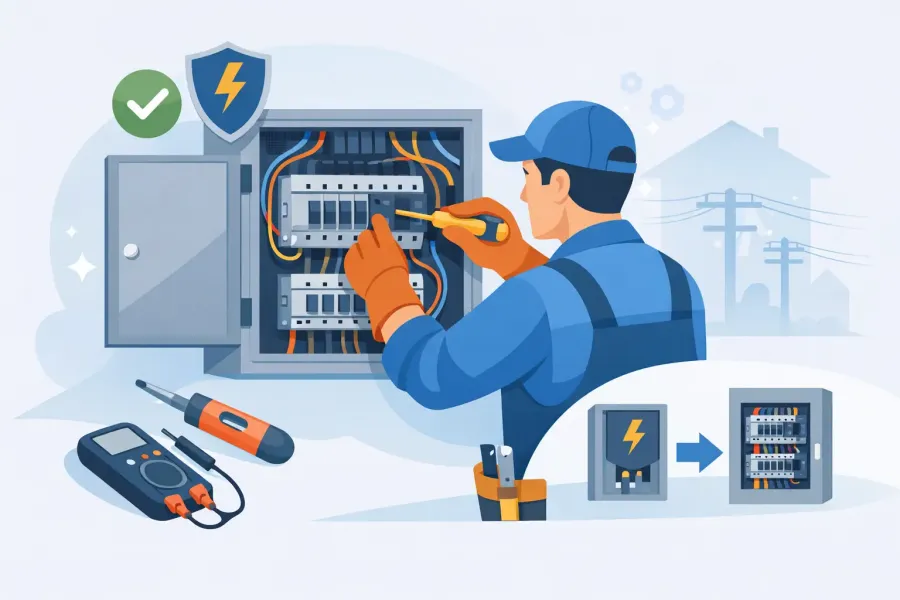
On the scheduled day, the utility power is shut off so the old panel can be removed safely. The electrician installs the new panel, transfers or replaces circuits as needed, updates grounding and bonding, and makes sure breakers are correctly sized and labeled. If the service conductors, meter equipment, or related components need replacement, that work is handled as part of the approved scope.
After installation, the system is inspected and power is restored. A professional job also includes cleanup, testing, and a clear explanation of what was changed. For many customers, that clarity matters almost as much as the hardware itself.
Cost depends on more than panel size
Customers often want a simple number, but panel upgrade pricing depends on several factors. The amperage increase matters, but so do the existing panel condition, utility requirements, permit fees, access, grounding upgrades, and whether damaged or outdated wiring is discovered during the job.
A straightforward residential panel replacement is very different from an older home that needs service mast work or a commercial property with multiple circuits feeding business-critical loads. The best estimate is one based on an in-person evaluation, not a guess over the phone.
That said, the lowest price is not always the best value. When a contractor is working on the heart of your electrical system, licensing, insurance, workmanship standards, and inspection-ready work should carry real weight in your decision.
Choosing the right electrician for the job
If you are comparing companies, ask direct questions. Are they licensed and insured? Do they regularly perform panel and service upgrades? Will they pull permits? Do they coordinate inspections? Do they warranty workmanship? Can they explain whether your project needs a panel replacement, a service upgrade, or both?
Those answers tell you a lot. So does how the estimate is presented. A dependable contractor should explain the scope clearly, discuss trade-offs honestly, and avoid vague promises.
In Los Angeles, many customers want a company that can handle more than a basic residential call. That matters because electrical needs often expand. A property may start with a panel upgrade and later need surge protection, EV charging, equipment circuits, lighting upgrades, or communications-related electrical work. Working with an established contractor such as Prime Electric gives customers confidence that the work is being handled by a team with broad field experience, proper credentials, and a long local track record.
When to schedule the upgrade
The best time is before the panel becomes an emergency. If you are planning a remodel, adding large appliances, installing an EV charger, or noticing breaker problems, it makes sense to address the panel early. Waiting can slow down other projects and, in some cases, increase repair costs if deterioration continues.
For landlords and property managers, proactive upgrades can also reduce nuisance service calls and support safer, more reliable occupancy. For business owners, planning the work before a failure helps protect uptime and avoids rushed decisions.
A panel upgrade is one of those jobs where experience, code knowledge, and careful planning matter more than speed alone. If your system is showing signs of strain, getting a professional assessment now is the smart move and usually the less expensive one in the long run.