fb
Skip to main content

Author: Prime Electric

Residential Electrical Service Installation

Residential Electrical Service Installation

If your lights dim when the AC kicks on, your panel is outdated, or you’re adding major appliances, residential electrical service installation may be the work that brings your home up to modern demand. This is not just about getting power from the utility to the house. It is about making sure the service entrance, meter connection, grounding, panel capacity, and overall setup are safe, code-compliant, and built for the way your home actually uses electricity.

In Los Angeles area homes, service installation and service upgrades are often tied to aging infrastructure. Many properties were built decades ago, long before EV chargers, larger HVAC systems, home offices, tankless water heaters, and expanded kitchen loads became common. A system that once handled basic lighting and a few outlets may now be stretched beyond what it was designed to support.

What residential electrical service installation includes

Residential electrical service installation usually covers the components that bring utility power into the home and distribute it safely. That can include the service mast or service lateral connection, meter socket, grounding and bonding, main disconnect, electrical panel, and the circuits that branch out from it. In a new home, that means building the service from the ground up. In an existing home, it may mean replacing old equipment, increasing amperage, or correcting unsafe conditions.

The exact scope depends on the property. Some homes need a complete service change from an older 100-amp panel to a 200-amp system. Others need a damaged meter base replaced, a relocated panel, or a new service configured to support an addition, pool equipment, or EV charging. The right approach depends on the current load, the condition of existing equipment, and local code requirements.

When a home needs electrical service installation or an upgrade

Some warning signs are obvious. If a panel is obsolete, damaged, or no longer code-compliant, replacement is often the safest option. If breakers trip frequently, fuses are still in use, or there is visible corrosion around the meter or panel, the system should be evaluated by a licensed electrician.

Other signs show up as lifestyle changes. A remodel that adds square footage, a kitchen renovation with new appliances, central air, a hot tub, or an EV charger can all push an older service beyond its practical limits. In these cases, the issue is not always failure. Sometimes the existing service still works, but it no longer provides enough capacity for reliable daily use.

For landlords and property managers, service installation may also come up during tenant improvements, insurance inspections, or sale preparation. If there are known code issues or old panels that make buyers and insurers nervous, addressing them early can prevent delays later.

Why proper sizing matters

Electrical service is not a place for guesswork. Oversizing can add unnecessary cost. Undersizing can leave you with a system that struggles from day one. A proper load calculation helps determine whether the home needs 100, 150, 200 amps, or more, based on square footage, fixed appliances, HVAC, specialty equipment, and likely future use.

That future-use piece matters more than many homeowners expect. If you are already opening walls, replacing a panel, or coordinating with the utility, it often makes sense to think ahead. Maybe you do not have an EV charger today, but you plan to buy an electric vehicle next year. Maybe your garage conversion or ADU is still on paper. Good planning can save you from paying twice for related work.

The permitting and utility side of residential electrical service installation

A professional residential electrical service installation involves more than swapping hardware. In most cases, permits and inspections are required, and utility coordination is part of the process. There may be scheduling around service shutoffs, reconnection windows, and inspection approvals before power is restored.

This is one reason experience matters. Service work affects the entire property. Delays, poor planning, or incorrect installation can leave a home without power longer than necessary or create problems during inspection. An established electrical contractor knows how to manage the sequence, communicate clearly about downtime, and complete the job in a way that meets both safety standards and utility requirements.

What affects cost

Homeowners usually want a fast price, but service installation is one of those jobs where the honest answer is: it depends. The amperage, condition of existing equipment, accessibility, utility requirements, grounding upgrades, panel location, and local permit costs all affect pricing.

A straightforward service replacement on an accessible single-family home is very different from a job with damaged stucco, outdated grounding, limited working clearance, or a panel relocation. If the home has aluminum branch wiring, unpermitted modifications, or multiple code issues tied to older work, the project may grow beyond the original assumption.

That does not mean pricing should be vague. It means the estimate should be based on real site conditions. A reputable contractor will explain what is included, what may change if hidden issues are uncovered, and whether the proposed system leaves room for future expansion.

Choosing the right electrician for service installation

This is high-stakes work. The right contractor should be licensed, insured, experienced with residential service changes, and comfortable handling permits and inspections. That may sound basic, but homeowners still run into avoidable problems when they hire based on the lowest number alone.

A service installation needs clean workmanship and technical accuracy. Grounding has to be correct. Panel labeling should be clear. The equipment should be sized properly. The installation should pass inspection for the right reasons, not because corners were missed or left for later.

It also helps to work with a company that has a stable local reputation. Longevity matters in electrical contracting because it reflects consistency. If a company has been serving the community for decades, stands behind its work, and has a strong review history, that is usually a better sign than a bargain price from a contractor you cannot verify.

Prime Electric has built that kind of trust by combining residential service experience with the broader technical capability to handle complex electrical systems. For homeowners, that means your service installation is being approached with the same professionalism and code awareness required on larger, more demanding projects.

Common questions homeowners ask

Will the power be off all day?

Sometimes, but not always. The length of outage depends on the scope of work, utility scheduling, and inspection timing. On a well-planned service replacement, electricians aim to minimize downtime and keep the process moving efficiently.

Can I keep my old panel if I just need more circuits?

Sometimes a subpanel can solve the issue, but not always. If the main service is already maxed out, outdated, or unsafe, adding circuits without addressing the core capacity problem is only a temporary fix.

Is a panel upgrade the same as residential electrical service installation?

Not exactly. A panel upgrade may be part of a residential electrical service installation, but service work can also involve the meter, service entrance conductors, grounding system, and utility connection. The terms are often used together, though the scope can differ from one home to another.

Do older homes always need a full service replacement?

No. Some older homes have been updated properly and still have adequate capacity for current use. Others need partial corrections or targeted upgrades. That is why an on-site evaluation matters. Age alone does not tell the whole story.

What to expect from a professional process

A strong service installation process starts with a real assessment of the home. That includes reviewing the existing panel, service size, major loads, grounding, and any planned additions. From there, the electrician should recommend a service size that fits both current demand and likely future needs.

Once the scope is defined, the next steps usually include permitting, utility coordination, scheduling, installation, inspection, and final energizing. Good communication matters throughout. Homeowners should know what is being replaced, how long the power may be out, and whether any wall repair or related finish work will be needed afterward.

The final result should be more than a new panel on the wall. It should be a safer, more dependable electrical foundation for the entire home. That means fewer nuisance trips, better support for modern appliances, and more confidence that the system is ready for the years ahead.

When you are considering residential electrical service installation, the smartest move is not to wait for a failure. If your home is showing signs of strain or your plans call for more power, getting a professional evaluation now can save time, money, and stress later.


Electrical Installation Condition Report Cost

Electrical Installation Condition Report Cost

If you are pricing an electrical installation condition report cost, you are probably not shopping for something optional. Usually, there is a reason – a property sale, a rental requirement, an insurance question, an older panel, repeated breaker trips, or simple peace of mind before a bigger upgrade. The price matters, but what matters more is whether the report is thorough, code-aware, and done by a licensed electrician who knows what to look for.

An Electrical Installation Condition Report, often called an EICR, is a formal inspection of a property’s electrical system. It looks at the condition of wiring, panels, breakers, grounding, outlets, and other key components to identify wear, damage, code concerns, and safety risks. For homeowners, commercial property owners, and facility managers, it is one of the clearest ways to understand whether an electrical system is still safe to operate or overdue for repair.

What affects electrical installation condition report cost?

The biggest factor is the size and complexity of the property. A small condo with a modern panel and straightforward branch circuits will usually cost less to inspect than a large home, a retail space with multiple subpanels, or an industrial site with specialized equipment. More square footage generally means more circuits, more devices, and more time on site.

Age also plays a major role. Older properties in Los Angeles often have a mix of legacy wiring, added circuits, undocumented modifications, or outdated service equipment. When an electrician has to trace questionable work, inspect older grounding methods, or verify past alterations, the report takes longer and the price reflects that.

Access can change the number quickly. If the panel is easy to reach, the space is occupied but organized, and the system layout is clear, the inspection tends to move efficiently. If rooms are blocked, electrical rooms are cluttered, panels are mislabeled, or there are multiple locked areas, labor time increases.

The purpose of the report matters too. Some clients want a baseline safety check before buying a property or planning renovations. Others need a more detailed condition assessment for commercial liability, insurance documentation, tenant turnover, or recurring electrical issues. The more detailed the scope, the more the final price may rise.

Typical price range for an EICR

In general, homeowners can expect electrical installation condition report cost to range from a few hundred dollars for smaller, straightforward residential properties to significantly more for larger homes or more complex buildings. Commercial and industrial properties often fall into a higher range because they involve more circuits, more equipment, and stricter operational concerns.

For a modest residential property, you may see pricing around the low-to-mid hundreds. A larger single-family home with multiple panels, additions, detached structures, or older wiring may cost more. Commercial spaces can move into the upper hundreds or beyond depending on occupancy type, electrical load, and how much of the system needs to be evaluated.

That said, there is no honest flat rate that fits every property. If one contractor gives a very low quote without asking about panel count, building age, or access, that is usually a sign the scope is thin or the report may not be as useful as you expect.

Why cheap reports can cost more later

This is where many property owners get tripped up. A low inspection fee sounds attractive, especially when you are already budgeting for repairs, tenant improvements, or escrow costs. But if the report is rushed, vague, or performed by someone without the right experience, you may end up paying again for a second inspection or missing serious issues the first time around.

A proper report should do more than check boxes. It should identify visible defects, flag safety concerns, note code-related issues where relevant, and give you a clearer sense of what needs attention now versus what should be monitored. That is useful information when you are deciding whether to repair, upgrade, negotiate, or plan future work.

For business owners and facility managers, poor reporting can be especially expensive. A shallow inspection might miss overloaded circuits, grounding problems, deteriorated conductors, or panel issues that later affect uptime. When electrical failures interrupt operations, the original savings disappear fast.

Residential vs. commercial electrical installation condition report cost

Residential inspections are usually simpler because the systems are more standardized. Even then, costs vary widely between a newer tract home and a 1950s property with multiple remodels. Homes with EV chargers, pool equipment, workshops, detached garages, or backup power equipment can require more inspection time.

Commercial reports tend to be more involved because the systems support business operations, occupant safety, and code-sensitive equipment. A small office may be relatively straightforward, but a restaurant, medical office, warehouse, or mixed-use property can require a much more detailed review. If the site includes dedicated circuits, machinery, data infrastructure, three-phase service, or multiple distribution points, expect the report cost to reflect that complexity.

Industrial environments are their own category. Equipment wiring, transformers, motor controls, high-load circuits, and maintenance history all affect the level of effort required. In these settings, experience matters as much as price, because the inspector needs to understand both safety and operational reliability.

What should be included in the price?

This is the question worth asking before you book. A professional quote should be clear about what the inspection covers, whether testing is included, whether the report is written and delivered as part of the fee, and whether any follow-up explanation is available once you receive the findings.

You should also ask whether the price includes inspection of all accessible panels, a representative sampling or full review of outlets and fixtures where appropriate, and basic documentation of defects and recommendations. If a contractor charges one price for the visit and another for the written report, that should be stated upfront.

In a well-run service operation, pricing is transparent. Clients should know what they are paying for, what is excluded, and whether any additional testing or troubleshooting would be billed separately. That kind of clarity helps avoid disputes and builds trust from the start.

Signs your quote may increase

A few situations commonly push pricing higher after the initial conversation. One is when the property has more panels or subpanels than expected. Another is when there are signs of prior unpermitted work, damaged wiring, or active faults that require extra diagnostic time.

Urgency can also affect cost. If you need same-day service, after-hours scheduling, or a fast turnaround for a transaction deadline, pricing may be different from a routine appointment. Some companies also price differently when travel, tenant coordination, or repeated site access is required.

None of that is unreasonable if it is explained clearly. Fair pricing does not always mean low pricing. It means the cost matches the work and there are no surprises hidden in the process.

How to compare quotes the right way

Start by comparing scope, not just the number at the bottom. Ask whether the electrician is licensed and insured, whether the report is written and detailed, and whether they regularly inspect the type of property you own. A contractor who handles both residential and commercial systems is often better equipped to spot issues that a limited-scope provider may overlook.

Reputation matters here. When you are hiring someone to evaluate electrical safety, professionalism is not a bonus feature. You want a company known for showing up on time, working cleanly, documenting findings clearly, and standing behind its work. In a market like Los Angeles, where properties range from updated condos to aging commercial buildings, experience across property types makes a real difference.

This is one reason many property owners prefer established local contractors with a long track record, strong reviews, and warranty-backed workmanship. Prime Electric, for example, has built its reputation on licensed, insured service and clear communication across residential, commercial, and industrial projects.

When paying for an EICR makes sense

Not every property needs a condition report right away, but some situations make it a smart move. If you are buying or selling an older building, managing a rental, seeing signs like flickering lights or hot outlets, planning a panel upgrade, or dealing with repeated electrical problems, a report can save time and guesswork.

It can also help you prioritize. Not every issue found in a report demands an emergency repair. Some items are advisory, some are maintenance-related, and some are urgent. A good electrician will explain the difference so you can make practical decisions based on safety, budget, and timeline.

The best way to think about electrical installation condition report cost is this: you are not just paying for a document. You are paying for an experienced assessment of a system that affects safety, liability, and reliability every day. When the inspection is done carefully, the report gives you something valuable – clarity. And clarity is often the first step toward making the right repair before a small issue turns into a much more expensive one.

How Much Does Electrical Installation Cost?

How Much Does Electrical Installation Cost?

Sticker shock usually happens when someone gets two electrical quotes that are nowhere near each other. One contractor says a job is a few hundred dollars. Another says it is several thousand. If you are wondering how much does electrical installation cost, the honest answer is that price depends on the type of work, the condition of the property, code requirements, and how much labor is needed to do it safely.

For homeowners, property managers, and business owners in Los Angeles, electrical pricing can vary even more because older buildings, permit requirements, access challenges, and higher local labor costs all affect the final number. The cheapest quote is not always the best value, especially when safety, inspections, and long-term reliability are on the line.

How much does electrical installation cost for common projects?

Electrical installation is a broad category. Installing a standard light fixture is very different from adding a subpanel, rewiring part of a commercial space, or setting up a Level 2 EV charger. That is why pricing is usually based on the specific scope rather than a single flat rate.

In many cases, smaller residential installations such as outlets, switches, or basic light fixtures may fall in the low hundreds. Mid-range projects like dedicated circuits, ceiling fan installations, or GFCI upgrades often run higher because they involve new wiring, code protections, or more labor. Larger jobs such as panel upgrades, EV charger installations, whole-home rewiring, or commercial electrical build-outs can reach into the thousands or much more.

A few rough examples help set expectations. Replacing a straightforward light fixture may cost far less than installing recessed lighting in multiple rooms. Adding one outlet where wiring is already nearby is typically less expensive than adding several outlets across finished walls. Installing a ceiling fan in a location with existing support and wiring is different from creating a new fan-rated box and running new cable.

For commercial and industrial properties, the range widens even more. Costs can rise quickly when the project involves machinery, dedicated circuits, telecom and data cabling, transformer work, three-phase systems, or after-hours scheduling to avoid downtime.

What drives electrical installation pricing?

The biggest factor is labor. Electrical work is highly skilled, licensed trade work, and labor costs reflect that. A job that looks simple on the surface can take longer if walls need to be opened, wiring needs to be rerouted, or older equipment does not meet current code.

Materials also matter. Basic residential switches and outlets are inexpensive, but specialty devices are not. Tamper-resistant receptacles, GFCI outlets, AFCI breakers, surge protection, heavy-gauge wiring, weather-rated equipment, smart controls, and commercial-grade devices all add to the total.

Then there is access. A clean, easy-to-reach installation inside an unfinished garage is usually less expensive than work in a finished ceiling, a tight attic, a crowded electrical room, or a multi-tenant commercial property. Time spent setting up safely, protecting finished surfaces, and restoring access all adds labor.

Permits and inspections can also affect price. Some jobs require permits, especially panel work, new circuits, service upgrades, and larger installations. That is not a bad thing. Proper permitting helps protect the property owner and confirms the work meets code.

Residential costs: what homeowners should expect

Homeowners usually call for electrical installation when they are upgrading convenience, safety, or capacity. A new chandelier, added recessed lighting, outdoor lighting, spa wiring, kitchen circuits, and EV charging are common examples.

Simple replacements cost less than first-time installations. If the wiring is already present and in good condition, the job is often faster and more predictable. If the electrician has to run new wire, add a breaker, upgrade a box, or correct older unsafe wiring, the cost climbs.

Older Los Angeles homes deserve special mention. Many have outdated panels, ungrounded wiring, undersized circuits, or previous handyman work that must be corrected before new installation can move forward. That extra work is often what separates a low estimate from a realistic one.

If you are planning a remodel, electrical costs may look higher at first because the scope is larger, but bundling work is often more efficient. Installing multiple fixtures, outlets, switches, and dedicated circuits during one project usually costs less than scheduling each item separately over time.

Commercial and industrial installations cost more for a reason

Business owners and facility managers often need pricing fast, but commercial electrical work rarely fits a one-size-fits-all model. Even a small tenant improvement can involve load calculations, code updates, emergency lighting, dedicated equipment circuits, and permit coordination.

Industrial pricing is even more specific. Machinery control repair, compressor wiring, high-voltage systems, transformers, and isolated circuits require deeper troubleshooting and a higher level of technical experience. In those environments, the true cost is not just installation. It is also risk reduction, uptime protection, and confidence that the work is done correctly the first time.

That is why experienced, licensed electricians with commercial and industrial capability often charge more than smaller outfits that only handle basic residential service. For many property owners, that premium is justified by fewer callbacks, better documentation, cleaner work, and less operational disruption.

Why estimates can vary so much

If you have ever compared bids and felt confused, that reaction is normal. Not every estimate includes the same scope. One quote may cover only visible installation, while another includes permits, materials, code corrections, cleanup, warranty coverage, and inspection coordination.

Some contractors also price for best-case conditions. That can make the number look attractive upfront, but change orders appear later if they run into access issues or hidden defects. A more thorough estimate may seem higher at first because it is based on likely realities rather than ideal conditions.

Insurance, licensing, and workmanship standards also affect pricing. A fully licensed and insured electrical contractor with a long track record, strong reviews, and warranty-backed work is not competing on the same level as someone offering cash jobs without the same protections. For customers who care about safety and accountability, those differences matter.

How to estimate how much your electrical installation will cost

Start with the scope. Be clear about what you want installed, where it will go, and whether the property already has wiring and capacity for it. A vague request leads to a vague price.

Photos help, but they are not always enough. For anything beyond the simplest installation, an on-site assessment is often the only way to price accurately. Electricians need to see the panel, the access path, the existing wiring, and any code or capacity issues that could affect the job.

It also helps to ask what is included. Does the quote cover labor and materials? Permit fees? Patch and repair? New breakers? Disposal of old fixtures? Warranty support? Those details make comparing estimates far easier.

If a quote is dramatically lower than the rest, ask why. Sometimes the contractor has found a more efficient path. Other times, key steps are missing. A low quote is only a good deal if the work is complete, code-compliant, and built to last.

How much does electrical installation cost when safety upgrades are involved?

Safety upgrades often change the price because they add necessary work that was not part of the original request. You may call for a new outlet and learn the circuit needs GFCI protection. You may want an EV charger and find out the panel does not have enough capacity. You may plan a lighting upgrade and discover deteriorated wiring in the attic.

These situations can be frustrating, but they are common. Good electricians explain what is required, what is recommended, and what can wait. That kind of transparency matters more than a fast number that ignores real hazards.

In the Los Angeles area, customers often benefit from choosing a contractor who can handle both everyday service work and more complex electrical systems. Prime Electric has built its reputation by doing exactly that, with the licensing, insurance, experience, and workmanship warranty customers want when the job affects safety and property value.

What is the best way to keep costs reasonable?

The best approach is not chasing the lowest number. It is planning the job carefully. Combining multiple installations into one visit, making access easy, choosing fixtures and devices before the appointment, and addressing known panel or wiring issues early can all help control cost.

It also pays to hire a contractor who communicates clearly from the beginning. The right electrician should explain the scope, identify possible variables, and give you confidence that the work will be clean, professional, and code-compliant. That is especially important for rental properties, businesses, and older homes where surprises are more likely.

If you need pricing for a specific project, the most useful next step is a professional estimate based on the actual site conditions. Electrical installation cost is never just about parts and labor on paper. It is about doing the work safely, correctly, and in a way that holds up long after the invoice is paid.

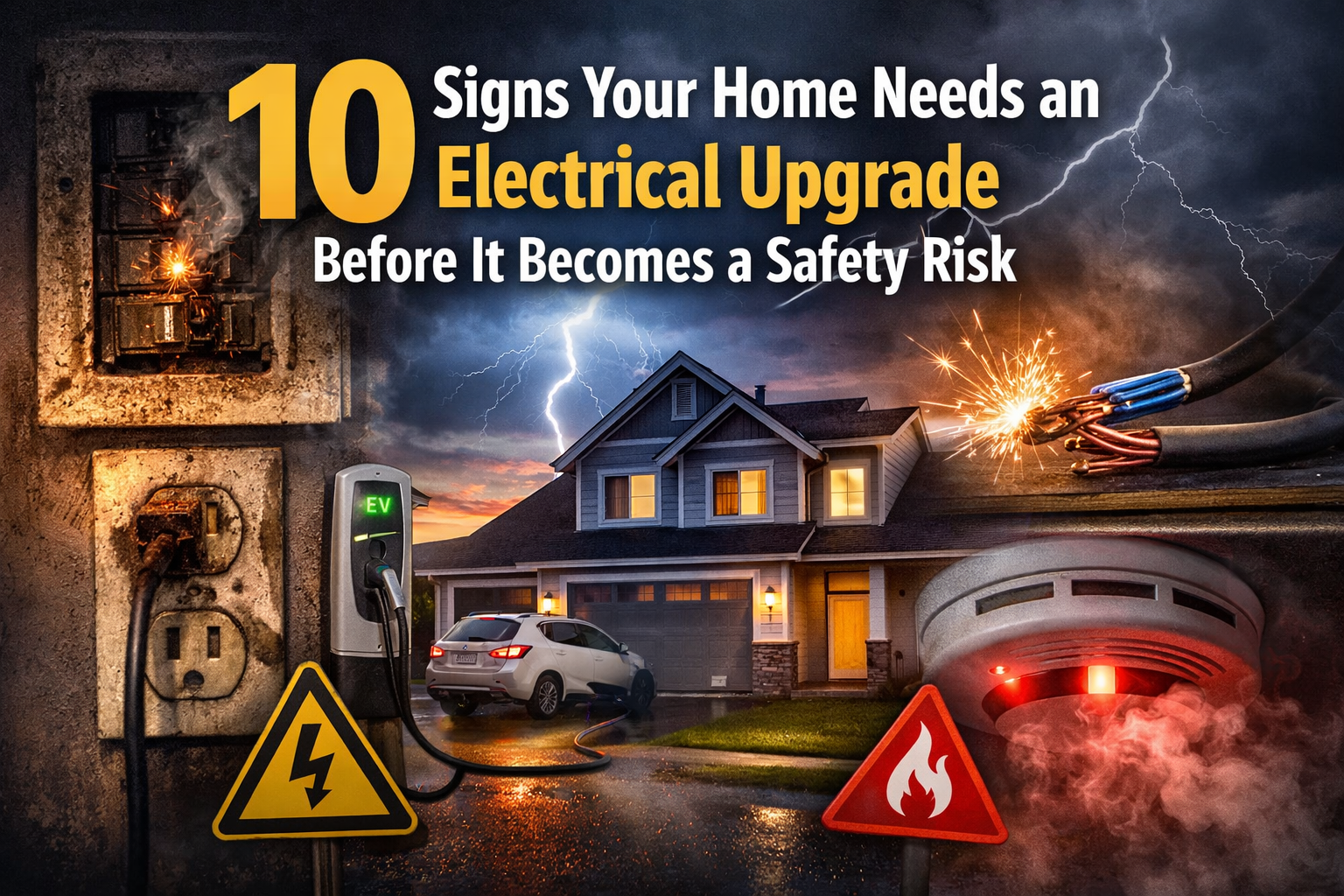
10 Signs Your Home Needs an Electrical Upgrade Before It Becomes a Safety Risk

Many homeowners don’t realize their electrical system may already be showing warning signs of overload, age, or hidden safety risks. What starts as a flickering light or tripped breaker can eventually turn into appliance damage, unreliable power, or even a fire hazard.

At Prime Electric, our licensed electricians in Los Angeles help homeowners identify electrical issues early and recommend safe, code-compliant solutions for modern living.

10 Signs Your Home Needs an Electrical Upgrade Before It Becomes a Safety Risk

TL;DR

Frequent breaker trips, flickering lights, warm outlets, and outdated panels are all signs your home may need an electrical upgrade. As homes add more appliances, electronics, and high-demand equipment like EV chargers, older electrical systems can become overloaded or unsafe.

If you’re seeing these warning signs, it may be time to schedule a professional inspection. Prime Electric can help with electrical troubleshooting, system upgrades, whole-house surge protection, and EV charger installation to keep your home safe and ready for modern power needs.

10 Signs Your Home Needs an Electrical Upgrade Before It Becomes a Safety Risk

1) Your Lights Flicker or Dim

If your lights dim when your microwave, air conditioner, or other heavy appliance turns on, your system may be struggling to distribute power correctly.

2) Your Circuit Breakers Trip Frequently

Breakers are supposed to protect your home—but if they trip often, that usually means something deeper is going on, such as overloaded circuits, faulty wiring, or an outdated electrical panel.

3) You’re Using Too Many Extension Cords

If extension cords and power strips have become your long-term solution, your home may not have enough circuits or outlets to support your daily power needs.

4) Your Outlets Feel Warm or Smell Burnt

Warm outlets, discoloration, or a burning smell should never be ignored. These can be signs of loose wiring or unsafe electrical connections.

5) Your Home Has an Older Electrical Panel

Older electrical panels often weren’t designed to support today’s electrical loads. If your home has an aging panel, it may be time to consider a professional inspection—especially if you’ve added modern appliances or are planning upgrades.

You can also learn more about older electrical panels and recalled panel safety concerns in this related guide.

6) You’re Installing New High-Power Equipment

If you’re adding a hot tub, new HVAC equipment, or considering home EV charger installation, your current electrical system may need panel capacity review or dedicated circuit work first. Prime Electric already offers EV charger installation in Los Angeles, which makes this a perfect internal bridge topic.

7) Your Electronics Need Better Protection

Modern homes rely heavily on computers, TVs, routers, smart home systems, and appliances. If your home isn’t protected against voltage spikes, whole-house surge protection can help reduce the risk of electrical damage.

8) You’re Renovating or Adding New Circuits

Kitchen remodels, bathroom remodels, room additions, and home office upgrades often require more power than your original system was designed to handle.

If you’re unsure what type of work should be done by a licensed electrician, read our guide on what electrical work requires a license.

9) Your Home Is Older and Has Never Been Evaluated

If your home is decades old and has never had a professional electrical inspection, it’s worth having your system assessed—especially before a renovation, resale, or major appliance installation.

10) You Want Better Safety, Reliability, and Future Readiness

Electrical upgrades aren’t only about fixing problems. They also help prepare your home for modern power needs, improved convenience, and safer long-term performance.

Need help figuring out if your home needs an electrical upgrade?
Prime Electric provides trusted troubleshooting, electrical safety evaluations, and upgrade recommendations for homeowners across Los Angeles and surrounding areas.

Light Up Your Home: Recessed Lighting Installation Essentials

TL;DR: Recessed lighting is trendy for its modern look and versatility, fitting into any room design. Planning involves assessing space and choosing the right lights. Installation requires special tools and electrical knowledge. While DIY is an option, hiring a professional like Prime Electric ensures safety and compliance. Located in Woodland Hills, California, they offer expert installation services to brighten your home.


When you want to create a cozy and inviting atmosphere in your house or give it a contemporary vibe, the appropriate lighting can help transform a space. Recently, many homeowners across the US have been turning to recessed lighting solutions to achieve this effect.

According to the Department of Energy, there are an estimated 600 million recessed lights currently installed in homes throughout the country. But why this surge in popularity? Recessed lighting offers a sleek, streamlined look you can’t achieve with traditional fixtures.

It makes rooms appear brighter and more open without the clutter of visible lamps or fixtures. The bulbs are fitted neatly into the ceiling, offering a sleek and modern look while providing ample illumination. 

This post will give you more information and advice on recessed fixture installation and how to light up your home. Recessed lighting installation essentials will set you on the right path to successfully install this major interior feature.

What is Recessed Lighting?

Recessed lighting refers to light fixtures installed into a hollow opening in a ceiling. When installed, it appears as if light shines from a ceiling hole, focusing the light downwards. Depending on the type of bulb and fixture used, it can shine a broad floodlight or a narrow spotlight.

Recessed lights come in various sizes, typically from 4 to 6 inches in diameter, allowing for a sleek and modern look that fits into any room design. There are two main types of recessed lighting fixtures to choose from, including:

  • IC-rated recessed lighting fixtures, which means they can be safely installed in ceilings with insulation without risk of fire
  • Non-IC-rated recessed lighting fixtures, which means they require a gap between the fixture and insulation.

Benefits of Choosing Recessed Lighting

Recessed lighting’s space-saving design is a significant advantage, especially in rooms with low ceilings where hanging lights might not be practical. These fixtures are flush with the ceiling and give a clean, unobtrusive look that appeals to minimalist aesthetics.

Recessed lighting is also incredibly versatile. You can use it for general lighting, task lighting over work areas, or accent lighting to light up i.e. accentuate certain aspects of your home. With advancements in LED technology, recessed lights have become more energy-efficient than ever, providing bright, high-quality light while reducing energy bills.

Planning Your Recessed Lighting Installation

When planning your recessed lighting installation, the first step is to understand what type of illumination your space needs and what is achievable. You must then figure out how to get the best possible light coverage.

Assessing Your Space

To begin with, consider the size of the area you’re lighting and the height of your ceilings. For larger rooms or those with high ceilings, you may need more lights or lights with a wider beam spread for adequate coverage.

Next, think about the room’s function. Is it a kitchen where you’ll be doing a lot of detailed tasks requiring bright, focused light? Or is it a living area where you want a softer, more ambient lighting setup? These are the kinds of details that will guide your planning process.

For instance, over a kitchen island or countertop, you’ll want more direct lighting compared to what you might prefer in a seating area.

Choosing the Right Lights

The lighting market has many bulb sizes and types, each achieving a pacific purpose and look. For general room lighting, you want larger bulbs that provide a broad spread of light, while smaller bulbs are more suitable for spotlighting artwork or other specific areas. The type of bulb, LED, halogen, or incandescent, will affect the quality and color of the light.

Another important factor is the bulb’s beam angle. A narrow beam angle can create a focused beam of light, perfect for highlighting objects or areas, while a wide beam angle provides a more general and diffused light. Brightness will also affect your choice. A brighter bulb can light up a larger area, but too bright can be uncomfortable, especially in a small or confined space.

Layout Design

Laying out your recessed lighting plan requires careful consideration to achieve an even and functional light distribution. A common mistake is spacing the lights too far apart, leading to uneven lighting with dark spots between the fixtures.

On the other hand, placing them too close together can result in too much light in some areas, making the space feel harsh and uninviting. In a room with 8-foot ceilings, you’d aim to space the lights approximately 4 feet apart. Start by placing lights around the room’s perimeter, about two to three feet from the walls.

From there, you can fill in the center of the room, focusing on the areas which need more light. Combining ambient, task, and accent lighting can dramatically improve the functionality and mood of a room.

The Installation Process

Installing recessed lighting is no walk in the park, mainly because you’re dealing with electricity, which always requires extra caution and know-how. Before you start, you’ll need some special tools and safety equipment.

You’ll need a drywall saw to make precise cuts in your ceiling, a drill for any necessary holes, wire strippers, a voltage tester (safety first!), and a screwdriver. As for safety equipment, get a pair of gloves to protect your hands, safety goggles to keep your eyes safe from debris, and a dust mask because you don’t want to be breathing in drywall dust all day.

Choosing the right wiring and fixtures is also a big part of the process. Select fixtures suitable for your space and meet all local building codes. As for wiring, opting for the correct gauge and type will prevent electrical mishaps.

Step-by-Step Installation Guide

Once you gather the tools and equipment you need for the installation process, you’re ready to start:

  • Turn off the power – Safety always comes first, so completely shut off the power to the area you’re working on.
  • Mark the ceiling -Plan where you want your lights to go and mark those spots on your ceiling. Accuracy here means less time fixing mistakes later.
  • Cut the ceiling holes – Using your drywall saw, carefully cut out the holes where your lights will go based on the marks you made.
  • Wire the lights – Run the wiring from one light to the next, securing and connecting as you go. Use your wire strippers and follow the wiring diagram that came with your lights.
  • Install the housing and trim – Once your wiring is in place, install the housing into the ceiling holes you cut earlier, followed by the trim. This part should start bringing your project together visually.
  • Test your lights – With everything installed, turn the power back on and test your lights to see if everything is working correctly.

Professional vs. DIY Installation

Installing recessed lighting yourself can save money upfront. You have control over the timeline and the exact materials used. However, it requires a solid understanding of electrical work, and mistakes can lead to safety hazards or not passing home inspections.

On the other hand, hiring a professional might cost more initially, but they have the expertise and often a warranty on their work. If your project is complex and involves a lot of fixtures, it’s wise to call in a professional. They can handle unexpected issues and keep the installation up to all necessary codes and standards.

Light Up Your Home

Hopefully, our guide helped you learn more about the essentials of recessed lighting installation.

If you want to brighten your space, nothing achieves a greater impact than recessed lighting. It offers a sleek, modern look and can transform any space, making it appear larger and more welcoming.

If you want to transform your home with the power of lighting, Prime Electric in Woodland Hills, California, can help you achieve the desired aesthetic. We will help you plan the optimal lighting set-up, install recessed lighting, and add other lighting features if you want. We know that electrical work is risky, so we are fully insured for the unlikely case of an accident.

Don’t get left in the dark, call us now, and let’s light up your world today!

The Science Behind Radiation Heating: How It Works and Why It’s Effective

TL;DR: Radiation heat transfer is vital for energy exchange, operating on electromagnetic radiation principles without a medium. Radiant heating systems offer efficient alternatives, directly warming objects and people while minimizing heat loss. Factors like system type, insulation, and installation are crucial considerations. The future holds promising advancements driven by technology and demand. Contact Prime Electric for advice or installation.


Radiation heat transfer, a process central to our existence, allows heat from the sun to travel through space and warm our planet. From the sun’s soothing warmth to the technological marvels that harness this power, understanding the science behind radiation heating and transfer is vital and intriguing.

Due to the increasing demand for radiation heating systems, the market is worth $3 billion. As we delve deeper into this topic, you’ll uncover the mechanics of how objects emit and absorb radiant energy, the significance of radiation in everyday life, and the cutting-edge advancements in radiation heating systems. 

From the basic principles that govern this phenomenon to its practical applications in various industries, this article aims to provide a comprehensive understanding of radiation heat transfer, explaining radiation, heat transfer, and radiant energy to enhance its visibility and accessibility.

Understanding Radiation Heating

Radiation heat transfer is a fundamental component of energy exchange processes, crucial for both natural phenomena and technological applications. Here’s a deeper dive into understanding this fundamental process:

Core Principles

At the heart of radiation heat transfer is that all objects emit electromagnetic waves if their temperature is above absolute zero. This radiant energy is always in play, from the vastness of space to the intimacy of our homes.

Unlike conduction and convection, radiation does not require a medium to travel. This allows the sun’s rays to warm the Earth despite the cold vacuum of space or the frigid temperatures of the mesosphere, showcasing the power and reach of radiant energy.

Application in Heating Systems

Radiant heating systems, which include underfloor, wall, and ceiling installations, support this principle to provide efficient and comfortable warmth. They’re particularly praised for their efficiency over traditional forced-air systems due to their elimination of duct losses and ability to provide even room-by-room controlled heat.

These systems are favored for their health benefits, reducing allergen and dust circulation, and their compatibility with renewable energy sources, marking them as a sustainable choice for future heating solutions.

Understanding radiation heat transfer enriches one’s appreciation for natural processes and informs the selection and use of heating systems in our living and working environments.

The Science of Radiant Heat Transfer

Radiant heat transfer, a sophisticated form of energy exchange, operates on the principles of electromagnetic radiation. This mechanism is controlled by the thermal motion of particles within matter, allowing heat to be conveyed even without a medium. Here’s a closer look at the science behind radiant heat transfer:

Core Mechanisms

  • Emission: Surfaces emit thermal radiation due to the kinetic energy from random movements of atoms and molecules.
  • Propagation: Unlike other heat transfer modes, thermal radiation can travel in straight lines at the speed of light, ensuring rapid heat transfer.
  • Interaction with Surfaces: When thermal radiation encounters another body, it can be absorbed, reflected, or transmitted based on the surface’s properties, such as temperature and spectral emissivity.

Key Characteristics

  • Frequency and Temperature: The frequency of emitted radiation increases with the temperature of the emitting body, illustrating the direct relationship between an object’s thermal state and its radiation characteristics.
  • Blackbody Radiation: Idealized as black bodies, certain objects can absorb all incident radiation, reaching maximum thermal radiation emission at given temperatures.

Applications

Understanding and applying the science behind radiation heating is fundamental in various technologies, from enhancing thermal comfort in buildings to improving the efficiency of solar energy systems. 

Notably, radiant heating systems offer an energy-efficient alternative to conventional heating methods, enhancing the importance of radiation in modern engineering and environmental sustainability efforts.

By dissecting these aspects, one comprehensively understands how radiant heat transfer functions, highlighting its significance across numerous applications and its role in advancing technology and sustainability.

Types of Radiation Heating Systems

In exploring the realm of radiation heat transfer, it’s crucial to understand the diverse types of radiation heating systems available in the market, each with unique mechanisms and applications. 

These systems can be broadly categorized into three types: Air Radiation, Electric Radiation, and Hydraulic Radiation, each contributing distinctively to the radiant heating landscape. Each system has its set of manufacturers, installation methods (wet or dry systems), and ideal applications, making the selection process critical based on individual heating needs and preferences.

Air Radiation Systems

They use heated air as the medium for heat transfer. Despite their operational simplicity, these systems are the least efficient due to air’s low capacity for retaining heat. They are generally not recommended for residential applications due to cost-effectiveness concerns.

Electric Radiation Systems

These systems have electric coils or mats that generate heat when electricity passes through them. Known for their low maintenance and suitability for floor heating, they are especially advantageous in homes with substantial thermal mass or favorable time-of-use electricity rates.

Hydraulic Radiation Systems (Hydronic)

Hydraulic radiation systems are the most popular and cost-effective, particularly in heating-dominated climates. They pump hot water from a boiler through a network of pipes installed beneath the floor, offering superior energy efficiency. 

However, they carry a risk of pipe bursts or leaks. Hydronic systems are versatile and capable of being powered by various energy sources, including gas, oil-fired boilers, or solar water heaters, making them a sustainable choice for comprehensive home heating.

Advantages of Radiation Heating

Radiant heating systems offer a significant advantage over traditional forced-air systems in terms of energy efficiency. With these systems, you can gain up to 43% in savings compared to other types. This is primarily due to the unique way radiant systems distribute heat. Here’s a closer look at why radiant heating is generally more energy-efficient:

  1. Direct Heat Transfer: Unlike forced-air systems that heat the air, radiant heating directly warms up objects and people in a room. This direct heat transfer is more efficient as it minimizes heat loss, ensuring energy is used effectively.
  2. Reduced Heat Loss: In forced-air systems, ductwork can be a significant source of heat loss due to leakage and lack of insulation. Radiant heating, on the other hand, involves minimal to no ductwork, reducing the potential for heat loss and making it a more energy-efficient option.
  3. Consistent Temperature: Radiant heating provides a consistent temperature across a space, eliminating the hot and cold spots commonly associated with forced-air systems. This consistency contributes to comfort and means that the system doesn’t have to work as hard to maintain the desired temperature, further enhancing its energy efficiency.

Considerations When Choosing Radiation Heating

When selecting radiation heating for commercial spaces, several critical considerations ensure the system’s efficiency, sustainability, and compatibility with your project requirements. Here’s a breakdown of essential factors:

  • System Type and Components: It is essential to choose a control system that can adapt to the building’s design characteristics and thermal inertia.
  • Insulation: This factor is vital to the system’s functionality to minimize energy loss.
  • Installation Process: It demands meticulous attention to detail and adherence to the correct procedure to prevent issues like pipe bursts in hydraulic systems.
  • Energy Shift: High-mass radiant cooling systems’ ability to shift energy input outside of peak hours contributes to operational cost savings and sustainability.

Future of Radiation Heating

The future of radiation heating is poised for significant advancements, driven by technological innovations and increasing demands in both residential and commercial sectors. Here are some key trends and developments to watch:

The Radiant Heating Systems Market is expected to witness substantial growth, fueled by heightened demand across various sectors. Solar panels and collectors exemplify the use of radiation to generate clean, renewable energy, reducing dependence on fossil fuels and mitigating greenhouse gas emissions.

Infrared (IR) technology, used in food manufacturing, showcases the efficiency and environmental benefits of radiation heating, offering increased energy throughput and quality improvement in food processing.

Conclusion

The method of transferring energy through electromagnetic waves is fascinating because it doesn’t require a medium to move; whether through the vacuum of space or the air around us, radiant energy never stops working.

The science behind radiation heating and its developments indicate a promising future for this industry, emphasizing its role in various sectors, environmental sustainability, and energy efficiency. So, if you need further radiation heating advice or professional installation, Prime Electric is always at your disposal!

The Importance of Timely Electric Sign Repair: Enhancing Business Visibility

TL;DR: Electric signs are crucial for your business’s first impression and marketing. Timely repair is vital to maintain visibility and professionalism. Common issues include burnt-out bulbs, wiring problems, and structural damage. Delayed repairs can lead to customer loss, revenue decrease, and legal issues. Look for reliable repair services with experience, quality, affordability, and good customer service. Delaying repairs costs more in the long run, so prioritize timely maintenance to ensure your sign remains an effective marketing tool.


As a business owner, you must fully grasp the importance of maintaining electrical signs in top condition for maximum impact. After all, your business’ electric sign is the first impression your customers get about your establishment. 

In that context, it’s crucial to understand the importance of timely electric sign repair and how vital it is for your business’s success. We’ll go over some of the most common issues faced by electric signs, as well as the benefits of prompt repair, so you can understand why investing in timely electric sign repair is essential for the success of your business.

Why Timely Electric Sign Repair Is Important for Businesses

Even though often overlooked, electric signs are an integral part of your business’s marketing strategy. They’re a marketing tool that can help create brand awareness just like any other. A well-designed and properly functioning electric sign can put your business on the map. 

In today’s fast-paced and competitive business landscape, you have to establish a strong presence if you want to succeed. The condition of your electric sign is a key aspect that ensures this type of presence. 

Whether you opt for an attention-grabbing electric sign, stick to simple basics, or try something in between, your sign has a pivotal role in conveying your brand message. This is where timely sign repairs enter the frame, as they ensure your sign can perform optimally. 

Common Issues With Electric Signs

While electric signs are a proven way to attract customers and market your brand, they also require regular maintenance. Various issues affect their performance and appearance, some of which are:

  • Burnt-out Bulbs or LEDs. This can make your sign look dim, uneven, or incomplete. It can also reduce the visibility and readability of your message.
  • Loose or Damaged Wiring. It can result in a flickering sign or even a complete breakdown. Wiring is also a potential fire hazard or an electrocution risk.
  • Cracked or Faded Faces. An appearance that makes your sign look old, worn, or unprofessional affects your business. Cracks can also expose the internal components to weather damage and vandalism.
  • Structural Damage. Usually, it’s a result of accidents, storms, or natural wear and tear affecting the structural stability of your sign and turning it into a serious safety risk.

The Impact of Delayed Sign Repair on Business Success

As is apparent by now, your electric sign matters when it comes to promoting your business. Therefore, keeping your electric sign in good condition is essential for your business success. However, if you neglect or delay the repair of your electric sign, you may face some serious consequences, such as:

  • Losing Customers. A faulty or damaged sign can deter potential customers from entering your premises or choosing your products or services. It can also create a negative impression that diminishes your reputation in the eyes of potential customers. 
  • Decreased Revenue. The fewer customers, the lower your potential cash flow and budget are, as you may have to spend more on advertising or marketing to compensate for the loss of visibility and exposure.
  • Losing Compliance. Depending on local codes and regulations that govern the installation and maintenance of electric signs, you can end up exposed to legal liabilities and penalties, as well as potential lawsuits.

Signs That Indicate the Need for Immediate Repair

Sometimes, the issues with your electric sign may not be obvious or visible, but they may still require immediate attention and repair. Some of the indications that you need a professional service to repair your electrical sign include: 

  • Strange Noises. Any buzzing, humming, or crackling noises coming from your sign need immediate attention as they may indicate a problem with the electrical components. This can affect the performance and safety of your sign, as well as cause annoyance and disturbance to your customers and employees.
  • Unusual Smells. If you smell any burning, melting, or chemical odors emanating from your sign, your sign might be having issues with the wiring, the bulbs, or the face.
  • Erratic Behavior. Erratic behavior of your sign includes flickering, dimming, flashing, or changing colors and may indicate a problem with the circuitry, the controller, or the software. This can cause issues in the functionality and reliability of your sign, as well as mislead your customers and employees.
  • Warning Signs. Error messages, low battery indicators, or service reminders usually point to a problem with either the system, the battery, or the maintenance. This directly affects the durability of your sign. 

Finding a Reliable Electric Sign Repair Service

When looking for a reliable electric sign repair service, you shouldn’t settle for less than the best. You should look for a service that boasts the following:

  • Experience and Expertise. Experience in repairing electric signs of various types, sizes, and brands is invaluable. You want to hire a service that has all the necessary licenses and certifications, as well an insurance to operate legally and safely.
  • Quality and Efficiency. The quality of the company’s service is crucial, particularly when delivered timely and efficiently. Look for a company that provides a guarantee for their work and products.
  • Affordability and Transparency. Transparent and honest estimates are a definite must when you’re looking to hire an expert electrical sign service provider. An offer of flexible and convenient payment options and plans is also helpful.
  • Customer Service and Satisfaction. Customer satisfaction is usually the best way to determine the real status of expert service. Make it a point to look at all the reviews and testimonials concerning the company that caught your eye. 

The Cost of Delaying Sign Repair

Overlooking an issue never yields positive fruits, and the same goes for delaying sign repair. The cost of delaying sign repair goes beyond just the immediate financial implications. It can result in customer loss, a decrease in foot traffic, and a negative brand reputation. 

With each passing day, a malfunctioning or damaged sign fails to attract customers and promote your business effectively. The longer you delay repairs, the more your business suffers as you fail to connect with potential customers and generate revenue. Therefore, it’s essential to prioritize timely sign repair to safeguard the success of your business.

Conclusion

To summarize, the importance of timely electric sign repair is no joke. A well-maintained sign attracts customers, enhances brand reputation, and generates revenue. Delaying sign repair can result in a decline in foot traffic, missed opportunities, and damage to your business’s image.

By promptly addressing issues and investing in professional repairs, you can ensure that your electric sign remains a powerful marketing tool. It’s important to prioritize regular maintenance to prolong the lifespan of your sign and prevent costly repairs. 

We at Prime Electric are always ready to tend to your electrical needs. We boast year-long experience in the field, so call us today and allow us to provide your electrical sign with expert attention and help you take your business to the next level!

Understanding the Electrical Needs of Your Pool and Spa

TL;DR: The pool and spa market is booming, valued at over $19 billion, but understanding their electrical needs is crucial for safety and longevity. Key considerations include wiring, grounding, GFCI installation, load capacity, and voltage requirements. Hiring professional electricians ensures compliance, safety, expertise, and cost-effectiveness. Prime Electric offers tailored services for peace of mind.


The pool and spa market is worth over $19 billion, with more and more people recognizing the value of these luxurious additions to their property. They offer a place for relaxation, entertainment, and a warm welcome. However, understanding the electrical needs of your pool and spa is of significant importance, as it directly impacts their safety and longevity.

Being aware of these electrical needs enables you to comply with relevant regulations and industry standards, safeguard against potential hazards, and ensure the long-term functionality of your pool and spa electrical systems. That said, let’s delve into today’s article and discuss the electrical requirements of your pool and spa!

Understanding Electrical Requirements

There are more than 10.4 million pools in American households. But, when it comes to expensive and fancy amenities, understanding your pool’s and spa’s electrical needs is essential to ensure the security of everyone who uses them. It also prevents electrical hazards. 

Take a look at some of the key reasons why understanding these requirements is important:

Safety

Understanding the electrical needs of your pool and spa helps you prevent electrical accidents, such as electric shocks or fires, which can occur if the electrical systems aren’t appropriately installed or maintained. By familiarizing yourself with the electrical requirements, you can ensure that your pool and spa electrical systems comply with local and national regulations designed to uphold safety standards and prevent electrical hazards.

Efficient Operation

Understanding the electrical needs enables you to optimize energy usage, ensuring that your pool and spa systems operate efficiently without consuming excessive electricity. 


Properly understanding the electrical requirements helps prevent damage to pool and spa equipment, such as pumps, heaters, and lighting, by ensuring that they receive the appropriate electrical supply and aren’t subjected to voltage fluctuations or overloading.

Key Electrical Considerations for Pools and Spas

To ensure the safe and efficient operation of pool and spa electrical systems, you must take several key considerations into account:

  • Wiring and Grounding: The electrical wiring for pools and spas must be installed according to specific guidelines to prevent the risk of electric shock and equipment damage. This includes using appropriate wiring materials and ensuring proper insulation and protection from moisture.
  • Grounding Requirements: Proper grounding is essential to prevent the buildup of stray electrical currents, which can pose a safety hazard. The grounding requirements for pool and spa electrical systems are crucial for ensuring safe operation.
  • GFCI Installation: Ground Fault Circuit Interrupters (GFCIs) are designed to protect against electric shock in wet environments. This is why you must understand the need for GFCI protection and ensure its proper installation.
  • Electrical Load Capacity: Understanding the electrical load capacity of the pool and spa equipment is essential to ensure that the electrical supply can meet the demands of the various components, such as pumps, heaters, and lighting.
  • Voltage Requirements: Different pool and spa equipment may have specific voltage requirements. Understanding these requirements is necessary to ensure that the electrical supply is compatible with the equipment being used.

Professional Assistance and Maintenance

The significance of hiring professional electricians for the electrical needs of your pool and spa cannot be overlooked. Their expertise, commitment to quality and safety, adherence to regulations, time and cost efficiency, and access to specialized tools and resources collectively contribute to the reliable and optimal functioning of pool and spa electrical systems.

Hiring professional electricians for the electrical needs of your pool and spa holds immense significance, offering a multitude of benefits that contribute to the safety, efficiency, and longevity of these amenities. Professional electricians boast year-long expertise and experience, ensuring that pool and spa electrical systems are installed, maintained, and operated to the highest standards.

Given pool and spa electrical systems’ technical nature, professional assistance is often advisable. Here’s why professional help is essential:

Installation Compliance and Safety

Professional electricians are well-versed in the electrical requirements for pools and spas and can ensure that the installation complies with regulations and meets safety standards.

They understand the legal and safety requirements specific to pool and spa electrical installations. Professional electricians ensure that your systems operate safely and within legal frameworks, thereby mitigating potential risks and liabilities.

They also implement safety protocols and measures in line with industry standards, such as proper grounding, GFCI protection, and adherence to wiring and electrical load capacity requirements, ensuring a secure environment for pool and spa users.

Expertise and Experience

Professional electricians specializing in pool and spa electrical systems bring a level of expertise that comes from focused knowledge and years of experience in dealing with these specific installations. Their expertise encompasses:

  • Familiarity With Pool and Spa Equipment: They’re well-versed in the electrical needs of various pool and spa equipment, such as pumps, heaters, lighting, and control systems, ensuring that these components receive the appropriate electrical supply without risking damage or inefficiency.
  • Troubleshooting Skills: With their experience, professional electricians have honed their troubleshooting skills, enabling them to quickly spot and address electrical issues that may arise in pool and spa systems, ensuring uninterrupted operation.
  • Quality and Reliability: Professional electricians are committed to delivering high-quality workmanship and have a track record of meeting deadlines and ensuring customer satisfaction.
  • Customer-Centric Approach: They prioritize customer satisfaction, maintaining open communication, and addressing client concerns with professionalism and dedication, ensuring a positive and stress-free experience for the homeowner.
  • Upkeep of GFCIs and Wiring: Professionals can ensure that GFCIs function correctly and that the wiring and grounding systems are well-maintained to uphold safety standards.
  • Proper Sizing and Configuration: Professionals can assess the electrical needs of the pool and spa systems and appropriately size and configure the electrical components to ensure safe and efficient operation. Regular inspection and maintenance of pool and spa electrical systems by qualified professionals are essential to identify and address any potential issues before they escalate into safety hazards.

Saving Time & Money 

By hiring professional electricians, you can save time, as they’ll efficiently handle the installation, maintenance, and repairs of pool and spa electrical systems, allowing you to focus on other priorities. Professional electricians can also minimize overall costs by avoiding errors, ensuring efficient energy usage, and preventing equipment damage.

Industry Connections

Professional electricians often have established connections with suppliers and manufacturers, allowing them to source high-quality electrical components and materials for pool and spa systems. This is how they guarantee that your installations will last for many years ahead.

Final Thoughts

Understanding the electrical needs of your pool and spa is crucial for both the safety and for improving the performance and the long-lastingness of these amenities. 

Here at Prime Electric, we offer pool and spa wiring, installation, and maintenance services based on your specific needs. By ensuring compliance with regulations and implementing appropriate safety measures, we make sure you can enjoy your pool and spa with peace of mind, knowing that your electrical systems are well-managed and safe for continuous usage.

So, contact us today and let us do what we do best—keep your pool and spa electrical systems alive!


FAQ

What electrical safety measures are crucial for my pool or spa?

Prime Electric emphasizes proper wiring, grounding, and GFCI installation to prevent hazards like electric shocks or fires, ensuring your pool or spa remains safe for use.


Why should I hire professional electricians for pool and spa electrical work?

Prime Electric’s experts possess the knowledge and experience necessary to ensure compliance with regulations, troubleshoot effectively, and offer cost-effective solutions, guaranteeing the safety and longevity of your pool or spa.


How can Prime Electric help optimize energy usage for my pool or spa?

Prime Electric specializes in assessing the electrical load capacity and voltage requirements of pool and spa equipment, allowing for efficient operation without excessive electricity consumption, ultimately saving you money on energy bills.


What sets Prime Electric apart in the pool and spa electrical service industry?

Prime Electric stands out for its commitment to quality workmanship, adherence to safety standards, and customer-centric approach. With tailored services designed to meet your specific needs, Prime Electric ensures peace of mind and satisfaction with every project.

The Pivotal Electrical Transformers Role in Business Continuity Planning

TL;DR: Electrical transformers are crucial for maintaining business continuity by ensuring stable power supply and protecting equipment. They regulate voltage, provide isolation, and manage loads efficiently. Transformers contribute to uninterrupted operations, equipment protection, and disaster recovery. Their resilience lies in redundancy, scalability, and risk mitigation. Transformer failure can disrupt operations, damage equipment, pose safety risks, harm reputation, and lead to financial losses. Professional installation and maintenance services are essential for ensuring transformer reliability and business resilience.

Electrical transformers play a crucial role in preventing and mitigating disasters or discontinuation of normal business operations. Quality electrical transformers guarantee the continuity and resilience of your system, ensuring the power supply remains stable and uninterrupted. So, let’s discover the electrical transformers’ role in business continuity planning in detail. 

As a professional electric motor and transformer installation service, we know how a well-working electrical device can help business operations run smoothly. Electrical transformers are key to maintaining a business property’s electrical functioning, guaranteeing its continuous efficiency. But all devices can have electrical problems, including transformers. Luckily, our team of experts possesses the necessary skills to identify the issues, examine the condition and specifications of the model, and repair it.

Understanding Electrical Transformers

To learn the electrical transformers’ role in business continuity planning, ensure you understand how they work and uncover the functions they perform. Electrical transformers are vital parts of every power distribution system. Their main purpose is to lower the electricity voltage using electromagnetic induction. 

Low voltage is the type of electricity transported to our power sockets, suitable for use in our homes or businesses. The transformers are the crucial component in the electrical distribution system that ensures systematic power transmission and accurate distribution.

The following is a detailed explanation of their functions:

Voltage Regulation

Electrical transformers control and adjust voltage levels. This ensures a stable and continuous electricity supply to businesses and homes. ITheir efficiency in controlling voltage is of primary significance during electricity disruptions and power outages. When electricity is restored, the transformer must maintain a steady voltage level, essential for avoiding damage to sensitive electrical equipment.

Isolation and Protection

Transformers also offer electrical isolation between the input and output circuits. This prevents high voltage from reaching the output part of the transformer. With this function, they protect all plugged-in devices and equipment from a power surge or fluctuations in the voltage. Isolation is vital to preserving fundamental business infrastructure during unpredicted circumstances.

Load Management

Transformers can efficiently manage the electrical demand within a business facility by enabling efficient power distribution to multiple loads. During emergencies, this ability to direct and prioritize loads becomes important for sustaining necessary operations.

How Electrical Transformers Contribute to Business Continuity

The use of transformers helps businesses avoid risks for critical power infrastructure. Thus, the contribution of electrical transformers to business continuity is vital. Let’s see why you should incorporate electrical transformer maintenance into your business continuity strategy:

Uninterrupted Operations

Electrical transformers create the foundation of a sturdy power supply infrastructure. TThis safe electricity network ensures the continuous operation of your business without any disruptions despite power outages or other failures. Companies maintain productivity and regular activities, avoiding financial losses.

Equipment Protection

Electrical transformers can protect important equipment and devices from any damage that power fluctuations or electrical disturbances can cause. This protection is instrumental in preventing costly downtime and equipment failures, safeguarding the continuity of business operations.

Disaster Recovery

Natural disasters come unexpectedly and cause damage like power disruptions in a business’s electricity system. In such cases, electrical transformers facilitate fast recovery by promptly restoring the power supply. This feature is crucial for companies to continue carrying out routine operations and minimize the impact of the disruption on their continuity.

Importance of Electrical Transformer Resilience

It’s very important for businesses to focus on maintaining strong and reliable electrical infrastructures, supporting fast and sufficient recovery and continuity of operations. Let’s see how electrical transformers can help with this.

Redundancy and Reliability

Including redundant electrical transformers in the power distribution system enhances its reliability. In business continuity planning, this redundancy certifies that even if one transformer fails, alternative units can uninterruptedly replace them. This is to prevent any interruption to the power supply and strengthen the overall resilience of the business.

Scalability and Adaptability

Transformers offer scalable and adaptable distribution of power within a business facility based on specific energy needs. This flexibility is essential in boosting growth, reconfiguring operational setups, and adapting to changing circumstances to support the continuity of business operations.

Risk Mitigation

Electrical transformers contribute to companies’ overall risk management strategies by reducing the risks associated with power disruptions. Their ability to maintain a well-grounded power supply even in unfavorable situations minimizes the influence of potential damages.

How Transformer Failure Impacts Business Operations

Transformer failure can significantly impact the flow of business operations. It may lead to  disruptions to power supply, damage to equipment and infrastructure, operational challenges, safety concerns, reputational damage, and financial implications. 

Mitigating the risks associated with transformer failure through proactive maintenance, contingency planning, and investment in resilient power infrastructure is crucial for businesses seeking to ensure operational continuity and minimize the potential adverse effects of such failures. Transformer failure can have wide-ranging consequences, affecting multiple aspects of business operations and disrupting the continuity planning process.

Interruption of Power Supply

Transformer failure can cause instant loss of power supply to critical business operations. This leads to expensive and turbulent downtime and halting production processes. The interruption of power supply can directly impact revenue generation, especially in industries where continuous production and operations are essential for increasing profits.

Damage to Equipment and Infrastructure

Power surges or changes caused by transformer failure can damage sensitive electrical equipment. This will increase the company’s expenses for repairs or replacements. Business facilities relying on the transformer for power distribution may experience damage to electrical infrastructure, further increasing the failure effect.

Operational Challenges

Failure of electrical transformers may disrupt logistical operations. Inventory management, shipping, and distribution processes may suffer due to this problem, influencing the entire supply chain. Loss of power can affect communication systems and information technology infrastructure, damaging internal and external communication and data management.

Safety and Regulatory Concerns

The loss of power due to transformer failure can compromise safety systems, lighting, and other business services, threatening the safety of personnel in the facility. This can result in difficulties meeting regulatory requirements regarding operational continuity and safety standards after experiencing transformer failure.

Reputational Impact

In industries highly dependent on sustained and constant power supply for customer service, transformer failure can cause significant disruptions. Continual power outages due to transformer failure can damage the business’s reputation, affecting customer trust and brand perception.

Financial Implications

The effects of transformer failure may also bring about financial problems or losses. They may cause the need for equipment repairs, infrastructure restoration, and recovery efforts. Also, businesses may run into insurance claims and potential liability issues related to disruptions caused by the transformer failure, further impacting their financial stability.

Electrical Transformers Installation and Maintenance: Consider Professional Services

The electrical transformers’ role in business continuity planning is integral. It is a component capable of maintaining an uninterrupted power supply, protecting critical equipment, and enhancing the overall durability and progression of business operations. 

The ability to control voltage levels, provide isolation, and accelerate prompt recovery during emergencies highlights the transformers’ importance in ensuring the seamless functioning of businesses during unforeseen conditions. As companies continue to prioritize continuity and resilience, electrical transformers become irreplaceable parts of any power infrastructure.

We know the function of electrical transformers inside and out. We offer various commercial electrical services like installing and repairing transformers based on your business’s needs and preferences. Contact Prime Electric today and schedule your first appointment!

FAQ’s

What types of transformer services does Prime Electric offer?

Prime Electric specializes in a range of transformer services, including installation, repair, and maintenance. Whether you need a new transformer installed, an existing one repaired, or regular maintenance to ensure optimal performance, our team of experts is equipped to handle all your needs.

How can I determine if my business needs transformer repair or replacement?

If you’re experiencing issues with your electrical system such as power fluctuations, equipment malfunctions, or frequent outages, it’s crucial to have a professional assessment. Prime Electric offers thorough diagnostics to determine whether repairs can resolve the issue or if replacement is necessary for optimal performance and safety.

Does Prime Electric provide emergency transformer services?

Yes, Prime Electric understands that electrical emergencies can occur at any time, disrupting business operations and causing inconvenience. That’s why we offer emergency transformer services to promptly address critical issues and minimize downtime. Our team is available 24/7 to ensure your business remains operational.

How often should I schedule maintenance for my electrical transformers?

Regular maintenance is key to prolonging the lifespan of your electrical transformers and preventing costly downtime. Prime Electric recommends scheduling maintenance inspections at least once a year, although frequency may vary depending on factors such as usage, environmental conditions, and the age of the transformers. Our experts can assess your specific needs and provide tailored maintenance plans to keep your transformers in top condition.

How Do Surge Protectors Work?

Have you ever had one of those moments where a storm hits, and you’re scrambling to unplug your electronics, fearing a power surge might fry them? That’s where a good surge protector comes in handy, protecting your devices from unexpected spikes in electrical voltage.

But how do surge protectors work? These devices monitor the electricity flowing to your appliance and other electronic devices. When they detect a surge in power that could be harmful, they divert the excess electricity away from your electronics, preventing damage.

In this post, we’ll look at what exactly surge protectors are and break down how they work. Let’s get into the specifics of how surge protectors do their job and why you should consider installing them in your house.

What Are Electrical Surges

Sudden spikes in electrical voltage are known as electrical surges. These aren’t your typical voltage levels. They’re much higher and can occur in the blink of an eye. They can happen for several reasons, including:

  • Lightning strikes: They can hit power lines directly or strike nearby objects, inducing a surge in the lines.
  • Malfunctioning appliances: They can send unexpected voltage spikes through your circuits. That usually happens with older appliances.
  • Overloaded outlets or circuits: When you have too many appliances plugged into a single outlet or circuit, that can cause overloading, which will lead to a surge.
  • Power grid issues: Equipment failure or sudden changes in demand can also cause surges.

Potential Damage from Surges

Excessive voltage can fry circuits and degrade the internal components of your devices, shortening their lifespan or outright killing them. That’s why you need to surge protectors in your house. They divert the extra voltage from your devices, ensuring that only the standard power level reaches them. Investing in quality surge protectors can save you from the headache of replacing damaged appliances and electronic devices.

The Basics of How Surge Protectors Work

When a surge protector senses voltage that exceeds the normal level, which usually is 110-120 volts in the US, it jumps into action. This excess voltage poses a real threat to anything plugged into an outlet.

It diverts the dangerous excess voltage to the ground line away from the outlets and your electronics. This process happens quickly, protecting your electronic devices from damage without you ever knowing there was a threat.

Components of a Surge Protector

A surge protector has several components that work together to keep your devices safe. The most common of these are:

  • Metal Oxide Varistors (MOV): A pressure-sensitive valve that only opens when the voltage gets too high. Under normal conditions, it does nothing – it’s just there, waiting. But when the voltage spikes, the MOV reduces the resistance and allows the excess electricity to pass through it and into the ground wire, effectively neutralizing the threat.
  • Gas Discharge Tubes (GDT): They kick in for big surges, like those caused by lightning. GDTs can handle more energy than MOVs and work by creating a short path to ground for the excess voltage, protecting your devices.
  • Circuit breaker: It cuts off the power if the current flowing through gets too high, preventing overheating and potential fires. 
  • Inductors: These components help filter out excess energy, ensuring that only clean, steady power reaches your devices.

Limitations of Surge Protectors

However, you can’t expect the same level of protection from all surge protectors. The differences can be substantial, and they boil down to the quality of their internal components. More expensive units typically offer better protection, thanks to higher-quality MOVs, GDTs, and additional features like inductors.

Also, surge protectors don’t last forever. Over time, the protective components inside can wear out, especially if they’ve had to defend against several large surges. This degradation isn’t always apparent, so it’s best to replace surge protectors every few years or immediately after you know they’ve taken a significant hit. A surge protector can’t save your devices if it can no longer do its job due to wear and tear.

Types of Surge Protectors

When considering the types of surge protectors available, you’re looking at two main categories: strip and whole-house surge protectors. 

Strip surge protectors are the ones you’re likely most familiar with. They’re power strips that let you plug in multiple devices in one spot. 

They’re super convenient, especially if you’ve got a lot of gadgets in one area of your home. However, they do have limitations. While they can protect the devices plugged into them, they can’t shield your home’s electrical system from surges.

On the other hand, whole-house surge protectors go into your home’s electrical panel. That means they offer a much broader level of protection, safeguarding not just your TVs, computers, and stereo systems but also big-ticket items like your HVAC and refrigerator from power surges. They’re more expensive upfront and require professional installation. However, they’re often worth the investment because of the added protection.

Features to Look For in a Surge Protector

When picking a surge protector, think about its joule rating. The higher this number is, the higher the level of protection, as this means your protector can absorb more energy before burning out.

Then there’s the response time, which is how quickly the protector can react to a surge. Faster is better here because even microseconds matter when a surge hits. Think about the number of outlets you need. Ensure the surge protector has enough spots for all your devices.

The UL rating of the surge protector speaks volumes on its quality. For example, a UL 1449 rating is a must-have as it indicates the device has met stringent safety standards for surge protection. The specifics of the rating can tell you about the device’s clamping voltage (the voltage level at which the protector begins to block or redirect excess electricity), among other things. This rating can help you gauge how well a surge protector will perform in real-world conditions.

Maintenance and Replacement

You might not realize it, but surge protectors don’t last forever. Signs that it’s time for a new one include visible damage, like a cracked case or frayed wires. There are more subtle indicators, such as the surge protection light (if yours has one) no longer illuminating.

Also, if you’ve had a major power surge recently, it’s a good idea to swap out your protector even if it looks fine—its internal components might be fried. Generally, you need to check your surge protectors every couple of years. 

If you’re not confident about assessing the state of your surge protectors, you should call in a professional electrician. They can give your devices a thorough check and ensure your home stays safe from unexpected electrical spikes.

Get Surge Protection In Woodland Hills, CA

Getting your head around the question of “How do surge protectors work?” is a smart move to safeguard your electronic devices. These gadgets manage unexpected spikes in voltage, ensuring your appliances and gadgets stay safe and sound.

If you’re ever in doubt about choosing a surge protector or have unique requirements, don’t hesitate to reach out to the professionals at Prime Electric in Woodland Hills, CA. We can inspect your electrical setup and give you a free estimate for the work that needs to be done. 

With over 35 years of experience, your switches and wires are in stable hands. So get in touch today, and let us protect your home!