Whole House Surge Protector Installation
[ez-toc]
A single power surge can do more than knock out a TV. It can shorten the life of your HVAC system, damage smart appliances, trip sensitive electronics, and put expensive stress on the electrical panel that your entire property depends on. That is why whole house surge protector installation is one of the most practical electrical upgrades for homes and many commercial properties in Los Angeles.
Most people think about surges as rare, dramatic events caused by lightning. In reality, many surges are smaller and happen inside the building. Air conditioners cycling on, large appliances starting up, utility switching, and panel issues can all create voltage spikes. One major event can cause immediate failure, but repeated smaller surges often do the slow damage that homeowners do not notice until equipment starts failing earlier than expected.
What whole house surge protector installation actually does
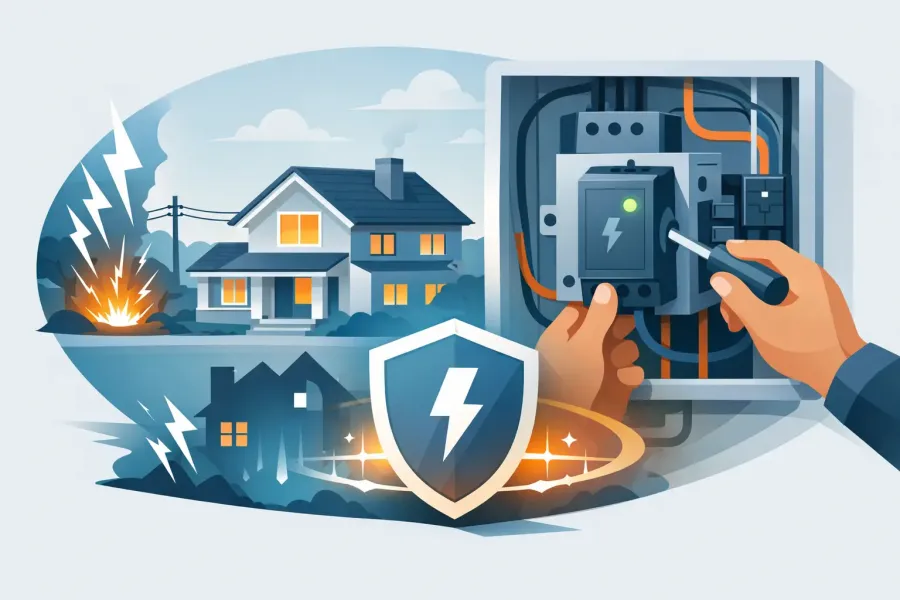
A whole house surge protector is installed at or near the main electrical panel. Its job is to divert excess voltage away from the circuits feeding your home or building. Instead of allowing that extra energy to move into appliances, electronics, or connected systems, the device channels it safely toward ground.
This protection matters because modern properties contain far more sensitive equipment than they did even a decade ago. Refrigerators have control boards. Garage doors use electronics. Tankless water heaters, EV chargers, internet equipment, security systems, smart thermostats, and LED lighting all rely on components that do not respond well to unstable voltage.
A point-of-use surge strip can help protect individual devices, but it does not replace panel-level protection. It works best as a second layer. The whole house device is there to intercept surges before they spread through branch circuits. For many properties, that layered approach makes the most sense.
Why this upgrade makes sense in Los Angeles properties
Los Angeles homes and commercial buildings often have a mix of older electrical infrastructure and newer electronics. That combination creates a common problem. The property may have upgraded devices and appliances, but the electrical system was not originally designed with today’s load profile and sensitivity in mind.
If your property has an aging panel, recent remodeling, new HVAC equipment, home office systems, or an EV charger, surge protection becomes even more relevant. It is also worth considering in properties with pool equipment, gate systems, communications equipment, or expensive kitchen appliances. In these settings, a surge protector is not a luxury item. It is a preventive measure that can help reduce avoidable repair and replacement costs.
There is also a practical insurance angle. A surge event can trigger multiple failures at once, and not every loss is simple to document or recover. Preventing the damage is usually less expensive than dealing with several damaged devices, service interruptions, and troubleshooting calls after the fact.
What happens during whole house surge protector installation
Whole house surge protector installation is typically a straightforward job for a licensed electrician, but it is not a DIY project. The work takes place at the main panel, where safety, code compliance, and proper product selection matter.
First, the electrician evaluates the panel and service configuration. Not every property has the same setup, and surge protection must be matched to the electrical service. The installer will also check whether the panel is in good enough condition to accept the device. If the panel is outdated, damaged, overcrowded, or already showing signs of failure, that issue needs to be addressed first.
Next comes product selection and placement. The device should be listed for the intended application and installed according to manufacturer requirements and local code. Wire length, breaker connection, grounding, and panel layout all affect performance. A poorly installed surge protector may not provide the level of protection the owner expects.
After installation, the electrician verifies operation and explains what the device does and does not protect. That part matters. No surge protector can guarantee that every possible event will cause zero damage. The goal is strong, code-compliant protection that reduces risk significantly, especially from common utility and internal surges.
Not every surge protector is the same
This is where many property owners get mixed messages. There are major differences in quality, ratings, and suitability. The right device depends on the property type, the service size, the panel brand and condition, and the level of protection needed.
A homeowner with a standard residence may need a different solution than a property manager overseeing a multi-unit building or a business protecting office equipment and telecom systems. Some installations are simple. Others require a broader discussion about panel upgrades, grounding improvements, or added point-of-use protection for especially sensitive equipment.
That is why the lowest price is not always the best value. A surge protector is only as good as the installation behind it. Properly evaluating the service, using the right device, and installing it cleanly and correctly is what turns the upgrade into real protection instead of a false sense of security.
Signs it is time to consider installation
You do not need to wait until something burns out to add surge protection. In fact, the best time is before there is visible damage. If you have experienced flickering lights, unexplained electronic failures, tripped breakers during equipment startup, or recent utility-related issues, it is worth having the system evaluated.
The same applies if you have invested in newer appliances, remodeled a kitchen, added a home office, installed an EV charger, or replaced HVAC equipment. Those upgrades increase the value of what you are trying to protect. Surge protection becomes a sensible part of protecting that investment.
For property managers and business owners, the question is often less about convenience and more about continuity. Replacing a failed device is one issue. Losing time, tenant comfort, or business operations is another. A proactive electrical upgrade can help limit those disruptions.
Why professional installation matters
Electrical panel work is not an area for guesswork. Surge protection devices must be installed with the correct overcurrent protection, correct conductor routing, and correct grounding path. If the panel has hidden issues, those need to be identified by someone qualified to see them.
Working with a licensed and insured electrician also gives you accountability. You want clean workmanship, transparent recommendations, and confidence that the job was completed to code. For many customers, that peace of mind is just as important as the device itself.
Prime Electric has spent more than 40 years helping Los Angeles property owners with electrical upgrades that protect safety, reliability, and long-term system performance. When a service touches the main panel, experience matters.
A surge protector is part of a bigger electrical picture
Whole house surge protector installation works best when the rest of the electrical system is in sound condition. If the panel is obsolete, the grounding system is inadequate, or breakers are failing, surge protection should be part of a broader plan rather than a stand-alone quick fix.
That does not mean every property needs a major upgrade. It means the installation should start with an honest assessment. Sometimes the panel is ready and the job is simple. Sometimes the right recommendation is to correct a panel issue first so the new device can do its job properly.
That kind of straight answer is what most homeowners and facility decision-makers want. Not upselling. Not vague advice. Just a clear explanation of what the system needs and why.
Is it worth it?
For most properties, yes. When you compare the cost of installation to the price of replacing appliances, electronics, HVAC boards, networking equipment, or other control systems, surge protection is usually a smart investment. The value becomes even clearer in homes and buildings with newer technology, sensitive equipment, or a history of electrical disturbances.
Like many electrical upgrades, the real benefit is often what does not happen. No damaged compressor board. No fried modem after a utility event. No surprise troubleshooting visit because several devices started acting strangely after a voltage spike. You are paying to reduce risk and protect systems you already rely on every day.
If you are considering whole house surge protector installation, the best next step is a professional evaluation of the panel and service. A qualified electrician can tell you whether your system is ready, what type of protection fits the property, and whether any related upgrades should be handled at the same time. A small preventive step now can save a much larger headache later.